Last night I misread a call from BMC Pregnancy & Childbirth. To be fair the email included two different request to contribute to two different kinds of blog posts with different set of instructions. Of course, I managed not to simply to swap these instructions around, but mix them up properly. The result is the text below that does not fit either of the two calls, I think.
 The question I tried to address was: “Tell us how your research published in BMC Pregnancy & Childbirth has links to wider issues than health!. The actual call in the email was: “Tell us about your contribution to the SDGs (Sustainable Development Goals) – We invite our Editorial Board Members who have research or personal interests related to the SDGs to contribute a blog post to our BMC Series Blog network discussing your work/interests as these relate to the SDGs”.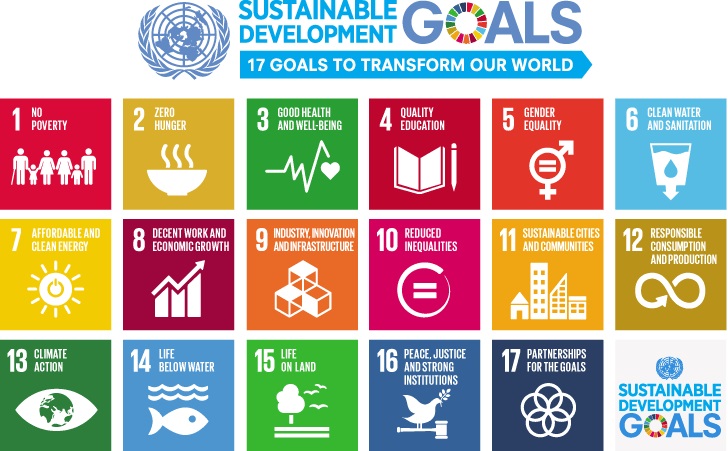
My adopted question explains the title ‘Health is not a vacuum’. The short overview of the blog I drafted focused on all the papers I have published in this journal over a fifteen-year period from 2006-2021 [1-11]. Not surprising for a sociologist of health & illness, my argument is that there are nearly always issues wider than SDG 3 ‘Good health and well-being’ in the way health care/service or health policy factors affects maternity care and midwifery. Social, cultural and economic factors affect the way maternity services ares provided, used and perceived. SDG 5 ‘Gender equality’ springs to mind first, but also important is SDG 4 ‘Quality education’, especially of girls, and SDG 1 ‘No poverty’, of course strongly linked with SDG 10 ‘Reduced inequalities’.
 Gender is highlighted or at least part of the argument in many of our papers in low- and middle income countries [2,3,5, 7,10,11], but also in a high-income context [1,6]. Education, both health education and education more generally, for example education levels of maternity service users, appears in several papers [1,6,8-11] whilst poverty is a key factors in several papers based on our work in Nepal [2,3,5,6,11]. Several of our papers address issues wider than health that are not strictly speaking SDG, such as paper on cultural differences in postnatal quality of life among German-speaking women living either side of the Swiss-German border [4], and of course, our paper on media and childbirth [6].
 Last, but not least, all papers published in BMC Pregnancy & Childbirth are Open Access and freely available online!
Prof. Edwin van Teijlingen
CMMPH (Centre for Midwifery, Maternal & Perinatal Health)
References:
- Hall, J., van Teijlingen E. (2006) A qualitative study of an integrated maternity, drugs and social care service for drug-using women, BMC Pregnancy & Childbirth, 6(19) biomedcentral.com/content/pdf/1471-2393-6-19.pdf
- Dhakal, S., Chapman, G., Simkhada, P., van Teijlingen E., Stephens J., Raja, A.E. (2007) Utilisation of postnatal care among rural women in Nepal, BMC Pregnancy & Childbirth 7(19). Web: biomedcentral.com/content/pdf/1471-2393-7-19.pdf
- Simkhada, B., Porter, M., van Teijlingen, E. (2010) The role of mothers-in-law in antenatal care decision-making in Nepal: A qualitative study. BMC Pregnancy & Childbirth 10(34) biomedcentral.com/content/pdf/1471-2393-10-34.pdf
- Grylka-Baeschlin, S., van Teijlingen, E.R., Gross, M.M. (2014) Cultural differences in postnatal quality of life among German-speaking women – a prospective survey in two countries, BMC Pregnancy & Childbirth 14: 277. https://bmcpregnancychildbirth.biomedcentral.com/articles/10.1186/1471-2393-14-277
- Milne, L, van Teijlingen, E, Hundley, V., Simkhada, P, Ireland, J. (2015) Staff perspectives of barriers to women accessing birthing services in Nepal: A qualitative study BMC Pregnancy & Childbirth 15:142 biomedcentral.com/1471-2393/15/142 .
- Luce, A., Cash, M., Hundley, V., Cheyne, H., van Teijlingen, E., Angell, C. (2016) “Is it realistic?” the portrayal of pregnancy and childbirth in the media BMC Pregnancy & Childbirth 16: 40 http://bmcpregnancychildbirth.biomedcentral.com/articles/10.1186/s12884-016-0827-x
- Sharma, S., van Teijlingen E, Hundley, V, Angell, C., Simkhada, P. (2016) Dirty and 40 days in the wilderness: Eliciting childbirth & postnatal cultural practices and beliefs in Nepal BMC Pregnancy & Childbirth 16: 147 https://bmcpregnancychildbirth.biomedcentral.com/articles/10.1186/s12884-016-0938-4
- Symon, A., Pringle, J, Cheyne, H, Downe, S., Hundley, V, Lee, E, Lynn, F., McFadden, A, McNeill, J., Renfrew, M., Ross-Davie, M., van Teijlingen, E., Whitford, H, Alderdice, F. (2016) Midwifery-led antenatal care models: Mapping a systematic review to evidence-based quality framework to identify key components & characteristics of care, BMC Pregnancy & Childbirth 16:168 http://rdcu.be/uifu
- Symon, A., Pringle, J., Downe, S, Hundley, V., Lee, E., Lynn, F, McFadden, A, McNeill, J, Renfrew, M., Ross-Davie, M., van Teijlingen, E., Whitford, H., Alderdice, F. (2017) Antenatal care trial interventions: a systematic scoping review & taxonomy development of care models BMC Pregnancy & Childbirth 17:8 http://bmcpregnancychildbirth.biomedcentral.com/articles/10.1186/s12884-016-1186-3
- Ladur, AN, van Teijlingen E, Hundley, V. (2018) `Whose Shoes?’ Testing educational board game with men of African descent living in UK, BMC Pregnancy & Childbirth 18:81. http://rdcu.be/JXs0
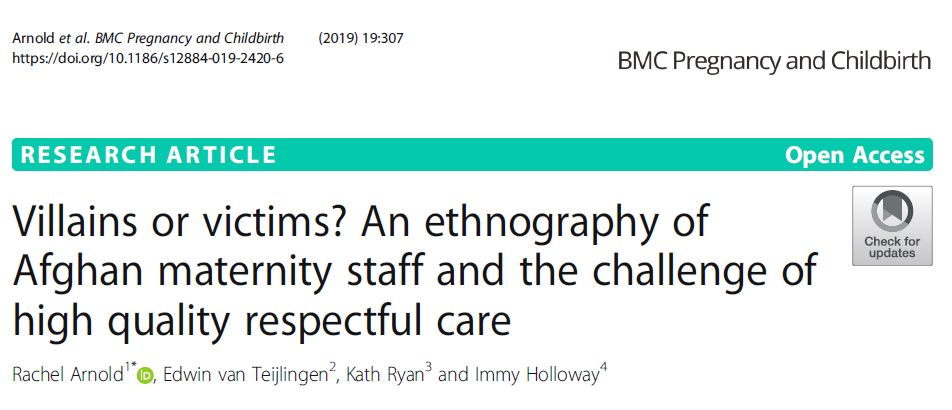
- Arnold, R., van Teijlingen, E., Ryan, K., Holloway, I. (2019) Villains or victims? An ethnography of Afghan maternity staff and the challenge of high quality respectful care, BMC Pregnancy & Childbirth 19 :307 https://rdcu.be/bPqlj
 Congratulations to PhD student Abier Hamidi on winning two scholarships within weeks. Earlier this month Abier was awarded a scholarship from the BHIVA (British HIV Association) to pay the registration fee for BHIVA Autumn Conference. This week she was also successful in getting a scholarship covering registration for the ‘Arab Health Summit: Advancing Health Equity for Women’ to be held on October 19-21. The Arab Health Summit serves as a platform for researchers in the USA to connect with their global counterparts, including in the MENA (Middle Eastern and North African) region. This summit offers a unique opportunity for Abier to exchange ideas and develop research relationships that may support her PhD study.













 REF 2029 Sector Survey: Have Your Say
 BU methods paper reached 2,500 reads
 UKCGE Recognised Research Supervision Programme: Applications Close 19 October
 Dr. Orlanda Harvey interviewed as expert
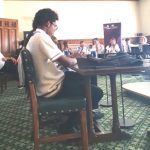 Dr. Paul Whittington attends Technology and the SEND Reforms Roundtable in the House of Commons
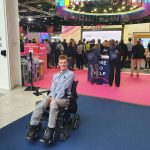 Dr. Paul Whittington joins Bett 2026 DfE Assistive Technology Roundtable
 Horizon Europe Cluster 3 (Civil Security for Society) 2026 Calls Now Open
 MSCA Doctoral Networks 2026 Call Information Webinar
 ESRC Festival of Social Science 2026: Application Deadline Extended to Thursday 25 June 2026
 Reminder: Register for the ESRC Festival of Social Science 2026 Information Session
 ECR Funding Open Call: Research Culture & Community Grant – Apply now
 ERC Advanced Grant 2025 Webinar
 Update on UKRO services
 European research project exploring use of ‘virtual twins’ to better manage metabolic associated fatty liver disease