Rowena Slope and Lucy Stainer are leading a unique writing opportunity for BU staff to join their writing team for the Delegation in Healthcare book, which has a publishing agreement with the Taylor & Francis Group. Your contribution could make a significant difference in the field of healthcare delegation.
– Do you have case studies/ experiences that can be used in this book?
– Do you have research/ literature on delegation?
If it’s ‘yes’ to either of these questions and you would be willing to share or would like to join our writing team (current membership is Teresa Burdett, Emily Brooks, Joanna Cleall, Chantel Cox, Alex Hull, Ursula Rolfe & Clare Shearer), please get in touch with us via email: lstainer@bournemouth.ac.uk
We’re excited about the possibility of including your work and expertise in our book, and we would love to hear from you.
(more…)
Category / writing
New editorial Journal of Asian Midwives published
The latest issue of the Journal of Asian Midwives was published last week. In the accompanying editorial we focused on the environment and sustainability in midwifery and maternity care.
Climate disasters appear to be on the rise worldwide, owing mostly to global warming, but also to urbanization and other human factors. Some Asian countries are among the world’s most climate-vulnerable, such as Nepal ranking 139th out of 182 in terms of exposure, sensitivity, and ability to adapt to the negative effects of climate change. Nepal, well-known for its mountains, the Himalayans, and especially, Mount Everest, is grappling with not solely earthquakes, but also floods, landslides, wildfires, and droughts. In the past decades we have also seen major natural disasters in many other South Asian countries, such as cyclones in Bangladesh, earthquakes and flooding in Pakistan, tsunami and drought in India, and so on.
Marginalized populations, suffer already from poverty, food insecurity, and discrimination, and agriculture-based livelihoods, are especially susceptible to environmental effects. These calamities frequently adversely impact low-income populations. We must not forget that when a disaster strikes, regardless of climate change, the impacted areas will require emergency rescue teams, temporary shelters, food and medication, and other necessities, as well as infrastructure support to keep non-emergency services functional. Remember that even after an earthquake, flood, or volcano eruption, there will still be a mother going into labour!
The Journal of Asian Midwives is Open Access and hence freely available to everybody with internet access in Asia (and elsewhere in the world).
Prof. Edwin van Teijlingen
Joint editor Journal of Asian Midwives
Reference:
- van Teijlingen, E., Musaddique, A, & Jan, R. (2024) Editorial – July 2024. Journal of Asian Midwives, 11(1): 1–2.


New BU Nepal migration health paper published
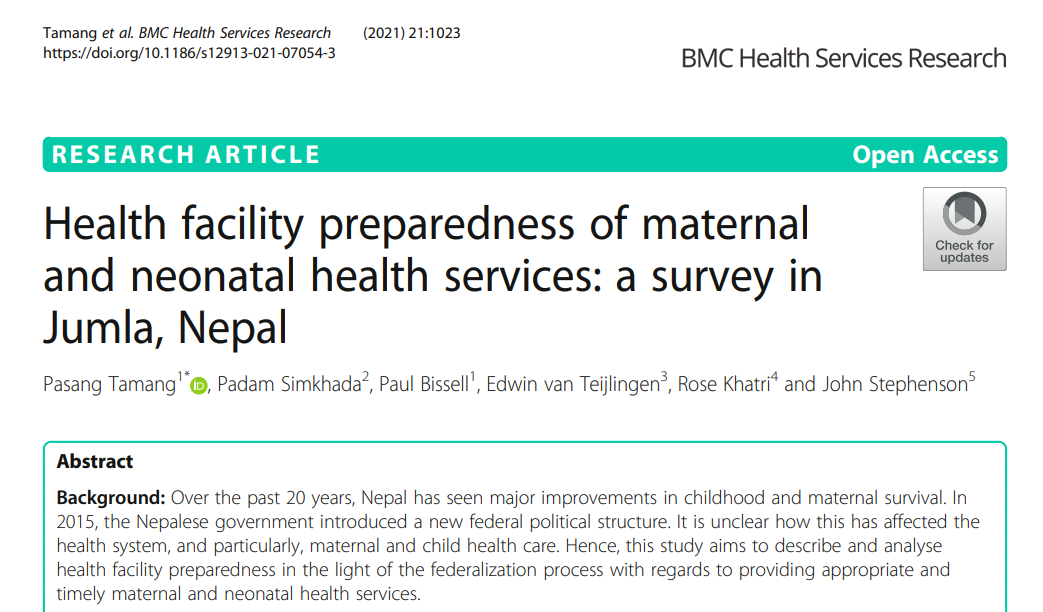
Last week the scientific journal Tropical Medicine & Infectious Disease informed us that our paper ‘A Qualitative Insights into Pre-Departure Orientation Training for Aspiring Nepalese Migrant Workers’ has been accepted for publication. This paper is part of a Special Issue of the journal with the title Contemporary Migrant Health, 2nd Edition). Tropical Medicine & Infectious Disease is an Open Access journal, which means it is freely available to anybody in Nepal (and the rest of the world) with internet access. The lead author of our latest health and migration article is Dr. Pramod Regmi in the Department of Nursing Science and his Bournemouth University co-authors are:
Dr. Nirmal Aryal and Prof. Edwin van Teijlingen.
Reference:
- Regmi, P., Aryal, N., van Teijlingen, E., KC, R.K., Gautam, M., Maharjan, S. (2024) A Qualitative Insights into Pre-Departure Orientation Training for Aspiring Nepalese Migrant Workers, Tropical Medicine & Infectious Disease 9(7), 150;https://doi.org/10.3390/tropicalmed9070150.
Research capacity building
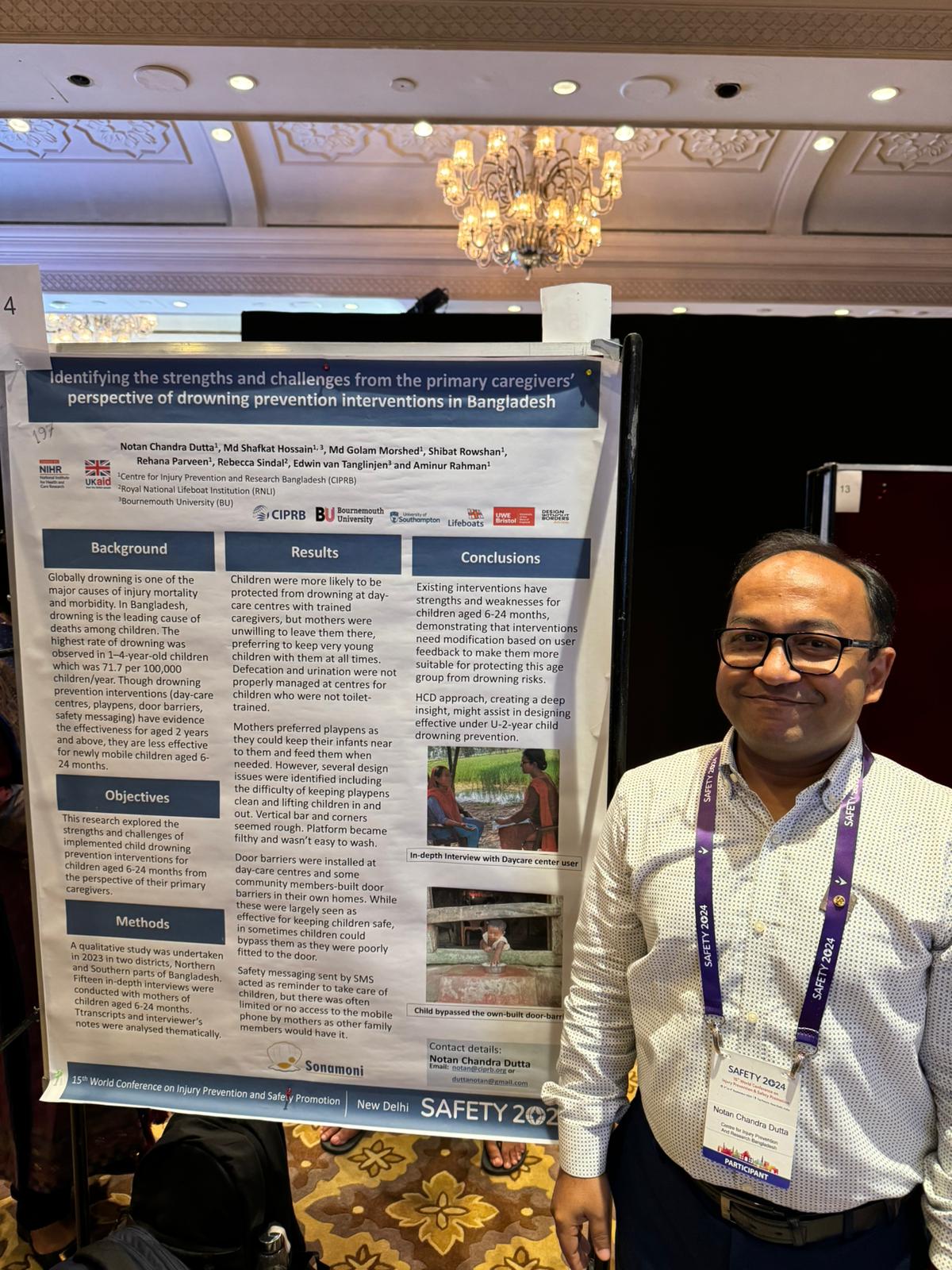
Last week I attended Bournemouth University’s Research Conference which focused on collaboration and participation. One the many issues discussed that day include international research teams, especially differences in culture and expectations as well as the very practical time differences across the globe. I was reminded of the latter this morning when I woke up at five AM to start a two-hour online training workshop on academic writing for our research colleagues in Bangladesh. This is one of the sessions we run as part of our internal research capacity building strategy on the Sonamoni project. Due to the time difference it was as 11.00 AM start in Bangladesh which meant sixteen people from CIPRB could attend, opening up the session to not jest those staff working on the Sonamoni project.
This project is an interdisciplinary study of nearly £1.7 million funded by the UK National Institute for Health and Care Research (NIHR). Sonamoni (meaning ‘golden pearl’ in Bangla) aims to reduce the deaths of newly-mobile toddlers (those aged under two) from drowning in rural Bangladesh. This multidisciplinary project is a collaboration of BU’s Centre for Midwifery & Women’s Health (CMWH), BU’s Department in Accounting, Finance & Economics and Department of Design & Engineering, and external partners, namely the University of the West of England, the University of Southampton, the Poole-based Royal National Lifeboat Institution (RNLI) and the Bangladesh-based research organisation CIPRB (Centre for Injury Prevention and Research, Bangladesh) and Design Without Borders (based in Uganda).
Prof. Edwin van Teijlingen
CMWH
New sociology paper Freedom from Academentia
Congratulations to Laura Favaro, Lecturer in Social Science in the Faculty of Health & Social Sciences, who published the paper ‘Let us be free from “ACADEMENTIA”’ this last weekend of June [1]. “Survivor of academentia” is how one former lecturer in sociology described herself when to Laura interviewed her for her ethnography of academia. In particular, the research explored the “gender wars”, namely the disputes around sex and gender that have escalated dramatically since the mid 2010s in Britain and increasingly also in many other countries. This article builds on feminist and other critical uses of the term academentia with original insights from interview and document data about the detrimental impact of queer theory and politics. The hope is to stimulate further inquiry into the push towards queering at universities, and beyond, as well as into the connections between the
transgender and mad movements.
Well done!

Prof. Edwin van Teijlingen
Centre for Midwifery & Women’s Health
Reference:
Favaro, L. (2024) Let us be free from “Academentia”, Cuestiones de género: de la igualdad y la diferencia. Nº. 19: 659-92.
Impact Factor for Nepal Journal of Epidemiology
The Nepal Journal of Epidemiology achieved its first proper Web of Science impact factor this month. The Nepal Journal of Epidemiology is a international journal with strong links to Bournemouth University. It is a Open Access journal that covers all aspects of epidemiology and encourages communication among those engaged in the research, teaching, and application of epidemiology of both communicable and non-communicable disease, including research into health services, public health and medical care. One of the two Editors-in-Chief is Dr. Brijesh Sathian, FHSS Visiting Faculty and the journal’s Editorial Board Members include Prof. Padam Simkhada, FHSS Visiting Faculty as well as Prof. Edwin van Teijlingen in the Centre for Midwifery & Women’s Health.
Positionality in qualitative research
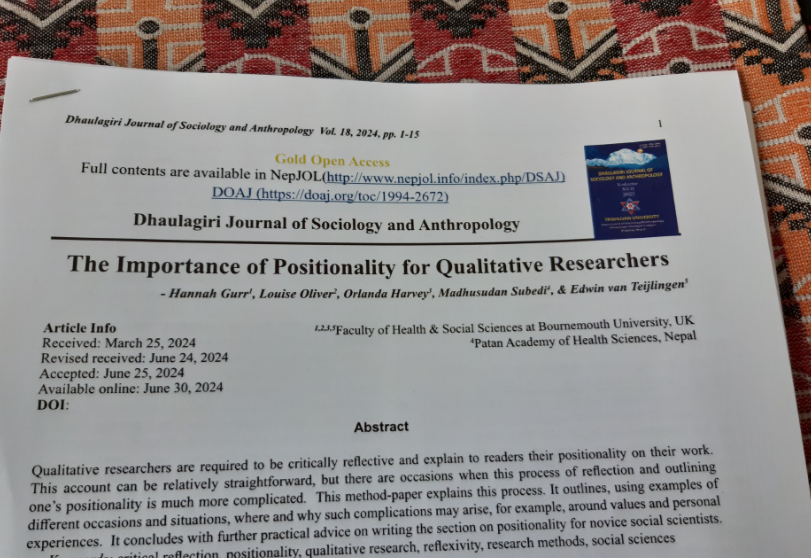
At the online editorial board meeting today [Saturday 29th June] of the Dhaulagiri Journal of Sociology and Anthropology I had the pleasure of seeing Bournemouth University’s latest paper ‘The Importance of Positionality for Qualitative Researchers‘ ahead of publication [1]. The lead author of this paper is Hannah Gurr and this methodology paper is part of her M.Res. research project in Social Work. Hannah is supervised by Dr. Louise Oliver, Dr. Orlanda Harvey and Prof. Edwin van Teijlingen in the Faculty of Health & Social Sciences (FHSS).
Dhaulagiri Journal of Sociology and Anthropology is a Gold Open Access journal so when it appears online it will be free to read for anybody across the globe.
Prof. Edwin van Teijlingen
Centre for Midwifery & Women’s Health
Reference:
- Gurr, H., Oliver, L., Harvey, O., Subedi, M.van Teijlingen, E. (2024) The Importance of Positionality for Qualitative Researchers, Dhaulagiri Journal of Sociology and Anthropology 18 (1): 48-54.
FHSS academics’ paper cited 1,000 times
This morning ResearchGate alerted us that our paper published two decades ago ‘The Importance of Pilot Studies’ has now been cited one thousand times [1]. This methods paper in the Nursing Standard is very often used by authors quoting a paper in their research methods section when they have done pilot or feasibility study for a larger-scale study. This paper is also our second top cited paper with 1,982 citations on Google Scholar and, interestingly enough, on SCOPUS it is not listed at all.
Pilot studies are a crucial element of a good study design. Conducting a pilot study does not guarantee success in the main study, but it does increase the likelihood of success. Pilot studies fulfill a range of important functions and can provide valuable insights for other researchers. There is a need for more discussion among researchers of both the process and outcomes of pilot studies. 
This paper is one of several methods paper focusing on pilot studies we have published over the past 22 years [2-7].
Professors Vanora Hundley & Edwin van Teijlingen
Centre for Midwifery & Women’s Health
References:
- van Teijlingen E, Hundley, V. (2002) ‘The importance of pilot studies’ Nursing Standard 16(40): 33-36. Web: nursing-standard.co.uk/archives/vol16-40/pdfs/vol16w40p3336.pdf
- van Teijlingen E, Rennie, AM., Hundley, V, Graham, W. (2001) The importance of conducting & reporting pilot studies: example of Scottish Births Survey, Journal of Advanced Nursing, 34: 289-95.
- Simkhada, P, Bhatta, P., van Teijlingen E (2006) Importance of piloting questionnaire on sexual health research (Letter), Wilderness & Environmental Medical Journal, 17(4): 295-96. wemjournal.org/wmsonline/?request=get-document&issn=1080-6032&volume=017&issue=04&page=0295#Ref
- van Teijlingen E, Hundley, V. (2001) The importance of pilot studies, Social Research Update Issue 35, (Editor N. Gilbert), Guildford: University of Surrey. Web: http://www.soc.surrey.ac.uk/sru/SRU35.html
- Hundley, V., van Teijlingen E. (2002) The role of pilot studies in midwifery research RCM Midwives Journal 5(11): 372-74.
- van Teijlingen E, Hundley, V. (2005) Pilot studies in family planning & reproductive health care, Journal of Family Planning & Reproductive Health Care 31(3): 219-21.
- van Teijlingen E, Hundley, V. (2003) Pilot study, In: Encyclopaedia of Social Science Research Methods, Vol. 2, Lewis-Beck, M., Bryman, A. & Liao, T. (eds.), Orego, Sage: 823-24.
RKEDF: Writing Academy 18th/19th/20th June 2024
This 3-day workshop covers strategies for academic writing: targeting a journal, writing to prompts, types of prompt for academic writing, ‘snack’ writing, goal-setting for writing, freewriting, generative writing, analysing academic writing in your field, criteria, writing an abstract, using prompts in series, outlining, dealing with reviewers’ feedback, writing groups, micro-groups and retreats. Many of these can be used in preparing for a concentrated spell of writing at a writing retreat.
This is a practical workshop. The aim of the writing activities in this workshop is to let you try these strategies and consider how/if/where they can fit in your writing practice. We also discuss how they can be used for writing theses, articles and other writing. They also let you start and work on your writing project during the workshop.
This workshop will be delivered remotely by the facilitator however attendees will participant in person. It involves several short writing activities, all designed to help you develop your paper/chapter/thesis and use productive, healthy writing habits. By signing up to this course you agree to do the writing tasks and to talk about your writing in small-group discussions, to give and receive feedback on this writing and to discuss your writing plans and goals.
You can find the programme here. Please note, participants are required to attend all three days of the Writing Academy sessions. Refreshments and lunch will be provided on all three days.
To book a place on this workshop please complete the Booking Form.
For any specific queries regarding this workshop please email rkedf@bournemouth.ac.uk
| Workshop | Date | Time | Location |
| Writing Academy: Day 1 – Workshop | Tuesday, 18 June 2024 | 10.00 – 16.00 | Talbot Campus (facilitator will be online) |
| Writing Academy: Day 2 – Writing retreat | Wednesday, 19 June 2024 | 9:00 – 16.00 | Talbot Campus (facilitator will be online) |
| Writing Academy: Day 3 – Writing day | Thursday 20 June 2024 | 9:00 – 16.00 | Talbot Campus |
Growing volume of migrant workers’ health research
Last week we found out that the paper ‘Moral panic, fear, stigma, and discrimination against returnee migrants and Muslim populations in Nepal: analyses of COVID-19 media content’ was published by the Journal of Media Studies [1]. This latest paper is co-authored by Dr. Nirmal Aryal and Dr. Pramod Regmi in the Department of Nursing Sciences, Prof. Edwin van Teijlingen in the Centre for Midwifery & Women’s Health (CMWH), as well as former BU employee Dr. Shovita Dhakal Adhokari. The published paper addresses the effects of COVID-19 stereotyping and so-called ‘othering’ on migrant workers returning home to Nepal is the latest article in a long line of publications by Faculty of Health and Social Sciences (FHSS) academics.
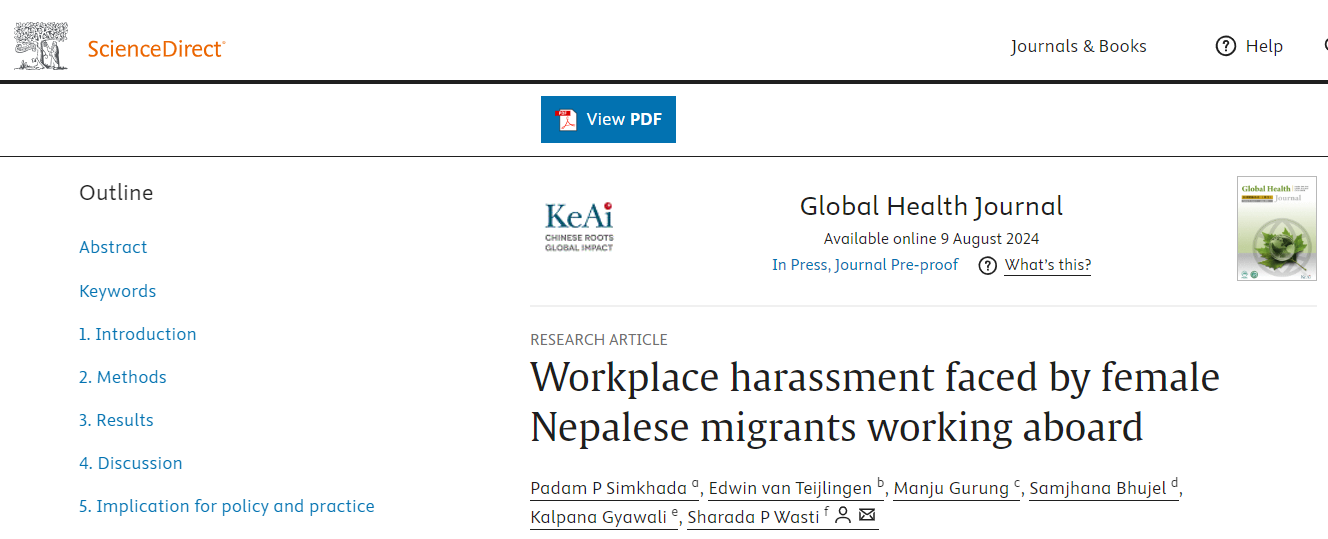
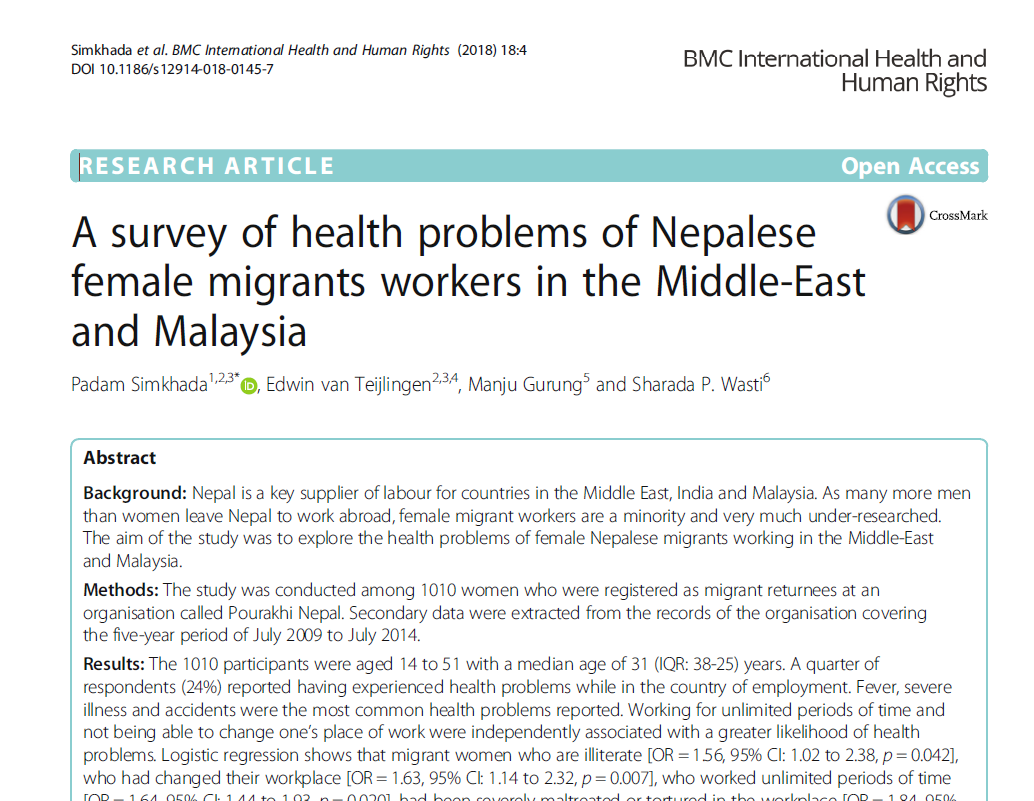
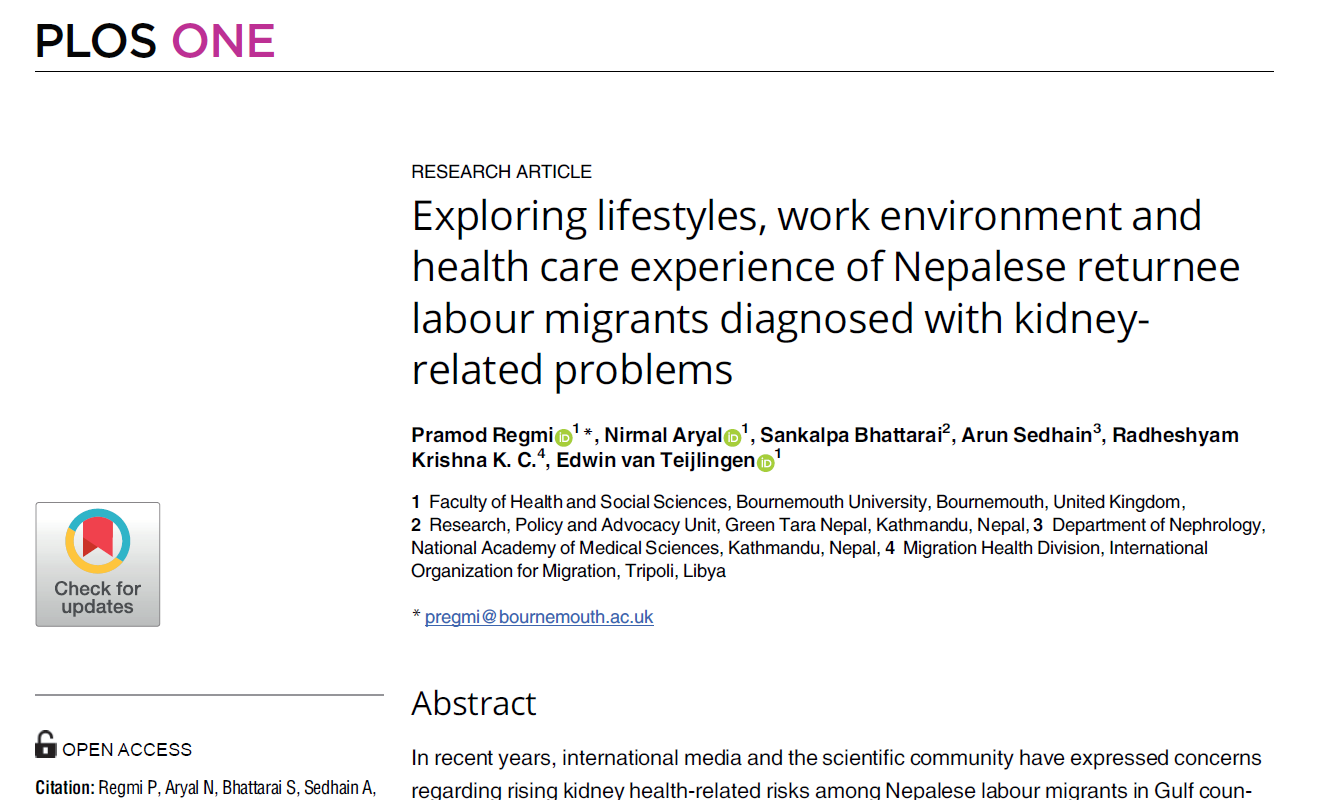
This BU team (including former and current PhD students) has published over thirty papers on a wide range of aspects related to migrant and their work, health and well-being [2-31].
References:
- Aryal, N., Regmi, P., Adhikari Dhakal, S., Sharma, S., van Teijlingen, E. (2024) Moral panic, fear, stigma, and discrimination against returnee migrants and Muslim populations in Nepal: analyses of COVID-19 media content, Journal of Media Studies, 38(2):71-98. http://111.68.103.26/journals/index.php/jms/article/viewFile/7846/4025
- Chaudhary MN, Lim V-C, Faller EM,Regmi P, Aryal N, Mohd Zain SN, Azman AS, Sahimin B. (2024) Assessing the basic knowledge and awareness of dengue fever prevention among migrant workers in Klang Valley, Malaysia. PLoS ONE 19(2): e0297527. https://doi.org/10.1371/journal.pone.0297527
- Khanal, S.P., van Teijlingen, E., Sharma, M., Acharya, J., Sharma, C., Kharel, S., Gaulee, U., Bhattarai, K., Pasa, R.B., Bohora, P. (2024) Risk Perception and Protective Health Measure Regarding COVID-19 among Nepali Labour Migrants’ Returnee from India. KMC Journal, 6(1): 313–330. https://doi.org/10.3126/kmcj.v6i1.62364
- Gyawali, K., Simkhada, P., van Teijlingen, E.R., Manandhar, S., Silwal, R.C. (2023). Sexual Harassment Among Nepali Non-Migrating Female Partners of International Labor Migrant Men. Journal of Health Promotion, 11(1): 22–31. https://www.nepjol.info/index.php/jhp/article/view/61198
- Chaudhary MN, Lim V-C, Sahimin N, Faller EM, Regmi P, Aryal N, Azman AS (2023) Assessing the knowledge of, attitudes towards, and practices in, food safety among migrant workers in Klang Valley, Malaysia, Travel Medicine and Infectious Disease doi: https://doi.org/10.1016/j.tmaid.2023.102620.
- Manandhar, S., Simkhada, P., Brown, P., van Teijlingen, E. (2023) Impact of Men’s Labour Migration on Non-migrating Spouses’ Health: A Systematic Review, Qeios, July 16, https://www.qeios.com/read/BX9WFC.2
- Adhikari, Y.R., Regmi, P.R., Devkota, B., van Teijlingen, E.R. (2022) Forgotten health and social care needs of left-behind families of Nepali migrant workers. Journal of Health Promotion, 10(1):1–4. https://doi.org/10.3126/jhp.v10i1.50976
- Khatri, R., van Teijlingen, E., Simkhada, P. (2022) The health and well-being of female labour migrants from: A qualitative study of stakeholder views, Europasian Journal of Medical Sciences (EJMS) accepted
- Aryal, N., Sedhain, A., Regmi, P.R., KC, R.K.,& van Teijlingen, E. (2021). Risk of kidney health among returnee Nepali migrant workers: A survey of nephrologists. Asian Journal of Medical Sciences, 12(12), 126–132.
- Aryal, N., Regmi, P.R., Sedhain, A., KC, R.K., Martinez Faller, E., Rijal, A., van Teijlingen, E. (2021) Kidney health risk of migrant workers: An issue we can no longer overlook. Health Prospect 20(1):15-7
- Khanal, S. P., van Teijlingen, E., Sharma, M. K., Acharya, J., & Sharma, S. (2021). Perceived threats towards COVID-19 pandemic among Nepali migrant workers returned from India. Journal of Health Promotion,9(01), 87–99.
- Aryal, N., Regmi, P.R., van Teijlingen, E., Trenoweth, S., Adhikary, P., Simkhada, P. (2020) The Impact of Spousal Migration on the Mental Health of Nepali Women: A Cross-Sectional Study, International Journal of Environmental Research & Public Health 17(4), 1292; https://doi.org/10.3390/ijerph17041292
- Adhikary, P., Aryal, N., Dhungana, R.R., KC, R.K., Regmi, P.R., Wickramage, K.P., Duigan, P., Inkochasan, M., Sharma, G.N., Devkota, B., van Teijlingen, E., Simkhada, P. (2020) Accessing health services in India: experiences of seasonal migrants returning to Nepal. BMC Health Services Research 20, 992. https://doi.org/10.1186/s12913-020-05846-7
- Regmi, P., Aryal, N., van Teijlingen, E., Adhikary, P. (2020) Nepali migrant workers and the need for pre-departure training on mental health: a qualitative study, Journal of Immigrant & Minority Health 22, 973–981.
- Adhikary, P. van Teijlingen, E. (2020) Support networks in the Middle East & Malaysia: A qualitative study of Nepali returnee migrants’ experiences, International Journal of Occupational Safety & Health (IJOSH), 9(2): 31-35.
- Simkhada, B., Sah, R.K., Mercel-Sanca, A., van Teijlingen, E., Bhurtyal, Y.M., Regmi, P. (2020) Health and Wellbeing of the Nepali population in the UK: Perceptions and experiences of health and social care utilisation, Journal of Immigrant & Minority Health 23(2): 298–307.
- OM [International Organization for Migration]. (2019) Health vulnerabilities of cross-border migrants from Nepal. Kathmandu: International Organization for Migration.
- Regmi, P., van Teijlingen, E., Mahato, P., Aryal, N., Jadhav, N., Simkhada, P., Syed Zahiruddin, Q., Gaidhane, A., (2019) The health of Nepali migrants in India: A qualitative study of lifestyles and risks, Journal of Environmental Research & Public Health 16(19), 3655; doi:10.3390/ijerph16193655.
- Dhungana, R.R., Aryal, N, Adhikary, P., KC, R., Regmi, P.R., Devkota, B., Sharma, G.N., Wickramage, K., van Teijlingen, E., Simkhada, P. (2019) Psychological morbidity in Nepali cross-border migrants in India: A community-based cross-sectional, BMC Public Health 19:1534 https://bmcpublichealth.biomedcentral.com/articles/10.1186/s12889-019-7881-z
- Aryal, N., Regmi, P.R., van Teijlingen, E., Simkhada, P., Mahato, P. (2019) Adolescents left behind by migrant workers: a call for community-based mental health interventions in Nepal. WHO South East Asia Journal of Public Health 8(1): 38-41.
- Aryal, N., Regmi, P.R., Faller, E.M,, van Teijlingen, E., Khoon, C.C., Pereira, A., Simkhada, P. (2019) ‘Sudden cardiac death and kidney health related problems among Nepali migrant workers in Malaysia’ Nepal Journal of Epidemiology 9(3): 755-758. https://www.nepjol.info/index.php/NJE/article/view/25805
- Adhikary P, van Teijlingen E., Keen S. (2019) Workplace accidents among Nepali male workers in the Middle East and Malaysia: A qualitative study, Journal of Immigrant & Minority Health 21(5): 1115–1122. https://link.springer.com/article/10.1007/s10903-018-0801-y
- Simkhada, P.P., van Teijlingen, E.R., Gurung, M., Wasti, S. (2018) A survey of health problems of Nepalese female migrants workers in the Middle-East & Malaysia, BMC International Health & Human Rights 18(4): 1-7. http://rdcu.be/E3Ro
- Adhikary P, Sheppard, Z., Keen S., van Teijlingen E. (2018) Health and well-being of Nepalese migrant workers abroad, International Journal of Migration, Health and Social Care 14(1): 96-105. https://doi.org/10.1108/IJMHSC-12-2015-0052
- Adhikary, P., Sheppard, Z., Keen, S., van Teijlingen, E. (2017) Risky work: Accidents among Nepalese migrant workers in Malaysia, Qatar and Saudi, Health Prospect 16(2): 3-10.
- Simkhada, P.P., Regmi, P.R., van Teijlingen, E., Aryal, N. (2017) Identifying the gaps in Nepalese migrant workers’ health and well-being: A review of the literature, Journal of Travel Medicine 24 (4): 1-9.
- Aryal, N., Regmi, P.R., van Teijlingen, E., Simkhada, P., Adhikary, P., Bhatta, Y.K.D., Mann, S. (2016) Injury and Mortality in Young Nepalese Migrant Workers: A Call for Public Health Action. Asian-Pacific Journal of Public Health 28(8): 703-705.
- Sapkota, T., Simkhada, P., van Teijlingen, E. (2014) Nepalese health workers’ migration to United Kingdom: A qualitative study. Health Science Journal 8(1):57-74.
- Adhikary P, Keen S and van Teijlingen E (2011). Health Issues among Nepalese migrant workers in the Middle East. Health Science Journal.5(3):169-i75 DOI: 2-s2.0-79960420128.
- van Teijlingen E, Simkhada, P., Adhikary, P. (2009) Alcohol use among the Nepalese in the UK BMJ Rapid Response: www.bmj.com/cgi/eletters/339/oct20_1/b4028#223451
- Adhikary, P., Simkhada, P.P., van Teijlingen E., Raja, AE. (2008) Health & Lifestyle of Nepalese Migrants in the UK, BMC International Health & Human Rights 8(6). Web address: www.biomedcentral.com/1472-698X/8/6
BU graduate’s paper read 600 times
Today ResearchGate informed us that the academic paper `Whose Shoes?` Can an educational board game engage Ugandan men in pregnancy and childbirth? published in 2018 by former Ph.D. student Dr. Alice Ladur has been read 600 times. The paper appeared in the Open Access journal BMC Pregnancy & Childbirth. Alice was based in the Centre for Midwifery and Women Health (CMWH) and supervised by professors Vanora Hundley and Edwin van Teijlingen.
Men can play a significant role in reducing maternal morbidity and mortality in low-income countries such as Uganda. Maternal health programmes are increasingly looking for innovative interventions to engage men to help improve health outcomes for pregnant women. Educational board games offer a unique approach to present health information where learning is reinforced through group discussions supporting peer-to-peer interactions. Alice conducted interviews with men from Uganda currently living in the UK on their views of an educational board game. Men were asked their perceptions on whether a board game was relevant as a health promotional tool in maternal health prior to implementation in Uganda.
The results of the pilot study were promising; participants reported the use of visual aids and messages were easy to understand and enhanced change in perspective. Men in this study were receptive on the use of board games as a health promotional tool and recommended its use in rural Uganda. The paper concluded that key messages from the focus group appeared to be that the board game is more than acceptable to fathers and that it needs to be adapted to the local context to make it suitable for men in rural Uganda
Prof. Edwin van Teijlingen
Reference:
- Ladur, A.N., van Teijlingen, E. & Hundley, V. `Whose Shoes?` Can an educational board game engage Ugandan men in pregnancy and childbirth?. BMC Pregnancy Childbirth 18, 81 (2018). https://doi.org/10.1186/s12884-018-1704-6
BU academic listed on Research.com
Research.com, a leading academic platform for researchers, has just released its 2024 Edition of the Ranking of Best Scientists in the field of Social Sciences and Humanities. BU is listed as 509th globally.
Prof. Edwin van Teijlingen, in the Centre for Midwifery & Women’s Health (CMWH), is the BU social scientist listed in this year’s ranking. The full UK ranking is available here: research.com/scientists-rankings/social-sciences-and-humanities/gb and the full world ranking is available here: research.com/scientists-rankings/social-sciences-and-humanities
Congratulations to Social Workers Drs. Oliver & Harvey
Congratulations to Dr. Orlanda Harvey and Dr. Louise Oliver on the publication of their latest article ‘The use of poetry in form of haikus as a tool for critical reflection’ [1]. This latest academic publication has been published in Social Work Education The International Journal. This interesting article focuses on critical reflection is an integral part of social work education and practice, yet it is widely understood to be hard to learn, teach, and assess. The authors introduced the use of poetry in the form of haikus to three different qualifying social work student groups to trial a creative way of getting students to engage in critical reflection. Ninety-six students took part in the reflection activity and 23 of the students agreed to take part in the research element, which used a mixed-methods approach to explore the value of haikus in critical reflection. Following the thematic network analysis process, we identified one global theme: that haikus were a useful tool for developing critical reflection. There were three organizing themes identified: the need to create a safe learning environment to support engagement; that taking part provoked reactions; and the activity held important elements that aided the development of critical reflection.
Well done !
Prof. Edwin van Teijlingen
Faculty of Health & Social Sciences
Questioning AI
Today the Open Access journal Health Prospect published our paper ‘ChatGPT: Challenges to editors and examiners’ [1]. The past year saw an exponential growth in the use of machine learning using AI (artificial intelligence) and particularly Generative AI (GenAI) such as ChatGPT. The latter has seen a spectacular rise in the public debate and in the mass media. Those not involved in the development of AI were amazed by the capabilities of ChatGPT to produce text equal to the average human produced texts. There is no doubt that the adoption of AI is advancing rapidly.
To test the ability of ChatGPT in its free version, we posed simple questions about migrant workers in Nepal, a topic we have published about widely. After reading the short essay produced by ChatGPT on that question, we repeated the question whilst asking for references to be included. We were surprised by the quality of this very general piece of work. In many UK universities, including at Bournemouth University, there is a debate about students’ use of ChatGPT. We all recognise how difficult it is to distinguish between work produced by the average student and that produced by AI. There is a similar problem for editors and reviewers of academic journals. It really boils down to the question: ‘How can you be certain the submitted manuscript came from a human source?’ However, we feel the progress of AI is not all doom and gloom. The paper also outlines some of the key problems around AI and academic publishing, but also opportunities arising from the use of AI in this area.
The authors of this paper are based at Bournemouth University, the University of Strathclyde, and the University of Huddersfield.
Reference:
- Simkhada, B., van Teijlingen, A., Simkhada, P., & van Teijlingen, E. R. (2024). ChatGPT: Challenges to editors and examiners. Health Prospect, 23(1), 21–24. https://doi.org/10.3126/hprospect.v23i1.60819
Paper with 160,000 reads
Occasionally we have the pleasure to announce that one of our papers has been read 300 times or 2,000 times or has been cited 40 times. However, some papers are in a different category. Today ResearchGate informed us that our 2002 paper ‘The Importance of Pilot Studies’ [1] has been read 160,000 times. This paper was written over two decades ago and submitted to the Nursing Standard when we were both still at the University of Aberdeen in Scotland.
Profs. Vanora Hundley & Edwin van Teijlingen
Centre for Midwifery & Women’s Health (CMWH)
Reference:
- van Teijlingen, E, Hundley, V (2002) The Importance of Pilot Studies, Nursing Standard, 16(40):33-6
BU Professor has been invited to a series of plenary and invited lectures.
BU Professor Zulfiqar A Khan has been invited to the 12th International Conference KOD 2024, Machine and Industrial Design in Mechanical Engineering to deliver a plenary talk to disseminate and discuss, the latest work on numerical simulation and modelling in interacting machines and systems conducted in NanoCorr, Energy and Modelling (NCEM) Research Group led by Professor Khan. This talk is also aimed to provide an overview of Professor Khan’s work in terms of Nanoengineering & Energy Systems (NES®).

System and Design – © Z Khan 2024.
The overall relation of interacting systems, durability and reliability will be discussed by Professor Khan in the following invited lecture, entitled “an overview of research: numerical modelling and simulation for predictive condition monitoring,” invited by Professor Aleksandar Marinković, Head of Machine Design Department, Faculty of Mechanical Engineering University of Belgrade, and Prof. DR Vladimir Popović, Dean of Faculty of Mechanical Engineering, University of Belgrade, the Republic of Serbia. Professor Popović has extended this invitation to include Professor Khan’s meetings with Faculty Management and Chairs of Laboratories for exploring to pursue mutual interests’ initiatives and common goals in Nanoengineering & Energy Systems (NES®).

Interacting System © Z A Khan 2024.

Contact mechanics and nanomaterials – IC © Z Khan 2024.
Professor Khan will then deliver an invited lecture in Mathematical Institute of the Serbian Academy of Sciences and Arts, National Institute of the Republic of Serbia to discuss the latest developed mathematical models, Khan-Nazir I, Khan-Nazir II and Khan-Nazir III, these are BU’s ground breaking and globally leading contributions to knowledge in terms of developing impactful design solutions to aid safety, cost savings, energy efficiency and reliability applied in complex interacting and energy systems. These novel models are linked to recently awarded GB, US, PR China, Singapore, Hong Kong (notice of allowance) and EU/EPO (pending) patents in mechanistic, nanofluidics and energy systems developed at BU by NCEM team led by Professor Khan. This lecture is invited by DR Ivana Atanasovska, seminar leader and Stepa Paunović, secretary of the seminar. This lecture will be live streamed on Tuesday, 28 May 2024, you are invited to join.

Interacting System 2 © Z Khan 2024.
This will be followed by invited meetings with key researchers and academics in the Institute of General and Physical Chemistry, Studentski try 12/V, Belgrade to explore collaborative initiatives in Clean Energy Systems.
If you are interested in any of the above topics, events and would like to know more then please get in touch through this link.
Research reaching non-academic audiences
Most grant awarding bodies expect a well thought through communications and dissemination plan. As Research Culture Champion in the Faculty of Health & Social Sciences (FHSS) I thought it might be useful to outline some of the kind of dissemination processes we have employed in the past. Sometimes funding agencies’ requests for a communications and dissemination plan are framed in terms of knowledge transfer and engagement with end users. In a typical research communication plans, apart from excellent scientific publications, we outline our experience of publishing research finding in practitioners journals, online sites, and pressure groups.
Depending on the research topic, population and country we may include the production of a short research summary in lay language [see picture Research Brief Migration & Health Jan 2019] and/or organising a dissemination meeting to national stakeholders. In addition we may highlight our experience in writing press releases and some of the subsequent media interest/coverage we have generated.
When writing articles for practitioners’ journals remember: First, do not to publish in practitioners’ journals before your scientific papers in academic journals, as some high-quality journals will not accept papers with findings that have been published/publicized elsewhere. Secondly, aim your paper at the target professional audience and stress the practical implications of your work. For example, BU Visiting Faculty Dr. Emma Pitchforth and I wrote an article from our NIHR-funded study on the role and place of community hospitals in the NHS in HRJ, a professional journal for health service managers [1], this had a very different slant than papers our team in the Centre for Midwifery & Women’s Health (CMWH) we has written for, for example, practical midwifery journals [2-8]. Of course, articles in practitioners’ journals don’t have to be published in English [9-11]. 
Apart from practitioners’ journals there is growing array of online sites interesting in publishing research findings to a wider audience. The first one that comes to mind is The Conversation; for example, some CMWH contributions on aspects of midwifery and maternity care [12-13], the latter article on Nepal was duplicated in several Indian online newspapers [14-16]. There are plenty of other online outlets available, such as research institutions’ websites [17-19], as well as websites of pressure groups. When writing press releases it is useful to put the actual press release online, for example one on NIHR-funded drowning prevention project in Bangladesh, or write a blog about the press event, for example one in Nepal, all this adds to your overall dissemination plan (and profile).
Prof. Edwin van Teijlingen
References:
- Pitchforth, E., van Teijlingen, E., Nolte, E. (2017) Community hospitals: a traditional solution to help today’s NHS? HSJ (11 July) hsj.co.uk/community-services/community-hospitals-a-traditional-solution-to-help-todays-nhs/7020019.article#/scientific-summary
- Way, S, Hundley, V., van Teijlingen, E, et al. (2016) Dr Know. Midwives 19: 66-7.
- Ireland, J., van Teijlingen, E. (2013) Normal birth: social-medical model, The Practising Midwife 16(11): 17-20.
- van Teijlingen E., Ireland, J.C. (2014) Community midwives on the go. Midwives 1: 54-55.
- Hundley, V., Duff, E., Dewberry, J., Luce, A., van Teijlingen, E. (2014) Fear in childbirth: are the media responsible? MIDIRS Midwifery Digest 24(4): 444-447.
- van Teijlingen E., Pitchforth, E (2011) One-stop shop, Midwives (The official magazine of the Royal College of Midwives) issue 1: 30-32.
- Pitchforth, E, van Teijlingen E, Ireland, J. (2007) Focusing the group, RCM Midwives Journal 10(2): 78-80.
- Eboh, W., Pitchforth, E., van Teijlingen E (2007) Lost words: research via translation, RCM Midwives Journal 10(8): 374-377.
- van Teijlingen, E., De Vries, R., Luce, A., Hundley, V. (2017) Meer bemoeien met media (In Dutch: more engagement with media). Tijdschrift voor Verloskundigen (in Dutch: J. for Midwives), 41 (6):28-29.
- Grylka-Baeschlin, S., van Teijlingen, E., Gross, M.M. (2017) Postpartale Lebensqualität beurteilen (in German: Assessing postnatal well-being), ch (April): 20-23.
- Nieuwenhuijze, M., van Teijlingen, E., Mackenzie-Bryers, H. (2019) In risiko’s denken is niet zonder risiko (In Dutch: Thinking in terms of risk, it not with its risk). Tijdschrift voor Verloskundigen (in Dutch: Journal for Midwives), 43 (4): 6-9.

- Hundley, V., van Teijlingen E (2017) Why UK midwives stopped the campaign for ‘normal birth’, The Conversation [31 Aug.] https://theconversation.com/why-uk-midwives-stopped-the-campaign-for-normal-birth-82779 Re-printed in UK newspaper The Independent http://www.independent.co.uk/life-style/health-and-families/healthy-living/why-uk-midwives-stopped-the-campaign-for-normal-birth-a7925496.html
- Simkhada, B., van Teijlingen E (2018) Why suicide rates among pregnant women in Nepal are rising , The Conversation [8 Mar.] https://theconversation.com/why-suicide-rates-among-pregnant-women-in-nepal-are-rising-86252
- Simkhada, B., van Teijlingen E (2018) ‘A project is training midwives in Nepal to stem rising suicides of pregnant women’ Scroll.in
- Simkhada, B., van Teijlingen E (2018) Why Suicide Rates Among Pregnant Women in Nepal Are on the Rise The Wire
- Simkhada, B., van Teijlingen E (2018) Why suicide rates among pregnant women in Nepal are rising MedicalXpress (18 March) .
- Pitchforth E., van Teijlingen E, Nolte E. (2017) Community Hospitals: Traditional Solution to Help Today’s NHS? RAND website https://www.rand.org/blog/2017/07/community-hospitals-a-traditional-solution-to-help.html
- Sheppard Z, Hundley V, van Teijlingen E, Thompson P. (2014) Collaborative ‘science of science’ needed to ensure research & education make a difference to practice. LSE Impact Blog http://blogs.lse.ac.uk/impactofsocialsciences/2014/12/15/the-impact-agenda-in-healthcare/
- van Teijlingen E, Simkhada P (2016) Publishing in journals of the NepJOL family. INASP website http://blog.inasp.info/publishing-journals-nepjol-family/
- Tamang, P., Mahato, P., van Teijlingen E, Simkhada, P. (2020) Pregnancy & COVID-19: Lessons so far, Healthy Newborn Network [14 April] healthynewbornnetwork.org/blog/pregnancy-and-covid-19-lessons-so-far/
- van Teijlingen, E. (1992) ‘The Organisation of Maternity Care in the Netherlands’, The Association for Community-based Maternity Care Newsletter, No.5:2-4.
Fifteen years at BU
Fifteen years ago I started as a professor in the Faculty of Health & Social Sciences. I have had three different job titles without moving jobs, starting in 2009 with ‘Professor of Maternal & Perinatal Health Research’, which, after a few years, changed to ‘Professor of Reproductive Health Research,’ and again then a few years later dropping the ‘Research’ to my current title of ‘Professor of Reproductive Health’. During these 15 years there have been major changes especially in terms of research in our Faculty. There has been a growth in quantity as well as quality as reflected in our REF scores in 2014 and 2021! We also have a much higher proportion of staff with a PhD then when I started. Currently, I am the Research Culture Champion for our Faculty, tasked with a small team to strengthen our research culture and profile even further.
At a personal level, I have supervised 17 PhD students to completion at BU in the past 15 years, plus an additional nine students registered elsewhere. The latter were mainly PhD students from the University of Aberdeen whom I continued to supervise. Interestingly, two of these Aberdeen PhD students ended up working for BU. I counted 42 PhD viva as external examiner in this period as well as five as internal BU examiner. Some of my experiences at BU were captured last year when I was interviewed by the editors of a sociology journal based in Nepal. [1]
Prof. Edwin van Teijlingen
CMWH (Centre for Midwifery & Women’s Health)
References:
- Subedi, M., & Khattri, M. B. (2023). Interview with Professor Edwin van Teijlingen. Dhaulagiri Journal of Sociology and Anthropology, 17(01), 79–88. https://doi.org/10.3126/dsaj.v17i01.61149


SPROUT Returns: Designing Sustainability in Research Practice – Wednesday 20 May 12-2pm
Innovative Approaches to Doctoral Supervision: Selected Case Studies
3C Event: Research Culture, Community & Canapés-Tuesday 19 May 1-2pm
New chapters published in maternity book on risk
The British Academy European Research Council Grant Support Sessions
Grant Writing Workshops: Master the Art of the Winning Proposal
Apply now to take part in the 2026 ESRC Festival of Social Science
Reminder: Register for the ESRC Festival of Social Science 2026 Information Session

ECR Funding Open Call: Research Culture & Community Grant – Apply now

ECR Funding Open Call: Research Culture & Community Grant – Application Deadline Friday 12 December
MSCA Postdoctoral Fellowships 2025 Call
ERC Advanced Grant 2025 Webinar
Update on UKRO services
European research project exploring use of ‘virtual twins’ to better manage metabolic associated fatty liver disease