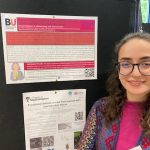
On 19th May 2025 at the Wessex Women and Girls Event at the Southampton Science Park, BU’s Centre for Midwifery and Women’s Health showcased its research and innovation in women’s health.
Professor Vanora Hundley and Dr. Dominique Mylod presented their ongoing development of an Early Labour app as a case study for the Maternity and Infant Health Equity Research Collaboration with Sheffield Hallam University. Professor Carol Clark’s presentation focussed on pelvic floor health and the cost of urinary and faecal incontinence to women’s health and the planet. Dr. Chloe Casey honoured her mother-in-law’s memory with her PechaKucha presentation on using creative methodologies to engage women in recovery from alcohol.
In addition, Dr. Malika Felton and MRes students Susara Blunden and Maryam Malekian displayed posters summarising their research into the impact of exercise on women’s physiology and health, improving diagnositic and treatment pathways for women with endometriosis and exploring the impact of professional knowledge and skills on breastfeeding support respectively.
The event provided a valuable platform for BU researchers to connect with regional partners, contribute to the growing Wessex Women and Girls research network, and play a key role in shaping future initiatives aimed at closing gaps in women’s health. The CMWH’s invovement reinforces BU’s role as a leading voice in this important area of health innovation.
Tagged / CMWH


PhD supervision is good for you
Some people in academia (and many outside it) don’t appreciate the importance of PhD supervision . An academic supervising PhD students is not merely for the educational purposes, or in other words, for the benefits of the postgraduate student. The value of postgraduate supervision lies in pushing the boundaries of knowledge, about testing new ideas, new approaches or even new methods.
Interestingly, enough it means that PhD supervision for an academic is also about developing their own ideas, expanding one’s CV, and developing one’s career. Whilst for the university it is also for the wider benefit of research for the wider society. The latter means that PhD students help improve the REF (Research Excellence Framework) scores for a university, through metrics such as number and proportion of PhD completions, but also through papers based on PhD research co-authored with staff. It always amazes me how some outsider regard PhD supervision as simply more of the same, i.e. not that different from supervising an undergraduate student.
Looking at my ow CV, some of my best papers have been co-written with PhD students, including my most cited paper on SCOPUS [1]. Moreover, as the graph of my h-index [checked SCOPUS for May 19th 2025] shows four of my top eight highest cited papers were co-authored with postgraduate students [1-4]. Papers that would not have been written without the postgraduate student conducting knowledge-advancing research! 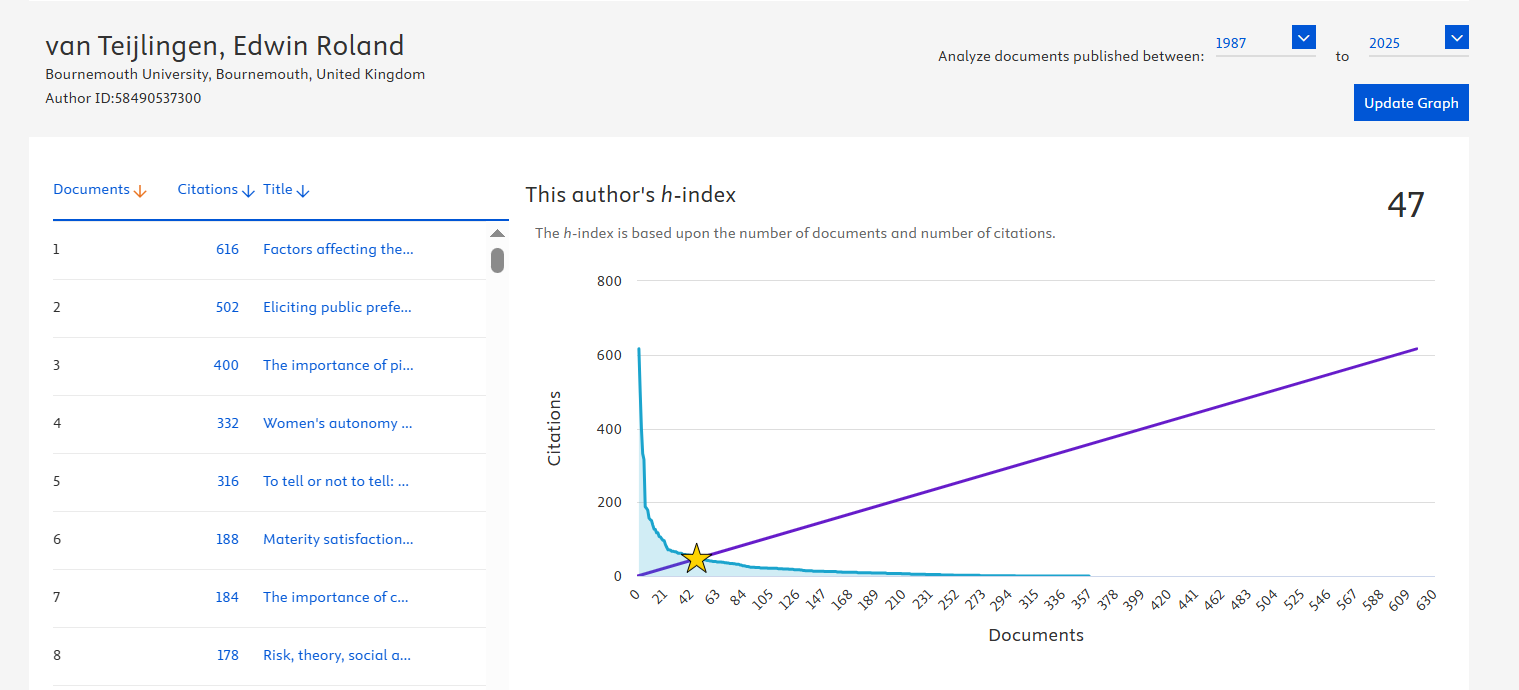
Not surprisingly, three of the four former PhD students who co-authored these highly-cited papers are now in academic positions across the UK (the fourth one has retired). These four highlighted papers are not just looking good on my CV, they are also highly ranked within their respective journals. The first paper [1] is the 28th most cited paper in the Journal of Advanced Nursing, an impressive 28th position out of 12,762 articles ever published by this international journal. Similarly, the paper ‘Women’s autonomy in decision-making for health care: Demographic study in Nepal’ [2] is the 10th most cited paper in Reproductive Health, whilst ‘ To tell or not to tell: Barriers and facilitators in family communication about genetic risk’ [3] is the 20th most article in Clinical Genetics. Last, but not least, ‘Risk, Theory, Social & Medical Models: critical analysis of the concept of risk in maternity care’ [4] is the 17th most cited article (out of 3,910) in the international journal Midwifery.
Prof. Edwin van Teijlingen
Centre for Midwifery & Women’s Health
References:
- Simkhada, B., van Teijlingen E., Porter, M., Simkhada, P. (2008) Factors affecting the utilisation of antenatal care in developing countries: a systematic review of the literature, Journal of Advanced Nursing 61(3): 244-260.
- Acharya, D.R., Bell, J., Simkhada, P., van Teijlingen, E, Regmi, P.R. (2010) Women’s autonomy in decision-making for health care: Demographic study in Nepal. Reproductive Health 9(15) reproductive-health-journal.com/content/pdf/1742-4755-7-15.pdf
- Forrest, K., Simpson, S., Wilson, B.J., van Teijlingen E, McKee L, Haites, N., Matthews E. (2003) To tell or not to tell: Barriers and facilitators in family communication about genetic risk,Clinical Genetics, 64: 317-26.
- MacKenzie Bryers H., van Teijlingen, E. (2010) Risk, Theory, Social & Medical Models: critical analysis of the concept of risk in maternity care, Midwifery 26(5): 488-496.
NIHR Global Health Research Academy 2025
 The 2025 NIHR Global Health Research Academy Member event will take place on Tuesday 13th and Wednesday 14th May. The NIHR recognizes that career progression is a common challenge for early-career researchers. This year the event’s theme is ‘Empowering Early-Career Researchers: Navigating Careers in Global Health’. This two-day online event aims to equip participants from across the globe with the skills and knowledge to navigate and build a career in global health research.
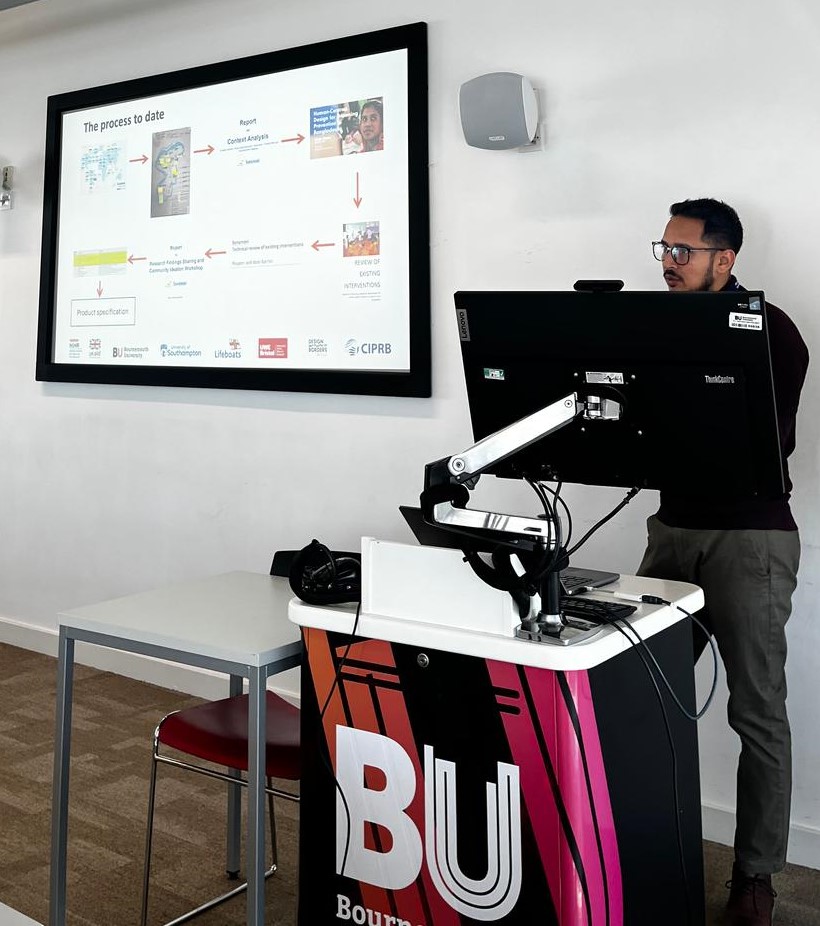 Bournemouth University staff and students participating in the NIHR Research and Innovation for Global Health Transformation Call 4: Drowning Prevention for newly mobile infants under 2 years in Bangladesh programme have been invited. This NIHR-funded project is called Sonamoni and BU’s student Md. Shafkat Hossain, whose PhD assessed the work in Bangladesh, is one the participants, as is our colleague from Bangladesh Notan Dutta. In the afternoon BU’s Edwin van Teijlingen who will be chairing a session on ‘Funding & Grant Writing’.
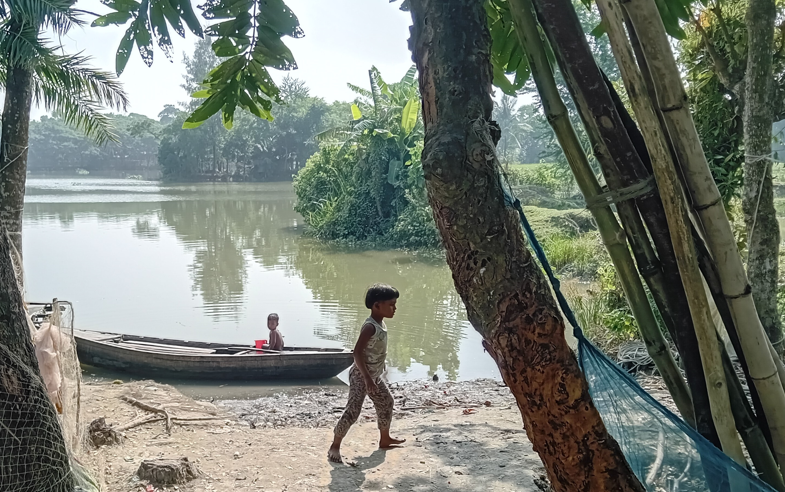 Sonamoni is being coordinated by Bournemouth University in collaboration with the Centre for Injury Prevention and Research (CIPRB) in Bangladesh as well as the University of the West of England, Bristol, the University of Southampton, Design Without Borders (DWB) in Uganda, and the Royal National Lifeboat Institution (RNLI). This project, with Prof. Dr. Aminur Rahman (at CIPRB) as Bangladesh lead, includes the above mentioned BU-based PhD project. The interdisciplinary team at Bournemouth University covers three faculties through: Dr. Mavis Bengtsson, Dr. Kyungjoo Cha, Dr. Mehdi Chowdhury, Dr. Yong Hun Lim, Mr. John Powell, and Prof. Edwin van Teijlingen.
Bournemouth University eHealth paper cited 40 times!
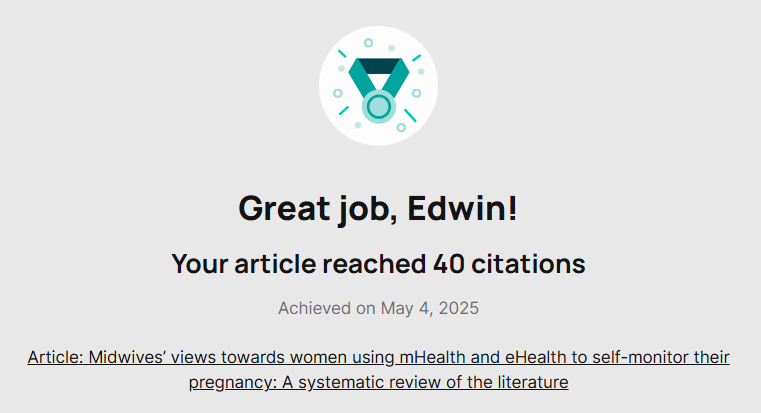
Yesterday, ResearchGate alerted us that the paper ‘Midwives’ views towards women using mHealth and eHealth to self-monitor their pregnancy: A systematic review of the literature’ [1] had reached 40 citations! This paper has four Bournemouth University (BU) authors and one author, Prof. Gary Smith, who was FHSS Visiting Professor at the time of publication. This literature review, published in 2020, sought midwives’ perspectives on women self-monitoring their pregnancy using eHealth and mHealth.
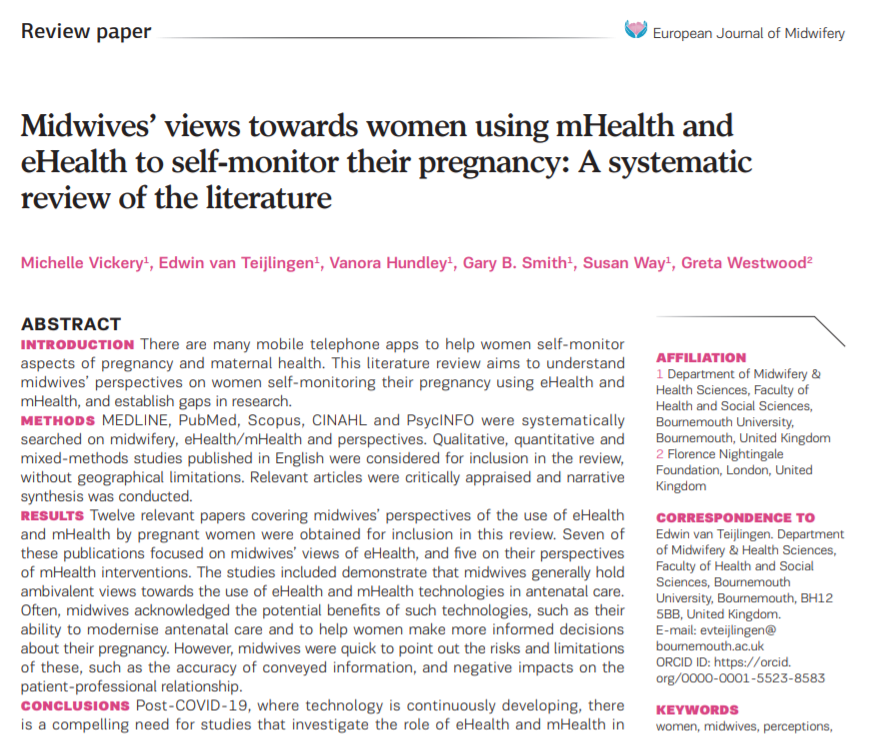 The paper fund that midwives generally held ambivalent views towards the use of eHealth and mHealth technologies in antenatal care. They acknowledged the potential benefits of such technologies, such as their ability to modernise antenatal care and to help women make more informed decisions about their pregnancy. However, midwives were quick to point out the risks and limitations of these, such as the accuracy of conveyed information, and negative impacts on the patient-professional relationship.
 This paper will contribute to our recently awarded NIHR funding to tackle inequalities in UK maternal healthcare as part of the NIHR Challenge Call: Maternity Disparities Consortium. Profs Vanora Hundley and Edwin van Teijlingen from the Centre for Midwifery and Women’s Health, and Prof. Huseyin Dogan and Dr. Deniz Cetinkaya from the Department of Computing and Informatics collaborate in MIHERC (Maternal & Infant Health Equity Research Centre). MIHERC is led by Prof. Hora Soltani at Sheffield Hallam University, and it is a partnership with Bournemouth University, the City of Doncaster Council and South Yorkshire Digital Health Hub as well as several charities and voluntary organisations. Prof. Dogan has recently been appointed the co-lead for the “Digital, data, monitoring, evaluation and implementation science” work stream of the NIHR Maternity Disparities consortium.
Reference:
- Vickery, M., van Teijlingen, E., Hundley, V., Smith, G. B., Way, S., Westwood, G. (2020). Midwives’ views towards women using mHealth and eHealth to self-monitor their pregnancy: A systematic review of the literature. European Journal of Midwifery, 4(Sept.), 1-11. https://doi.org/10.18332/ejm/126625
Nepal Family Cohort Study meeting in Bournemouth
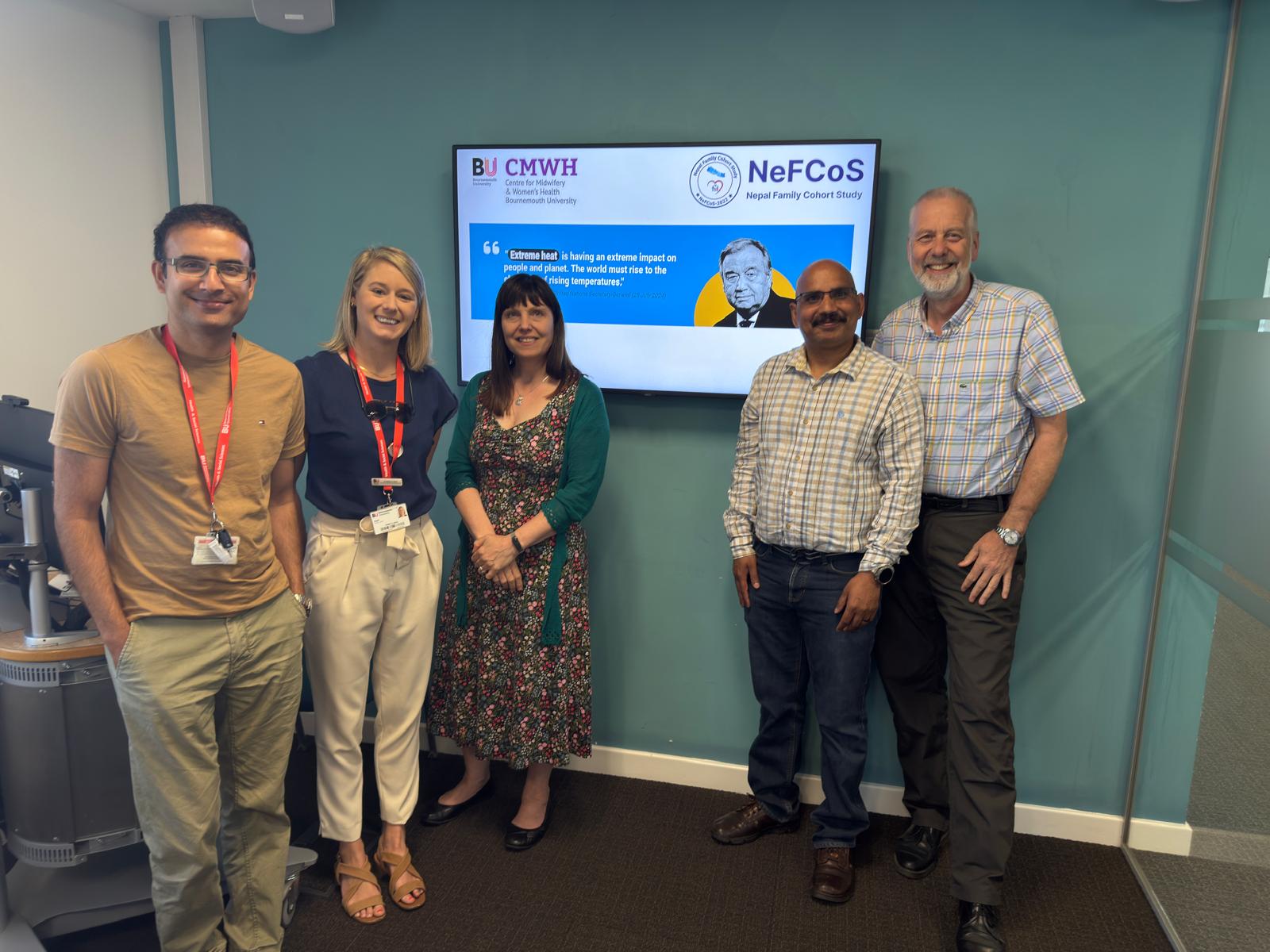 Prof. Om Kurmi who leads the Nepal Family Cohort Study (NeFCoS) joined the Bournemouth University (BU) team today for a research planning meeting in Bournemouth today. Dr. Om Kurmi, Associate Professor Research in the Centre for Healthcare and Communities at Coventry University. The BU team comprises Dr. Pramod Regmi (Principal Academic-International Health), Prof. Carol Clark (Professor in Physiotherapy), Prof. Edwin van Teijlingen (Professor of Reproductive Health), Dr. Rebecca Neal (Principal Lecturer in Exercise Physiology) and Dr. Vanora Hundley (Professor of Midwifery).
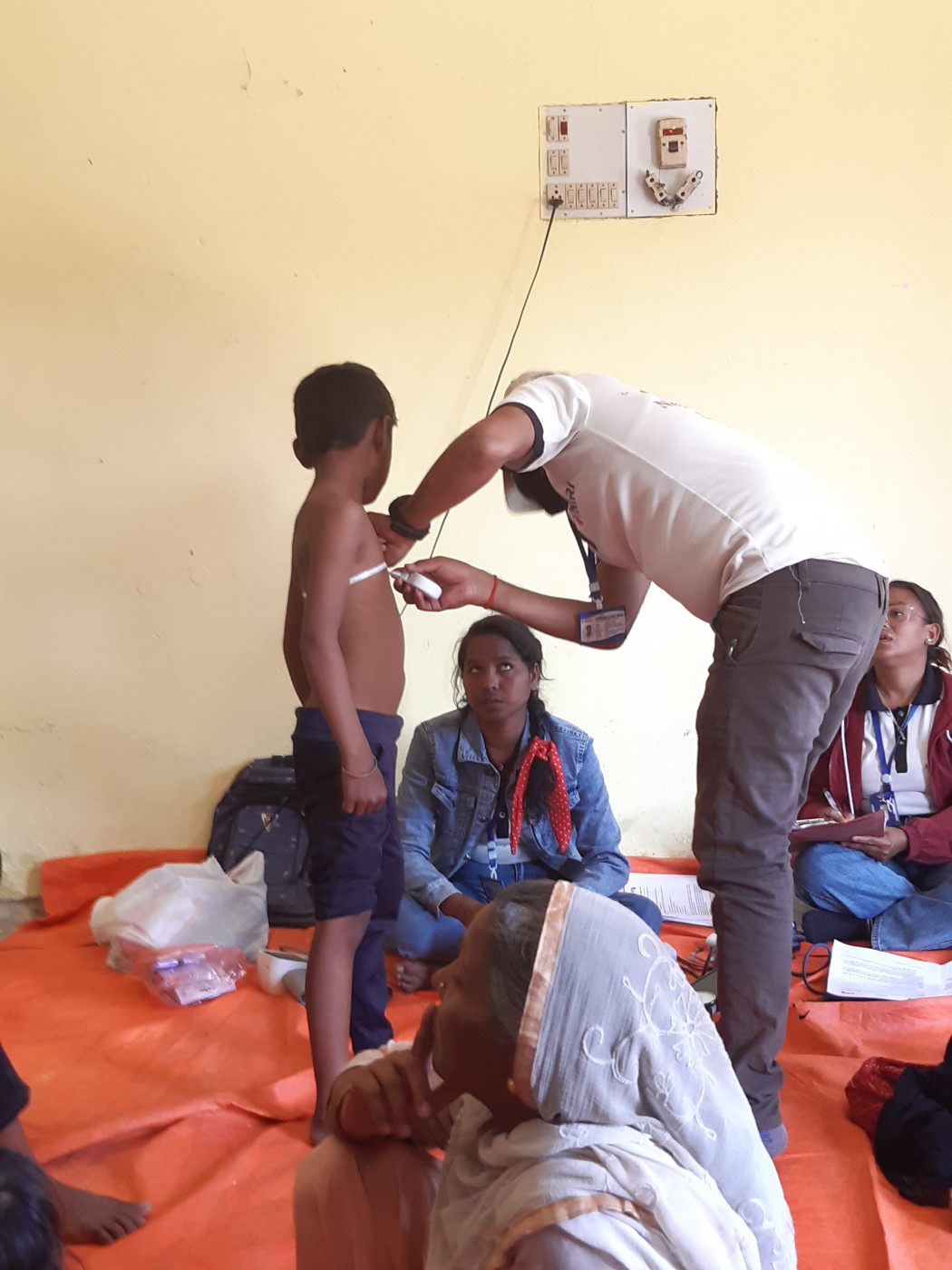
The Nepal Family Cohort Study (NeFCoS) is a multidisciplinary cohort study into the prevalence, incidence, and determinants of various diseases from childhood to adulthood in children and their parents [1]. NeFCoS has just started to collect date for the first round of follow-up.
 Today’s meeting was organised by Dr. Neal and supported by BU’s QR funds.
Reference:
- Kurmi, O.P., Chaudhary, N., Delanerolle, G., Bolton, C.E., Pant, P.R., Regmi, P., Gautam, S., Satia, I., Simkhada, P., Kyrou, I., Sigdel, T.K., Hundley, V., Dali, P.R., Lokke, A., Hubert Lam, K.B., Bennett, D., Custovic, A., van Teijlingen, E., Gill, P. Randeva, H., O’Byrne, P.M., and Nepal Family Cohort Collaborators Group, Nepal Family Cohort Study: A Study Protocol, BMJ Open 14:e088896. doi:10.1136/ bmjopen-2024-088896
Plenary talk by Dr Regmi on Hidden Health Burden of Nepalese Migrants
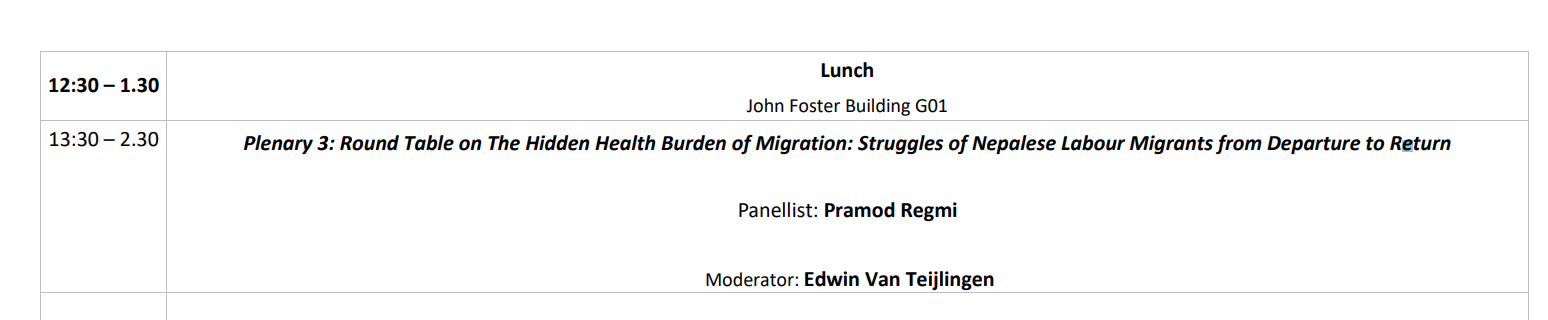
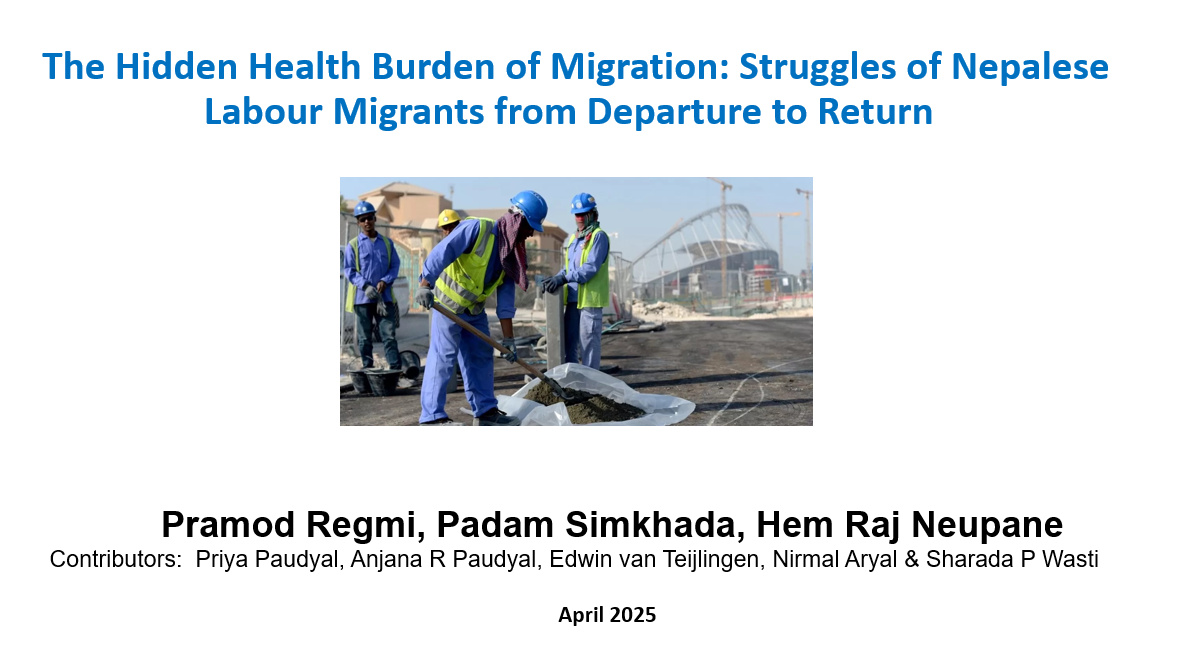 Last week, BU academic Dr. Pramod Regmi delivered a plenary talk on the struggles faced by Nepalese migrant workers from departure to return at the 22nd Britain-Nepal Academic Council (BNAC) Conference, held on 24–25 April in Liverpool. The session included two other panelists, including Prof. Padam Simkhada from the University of Huddersfield, he is also a BU Visiting Professor.
Dr. Regmi’s talk highlighted the health burden experienced by Nepali migrants throughout their migration journey. Labour migration from Nepal poses significant risks at all stages. Many aspiring migrants lack access to accurate information and support, while those from lower socioeconomic backgrounds face high documentation costs and illegal recruitment fees, affecting their mental health and placing strain on their families. Abroad, migrants often suffer exploitation, unsafe working conditions, overcrowded and unsanitary housing, limited access to healthcare, and high medical expenses. Female migrants face additional risks such as sexual violence, unintended pregnancy, exploitation, and unemployment. Upon return, especially for those who experienced abuse or trafficking, reintegration is hindered by social stigma and a lack of support services. Nepal’s weak economy further limits their ability to utilise skills gained abroad.
This presentation was informed by a long history of BU research into the health and well-being of Nepalese migrant workers, led by Dr. Regmi, Dr. Nirmal Aryal, Dr. Orlanda Harvey, Prof. Edwin van Teijlingen, and current PhD students Yagya Adhikari and Anjana Regmi Paudyal in the Faculty of Health & Social Sciences.
A round table discussion after the session focused on four questions:
- How can we better inform migrants during the pre-migration stage?
- How can we reduce the health vulnerabilities of Nepali labour migrant workers abroad?
- What are the barriers to, and opportunities for, reintegration when migrants return?
- How can we facilitate increased research collaboration in destination countries engaging local academic institutions?
Bournemouth University also contributed to two other presentations related to a project studying the impact of federalisation on Nepal’s health system. This study was funded by the UK Health Systems Research Initiative to examine the consequences of Nepal’s transition from a centralised political system to a federal structure in 2015. These two papers were presented by BU collaborators Prof. Julie Balen (Canterbury Christ Church University) and Ms. Amshu Dhakal (Manmohan Memorial Institute of Health Sciences, Kathmandu, Nepal).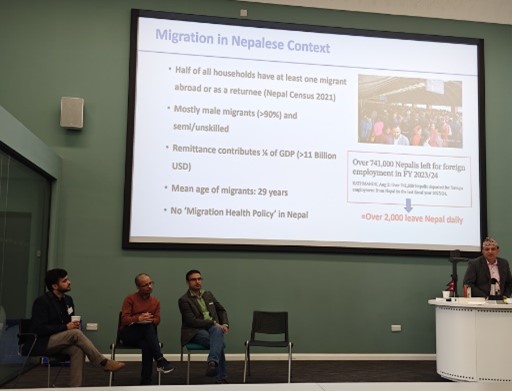
BU’s Dr. Regmi, Prof Edwin van Teijlingen and Dr Nirmal collectively have over 40 publications on Nepalese migrants’ health and well-being issues. Their recent publications on the topic include studies on modern slavery [1], kidney disease [2–4], pre-departure training of aspiring migrant workers in Nepal [5], moral panic and societal fears around migrant workers and COVID-19 [6–7], Nepalese migrant workers in Malaysia [8–9], left-behind families of migrant workers [10], migrant workers and the 2022 FIFA Men’s World Cup [11–12], Nepalese migrants in the UK [13], as well as a comprehensive literature review [14]. They are also a founder members of Health Research Network for Migrant Workers in Asia: www.hearmigrants.org

References:
- Paudyal, A. R., Harvey, O., Teijlingen, E. van, Regmi, P. R., Sharma, C. (2024). Returning Home to Nepal after Modern Slavery: Opportunities for Health Promotion. Journal of Health Promotion, 12(1), 125–132. https://doi.org/10.3126/jhp.v12i1.72713
- Aryal, N., Sedhain, A., Regmi, P.R., KC, R. K., van Teijlingen, E. (2021). Risk of kidney health among returnee Nepali migrant workers: A survey of nephrologists. Asian Journal of Medical Sciences, 12(12), 126–132. https://doi.org/10.3126/ajms.v12i12.39027
- Aryal, N., Regmi, P.R., Sedhain, A., KC, R.K., Martinez Faller, E., Rijal, A., van Teijlingen, E. (2021) Kidney health risk of migrant workers: An issue we can no longer overlook. Health Prospect 20(1):15-7
- Regmi, P., Aryal, N., Bhattarai, S., Sedhain, A., KC, R.K. and van Teijlingen, E. (2024) Exploring lifestyles, work environment and health care experience of Nepalese returnee labour migrants diagnosed with kidney-related problems, PLoS One 19(8): e0309203. https://doi.org/10.1371/journal.pone.0309203
- Regmi, P., Aryal, N., van Teijlingen, E., KC, R.K., Gautam, M. and Maharjan, S. (2024). A Qualitative Insight into Pre-Departure Orientation Training for Aspiring Nepalese Migrant Workers. Tropical Medicine and Infectious Disease, 9 (7).
- Aryal, N., Regmi, P., Adhikari Dhakal, S., Sharma, S. and van Teijlingen, E. (2024). Moral panic, fear, stigma, and discrimination against returnee migrants and Muslim populations in Nepal: analyses of COVID-19 media content. Journal of Media Studies, 38 (2), 71-98.
- Regmi, P., Dhakal Adhikari, S., Aryal, N., Wasti, S.P., van Teijlingen, E. (2022) Fear, Stigma and Othering: The Impact of COVID-19 Rumours on Returnee Migrants and Muslim Populations of Nepal, International Journal of Environmental Research & Public Health 19(15), 8986; https://doi.org/10.3390/ijerph19158986
- Chaudhary, M.N., Lim, V.C., Faller, E.M., Regmi, P., Aryal, N., Zain, S.N.M., Azman, A.S. and Sahimin, N. (2024). Assessing the basic knowledge and awareness of dengue fever prevention among migrant workers in Klang Valley, Malaysia. PLoS ONE, 19 (2).
- Chaudhary, M.N., Lim, V.C., Sahimin, N., Faller, E.M., Regmi, P., Aryal, N. and Azman, A.S. (2023). Assessing the knowledge of, attitudes towards, and practices in, food safety among migrant workers in Klang Valley, Malaysia. Travel Medicine and Infectious Disease, 54.
- Adhikari, Y., Regmi, P., Devkota, B. and van Teijlingen, E. (2023). Forgotten health and social care needs of left-behind families of Nepali migrant workers. Journal of Health Promotion, 10, 1-4.
- Regmi, P., Simkhada, P., Aryal, N., van Teijlingen, E. (2022) Excessive mortalities among migrant workers: the case of the 2022 FIFA World Cup. Europasian Journal of Medical Sciences, 4:31-32. https://doi.org/10.46405/ejms.v4i0.455
- Simkhada, P., van Teijlingen, E. and Regmi, P. (2022). Migrant Workers in Qatar: Not just an important topic during the FIFA World Cup 2022. Health Prospect: Journal of Public Health, 21 (3), 1-2.
- Simkhada, B., Sah, R.K., Mercel-Sanca, A., van Teijlingen, E., Bhurtyal, Y.M. and Regmi, P. (2021). Perceptions and Experiences of Health and Social Care Utilisation of the UK-Nepali Population. Journal of Immigrant and Minority Health, 23 (2), 298-307.
- Mahato, P., Bhusal, S., Regmi, P., van Teijlingen, E. (2024). Health and Wellbeing Among Nepali Migrants: A Scoping Review. Journal of Health Promotion, 12(1): 79–90. https://doi.org/10.3126/jhp.v12i1.72699
New Midwifery Publication
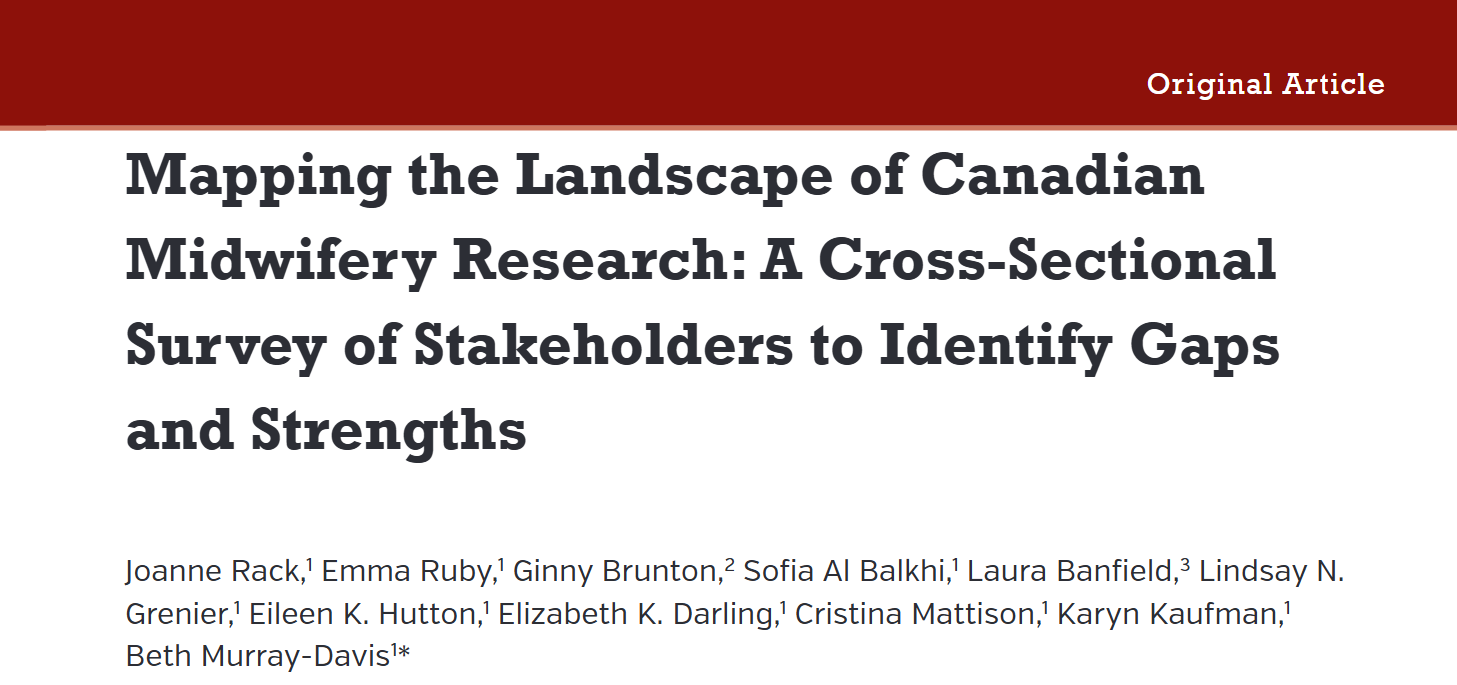 Congratulations to Joanne Rack, who is currently undertaking Bournemouth University’s four-year clinical doctorate, on the publication is week in the Canadian Journal of Midwifery Research and Practice. The latest paper “Mapping the Landscape of Canadian Midwifery Research” is Open Access and freely available online. The paper reports on a nation-wide study led by an inspiring team of midwifery researchers exploring the current landscape of midwifery research in Canada—identifying both its strengths and urgent gaps. With insights from over 200 stakeholders, this research calls for enhanced funding, mentorship, and research capacity to advance midwife-led, person-centered care.
Congratulations!
Profs. Vanora Hundley & Edwin van Teijlingen
Centre for Midwifery & Women’s Health
Reference:
- Rack, J., Ruby, E., Brunton, G., Al Balkhi, S., Banfield, L., Grenier, L.N., Hutton, E.K, Darling, E.K., Mattison, C., Kaufman, K., Murray-Davis, B. (2025) Mapping the Landscape of Canadian Midwifery Research Canadian Journal of Midwifery Research and Practice, 24 (1).
CMWH academics promoting women’s health in Dorset
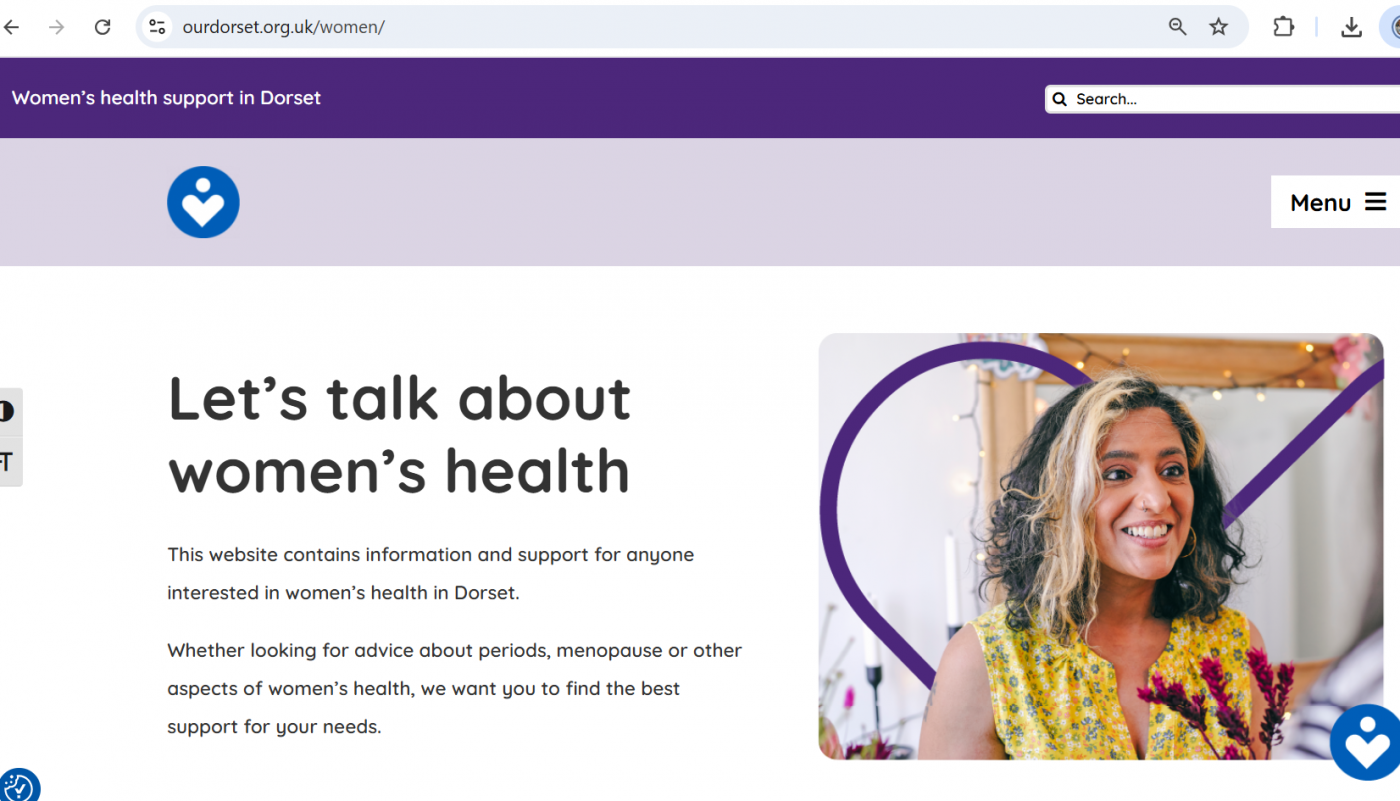 Women’s Health is now firmly on the Dorset map [i.e. online]. The new website, produced by Dorset Women CIC in conjunction with the NHS in Dorset, Bournemouth University, clinicians and the public, raises awareness of local community services. The website also provides resources to empower people with an interest in women’s health to make informed decisions about women’s mental and physical well-being. This is expected to improve access and quality of care – a priority identified by women – and ease pressures on the NHS.
 Prof. Vanora Hundley and Carol Clark from the Centre for Midwifery and Women’s Health and colleagues from the Centre for Wellbeing and Long-Term Health have been central to the development of the website. There is an opportunity to hear about how we have been involved on Thursday 24th April 2025, where Bournemouth University’s academics Linda Agyemang and Sarah Hillier will present.
If your are interested, you can registered to attend the event here.
Congratulations!
Prof. Edwin van Teijlingen
Bournemouth University’s contributions to BNAC
This year’s annual conference of BNAC (Britain-Nepal Academic Council) will be held on April 24-25 at Liverpool John Moores University. Dr. Pramod Regmi, Principal Academic in International Health in the Department of Nursing Sciences, will be a panellist on a Round Table discussion on the topic of ‘The Hidden Burden of Migration: Struggles of Nepalese Labour Migrants from Departure to Return’.  This contribution is inspired by history of BU research into the health and well-being of migrant workers from Nepal by Dr.Regmi, Dr. Nirmal Aryal, Dr. Orlanda Harvey, Prof. Edwin van Teijlingen as well as Bournemouth University PhD students Yagya Adhikari and Anjana Regmi Paudyal. Dr. Regmi’s more recent publications on the topic include papers on: modern slavery [1], kidney disease [2-4], pre-departure training of aspiring migrant workers in Nepal [5], moral panics and societal fear around migrant workers and COVID-19 [6-7], Nepalese migrant workers in Malaysia [8-9], left-behind families of migrant workers [10], migrant workers and the 2022 FIFA male football world cup [11-12], Nepalese migrants in the UK [13] as well as literature review [14].
Bournemouth University is further involved in two presentation originating from the project studying the impact of the introduction of federalisation in Nepal on its health system. Details about our project are on the website Nepal Federal Health System Project. This study was funded by the UK Health Systems Research Initiative [Grant ref. MR/T023554/1] to study the consequences for the health system of Nepal’s move from a centralised political system to a more federal government structure in 2015.
Our interdisciplinary joint project was led by the University of Sheffield in collaboration with Bournemouth University, the University of Huddersfield, Canterbury Christ Church University and two institutions in Nepal, namely Manmohan Memorial Institute of Health Sciences (in Nepal) and PHASE Nepal. In late 2022 further funding was awarded by 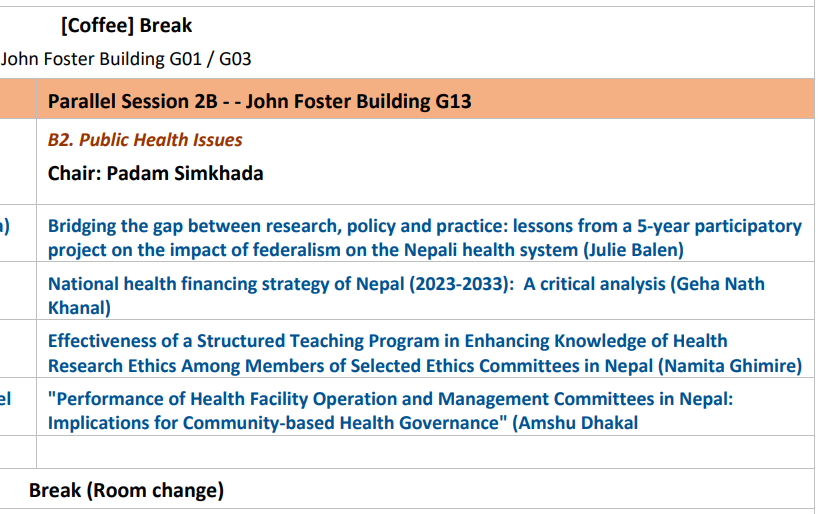 the Medical Research Foundation to Prof. Julie Balen, from Canterbury Christ Church University, to disseminate the findings of our UK Health Systems Research Initiative-funded research in Nepal. These two papers will be presented by our collaborators, namely Prof. Julie Balen of Canterbury Christ Church University and Ms. Amshu Dhakal from Manmohan Memorial Institute of Health Sciences in Kathmandu, Nepal.
Prof. Edwin van Teijlingen
References:
- Paudyal, A. R., Harvey, O., Teijlingen, E. van, Regmi, P. R., Sharma, C. (2024). Returning Home to Nepal after Modern Slavery: Opportunities for Health Promotion. Journal of Health Promotion, 12(1), 125–132. https://doi.org/10.3126/jhp.v12i1.72713
- Aryal, N., Sedhain, A., Regmi, P.R., KC, R. K., van Teijlingen, E. (2021). Risk of kidney health among returnee Nepali migrant workers: A survey of nephrologists. Asian Journal of Medical Sciences, 12(12), 126–132. https://doi.org/10.3126/ajms.v12i12.39027
- Aryal, N., Regmi, P.R., Sedhain, A., KC, R.K., Martinez Faller, E., Rijal, A., van Teijlingen, E. (2021) Kidney health risk of migrant workers: An issue we can no longer overlook. Health Prospect 20(1):15-7
- Regmi, P., Aryal, N., Bhattarai, S., Sedhain, A., KC, R.K. and van Teijlingen, E. (2024) Exploring lifestyles, work environment and health care experience of Nepalese returnee labour migrants diagnosed with kidney-related problems, PLoS One 19(8): e0309203. https://doi.org/10.1371/journal.pone.0309203
- Regmi, P., Aryal, N., van Teijlingen, E., KC, R.K., Gautam, M. and Maharjan, S. (2024). A Qualitative Insight into Pre-Departure Orientation Training for Aspiring Nepalese Migrant Workers. Tropical Medicine and Infectious Disease, 9 (7).
- Aryal, N., Regmi, P., Adhikari Dhakal, S., Sharma, S. and van Teijlingen, E. (2024). Moral panic, fear, stigma, and discrimination against returnee migrants and Muslim populations in Nepal: analyses of COVID-19 media content. Journal of Media Studies, 38 (2), 71-98.
- Regmi, P., Dhakal Adhikari, S., Aryal, N., Wasti, S.P., van Teijlingen, E. (2022) Fear, Stigma and Othering: The Impact of COVID-19 Rumours on Returnee Migrants and Muslim Populations of Nepal, International Journal of Environmental Research & Public Health 19(15), 8986; https://doi.org/10.3390/ijerph19158986
- Chaudhary, M.N., Lim, V.C., Faller, E.M., Regmi, P., Aryal, N., Zain, S.N.M., Azman, A.S. and Sahimin, N. (2024). Assessing the basic knowledge and awareness of dengue fever prevention among migrant workers in Klang Valley, Malaysia. PLoS ONE, 19 (2).
- Chaudhary, M.N., Lim, V.C., Sahimin, N., Faller, E.M., Regmi, P., Aryal, N. and Azman, A.S. (2023). Assessing the knowledge of, attitudes towards, and practices in, food safety among migrant workers in Klang Valley, Malaysia. Travel Medicine and Infectious Disease, 54.
- Adhikari, Y., Regmi, P., Devkota, B. and van Teijlingen, E. (2023). Forgotten health and social care needs of left-behind families of Nepali migrant workers. Journal of Health Promotion, 10, 1-4.
- Regmi, P., Simkhada, P., Aryal, N., van Teijlingen, E. (2022) Excessive mortalities among migrant workers: the case of the 2022 FIFA World Cup. Europasian Journal of Medical Sciences, 4:31-32. https://doi.org/10.46405/ejms.v4i0.455
- Simkhada, P., van Teijlingen, E. and Regmi, P. (2022). Migrant Workers in Qatar: Not just an important topic during the FIFA World Cup 2022. Health Prospect: Journal of Public Health, 21 (3), 1-2.
- Simkhada, B., Sah, R.K., Mercel-Sanca, A., van Teijlingen, E., Bhurtyal, Y.M. and Regmi, P. (2021). Perceptions and Experiences of Health and Social Care Utilisation of the UK-Nepali Population. Journal of Immigrant and Minority Health, 23 (2), 298-307.
- Mahato, P., Bhusal, S., Regmi, P., van Teijlingen, E. (2024). Health and Wellbeing Among Nepali Migrants: A Scoping Review. Journal of Health Promotion, 12(1): 79–90. https://doi.org/10.3126/jhp.v12i1.72699
Promoting Human-Centred Design in Drowning Prevention
 The Department of Design and Engineering at Bournemouth University has a reputation for its Human-Centred Design (HCD) work. In our interdisciplinary Sonamoni project we have HCD at its centre. The Sonamoni project is coordinated by Bournemouth University in collaboration with the University of the West of England (Bristol), the University of Southampton, and the Royal National Lifeboat Institution (RNLI), Design Without Border (DWB) in Uganda and Centre for Injury Prevention and Research, Bangladesh (CIPRB). The interdisciplinary team at Bournemouth University covers three faculties and six academics: Dr. Mavis Bengtsson, Dr. Kyungjoo Cha, Dr. Mehdi Chowdhury, Dr. Yong Hun Lim, Mr. John Powell, and Prof. Edwin van Teijlingen.
Last month two staff from CIPRB, Notan Chandra Dutta and Mirza Shibat Rowshan visited DBW in Uganda, as part of so-called South-South learning. Their objective was to share (1) knowledge and experience of using HCD techniques and (2) best practices of drowning prevention in both countries. Utilizing HCD techniques, Sonamoni is working to identify and prioritize potential solutions, develop prototypes, and assess the acceptability of the interventions to reduce drowning deaths among old children under two in Bangladesh.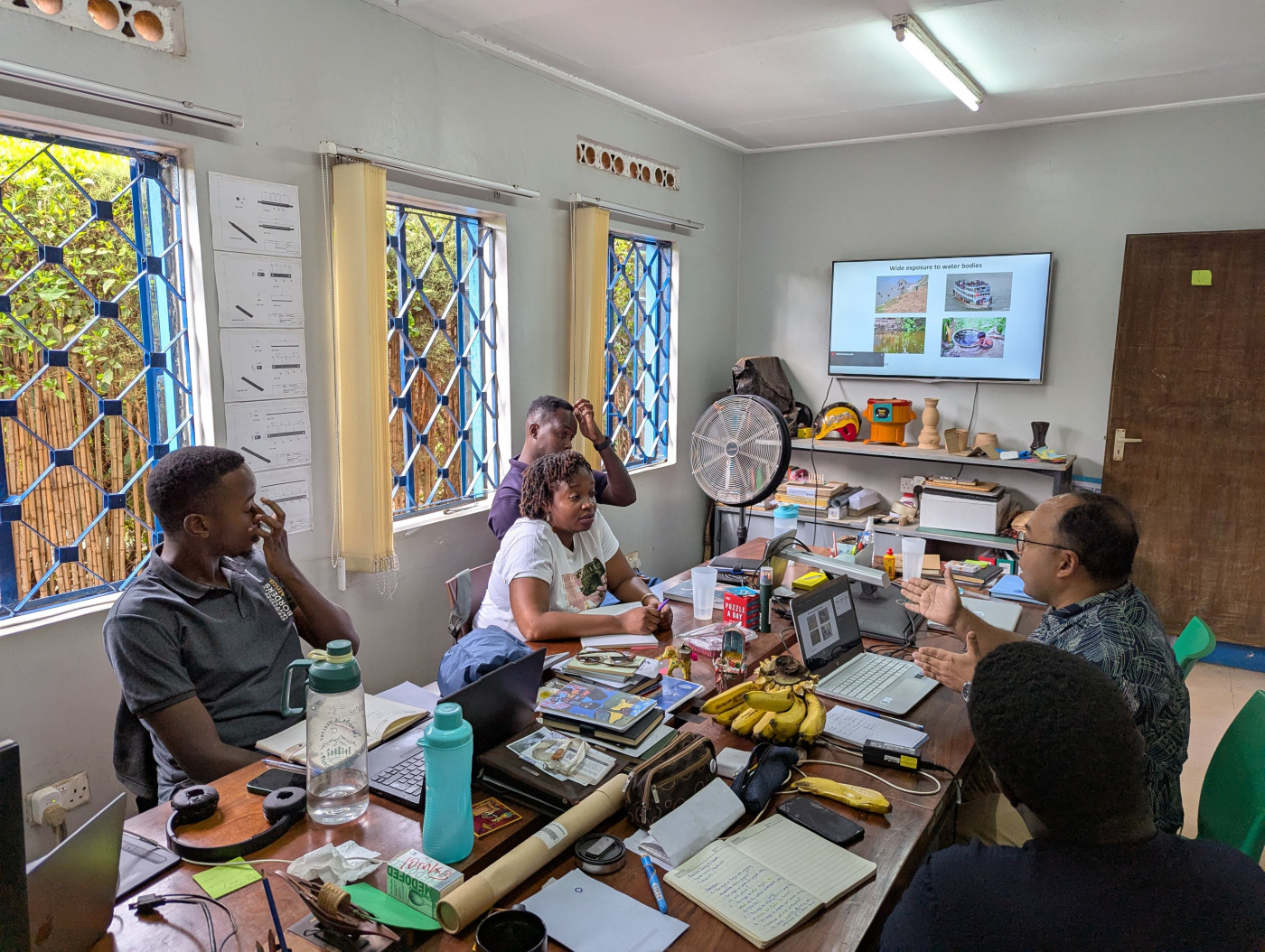
During the visit, Notan and Shibat participated a four-day ideation workshop with the fisher community near Lake Victoria, organized by DWB. In the workshop, different HCD tools were used along with other group activities to generate and refine ideas for the solutions. The generated ideas were recorded by visualization tools. Notan and Shibat also attended a session on the principles of creative facilitation of HCD, including the need to understand the problem, role of the facilitator and other stakeholders. Various visualization tools were discussed, e.g. ‘journey maps’, ‘stakeholder map’, ‘context map’ and different types of sketches. Notan shared CIPRB’s experiences of managing the best drowning prevention practices and its challenges from Bangladesh context.
This international project funded by the National Institute for Health and Care Research (NIHR) through their Research and Innovation for Global Health Transformation programme, also includes a BU-based PhD student, Mr. Md. Shafkat Hossein. Last week Shafkat presented our Sonamoni project in lecture to BU Engineering students at Talbot campus.
Prof. Edwin van Teijlingen
Centre for Midwifery & Women’s Health
When is a ‘new’ paper no longer new?
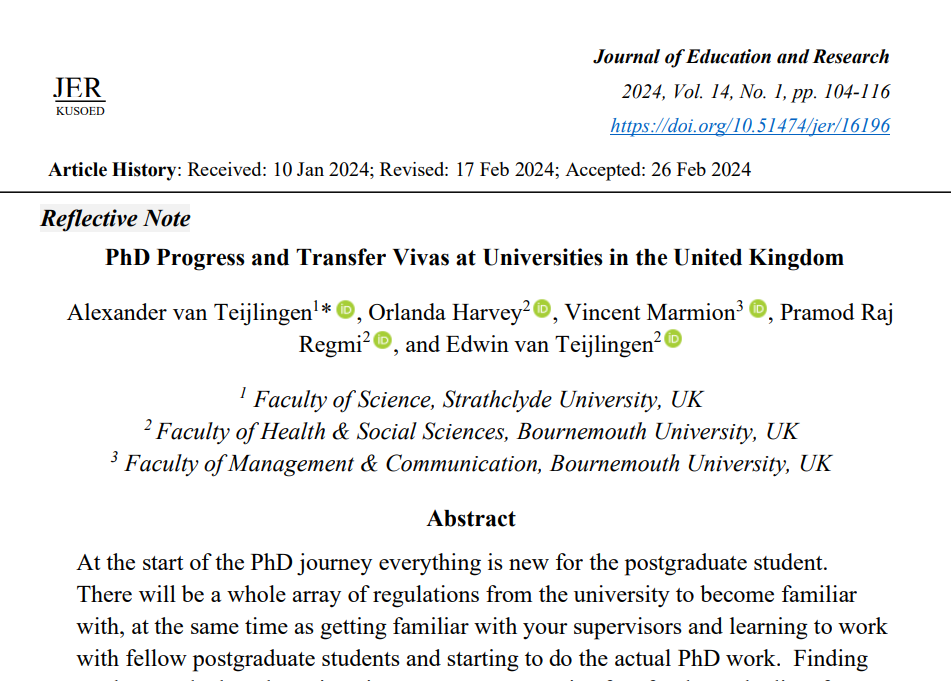
This week we had two new academic papers published online. The first paper was an education one ‘PhD Progress and Transfer Vivas at Universities in the United Kingdom‘ [1] and the second focused on ‘Knowledge, Attitude and Practices of Masters Level Students in the COVID-19 Pandemic‘ [2]. The first paper clearly states “Article History: Received: 10 Jan 2024; Revised: 17 Feb 2024; Accepted: 26 Feb 2024”, the online information for the second paper states: “Published 2024-12-31”, i.e. both are clearly identified as 2024 papers.
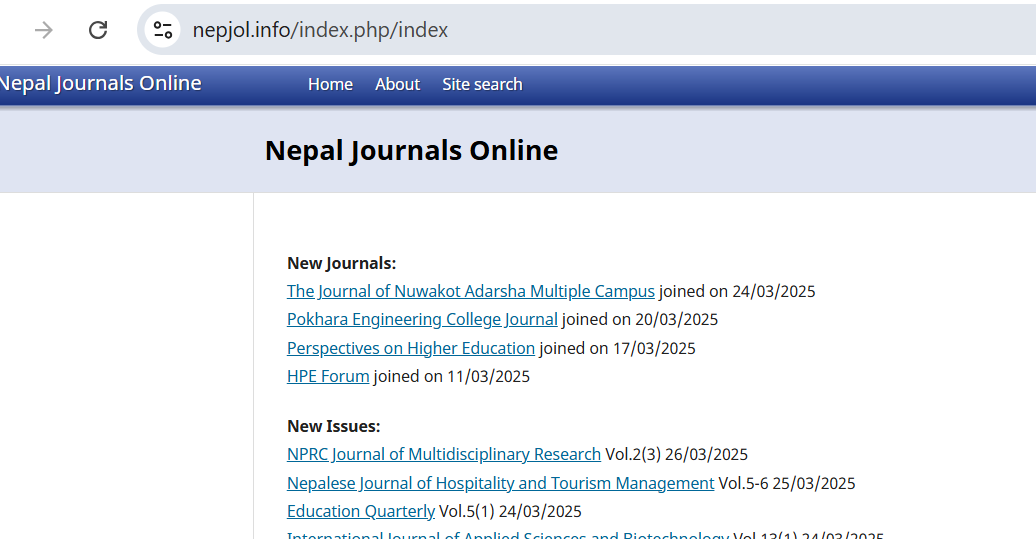
 The problem for the authors is that both only appeared online this week. For example, today (27th March 2025) Nepal Journals Online (NepJoL) reports the publication of the latest issue of Education Quarterly, Volume 5 Issue 1, the one in which we published, as 24th March (see picture below). The reason this happens is because the journal editors experienced problems in the past year and did not manage to publish an issue in the calendar year, which makes the publication history look less professional. To avoid having a year missing the most recently published issue is given an official 2024 publication date.
In a world full of problems the minor inconvenience of papers being backdated is twofold for academic authors. First, we can not really announce the publication of a a new Bournemouth University paper since the dated stamped on it is last year’s. Secondly, paper can’t be used for the REF as the acceptance date is also set in the past, for papers to be acceptable for inclusion in REF 2029 typically papers need to be made available on Open Access within three months after the acceptance date .
Prof. Edwin van Teijlingen
Centre for Midwifery & Women’s Health
References:
- van Teijlingen, A., Marmion, V., Harvey, O., Regmi, P., van Teijlingen, E. (2024) PhD Progress and Transfer Vivas at Universities in the United Kingdom, Journal of Education and Research, 14(1): 104-116, https://doi.org/10.51474/jer/16196
- Pasa, R.B., Khanal, K.P., Khatri, B.B., Adhikari, D., Kharel, S., Sharma, M.K., van Teijlingen, E.R. (2024). Knowledge, Attitude and Practices of Masters Level Students on the COVID-19 Pandemic. Education Quarterly, 5(1): 53–72. https://doi.org/10.3126/jeqtu.v5i1.76745
Early Labour App Interns attend NIHR Celebration Day

NIHR Undergraduate Interns Tom Lower and Kaisei Wieczorek Numao with their supervisor Dr. Dominique Mylod attended the Round 1 NIHR Undergraduate Intern Celebration at International Student House, Regent’s Park, London on 19th March 2025.
Tom and Kaisei are both BU Computer Animation students. Together with Year 3 midwifery student Carys Nash they have developed the User Interface and tracking systems on our Early Labour App during their internship. In line with the feedback that Carys has gathered from women and birth partners, the app provides education and strategies for families to navigate the latent phase (or ‘early labour’) at home before labour establishes and they transfer to a birth unit or Labour Ward. The app content has been developed from research through the BU Centre for Midwifery and Women’s Health and with the latest funding from the NIHR Undergraduate Internship programme.
Tom presented on behalf of the group and we caused some excitement by showcasing the app on a mobile phone to the other attendees!
Reading about Positionality
This week ResearchGate informed us that the paper ‘The Importance of Positionality for Qualitative Researchers‘ by Bournemouth University M.Res. student Ms. Hannah Gurr has been read over 800 times. The co-authors are Hannah’s supervisors Dr. Louise Oliver, Dr. Orlanda Harvey and Prof. Edwin van Teijlingen in the Faculty of Health & Social Sciences (FHSS), and one of Nepal’s foremost sociology of health and illness researchers Prof. Madhusudan Subedi. 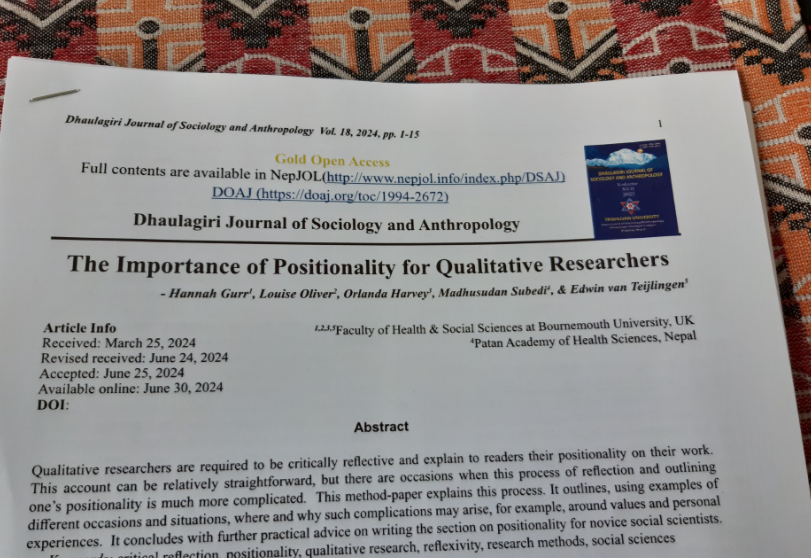
The paper is of particular interest for qualitative and mixed-methods researchers as these researchers are especially required to be critically reflective and explain to readers their positionality on their work. This account can be relatively straightforward, but there are occasions when this process of reflection and outlining one’s positionality is much more complicated. This method-paper explains this process. It outlines, using examples of different occasions and situations, where and why such complications may arise, for example, around values and personal experiences. It concludes with further practical advice on writing the section on positionality for novice social scientists. The journal in which this methodological paper is published is Open Access and therefor freely available to read for anybody across the globe.
Reference:
- Gurr, H., Oliver, L., Harvey, O., Subedi, M., van Teijlingen, E. (2024) The Importance of Positionality for Qualitative Researchers, Dhaulagiri Journal of Sociology and Anthropology 18(1): 48-54,
Dorset Women’s Health Programme – Invitation to attend celebration stakeholder event 24th April
 Since the launch of the Department of Health and Social Care (DHSC) Women’s Health Strategy for England in 2022, partners in Dorset have been working together on the Dorset Women’s Health Programme.
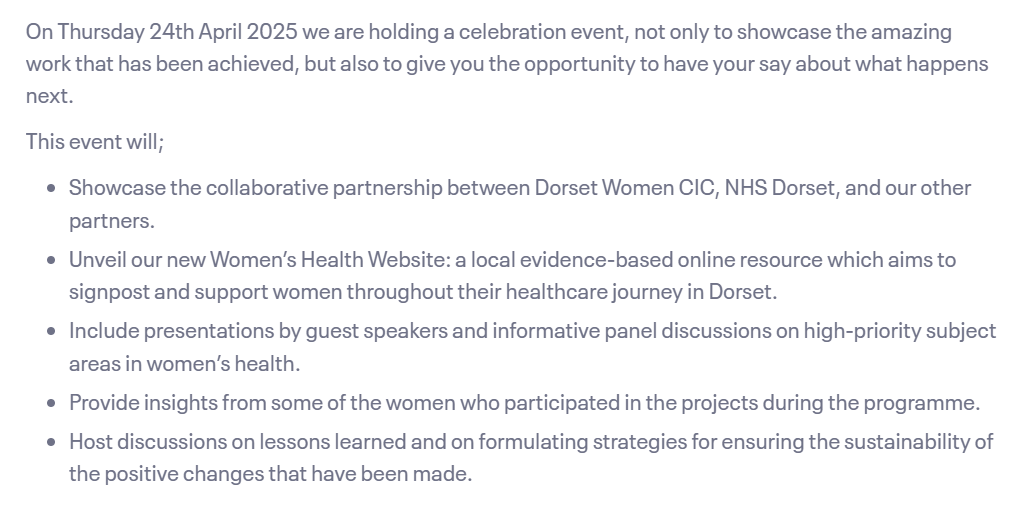
On Thursday 24th April 2025 we are holding a celebration event, not only to showcase the amazing work that has been achieved, but also to give you the opportunity to have your say about what happens next.
This event will: –
· Showcase the collaborative partnership between Dorset Women CIC, NHS Dorset, Bournemouth University and our other partners.
· Unveil our new Women’s Health Website: a local evidence-based online resource which aims to signpost and support women throughout their healthcare journey in Dorset.
· Include presentations by guest speakers and informative panel discussions on high-priority subject areas in women’s health.
· Provide insights from some of the women who participated in the projects during the programme.
· Host discussions on lessons learned and on formulating strategies for ensuring the sustainability of the positive changes that have been made.
Booking your place: –
Location: The Dorford Centre, Bridport Road, Dorchester, Dorset, DT1 1RR: https://dorchesterbc.org.uk/location
Timing: 9.30am (for a 10am start) to 3.30m
Booking: Please book a free place via Eventbrite: Celebrating Women’s Health – Dorset Stakeholder Event Tickets, Thu 24 Apr 2025 at 09:30 | Eventbrite
Presenting BU’s kidney disease research in Manchester
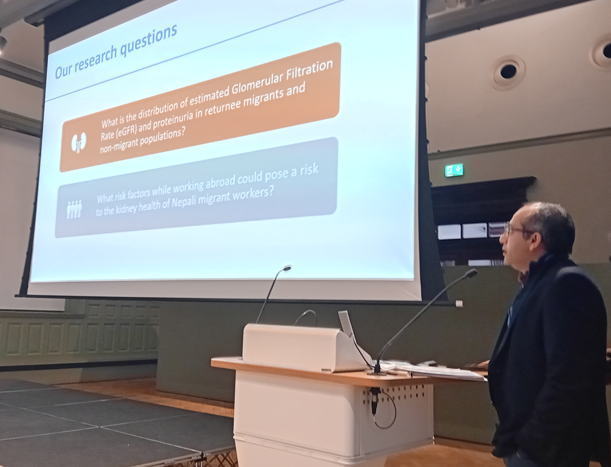 Tuesday 18th March Drs. Pramod Regmi and Nirmal Aryal from the Department of Nursing Sciences presented our work on risk of kidney disease in Nepalese migrant workers in the Middle East and Malaysia. The presentation was at the Project Impact Seminar in the Whitworth Gallery in Manchester organised by The Colt Foundation, the funder of our research.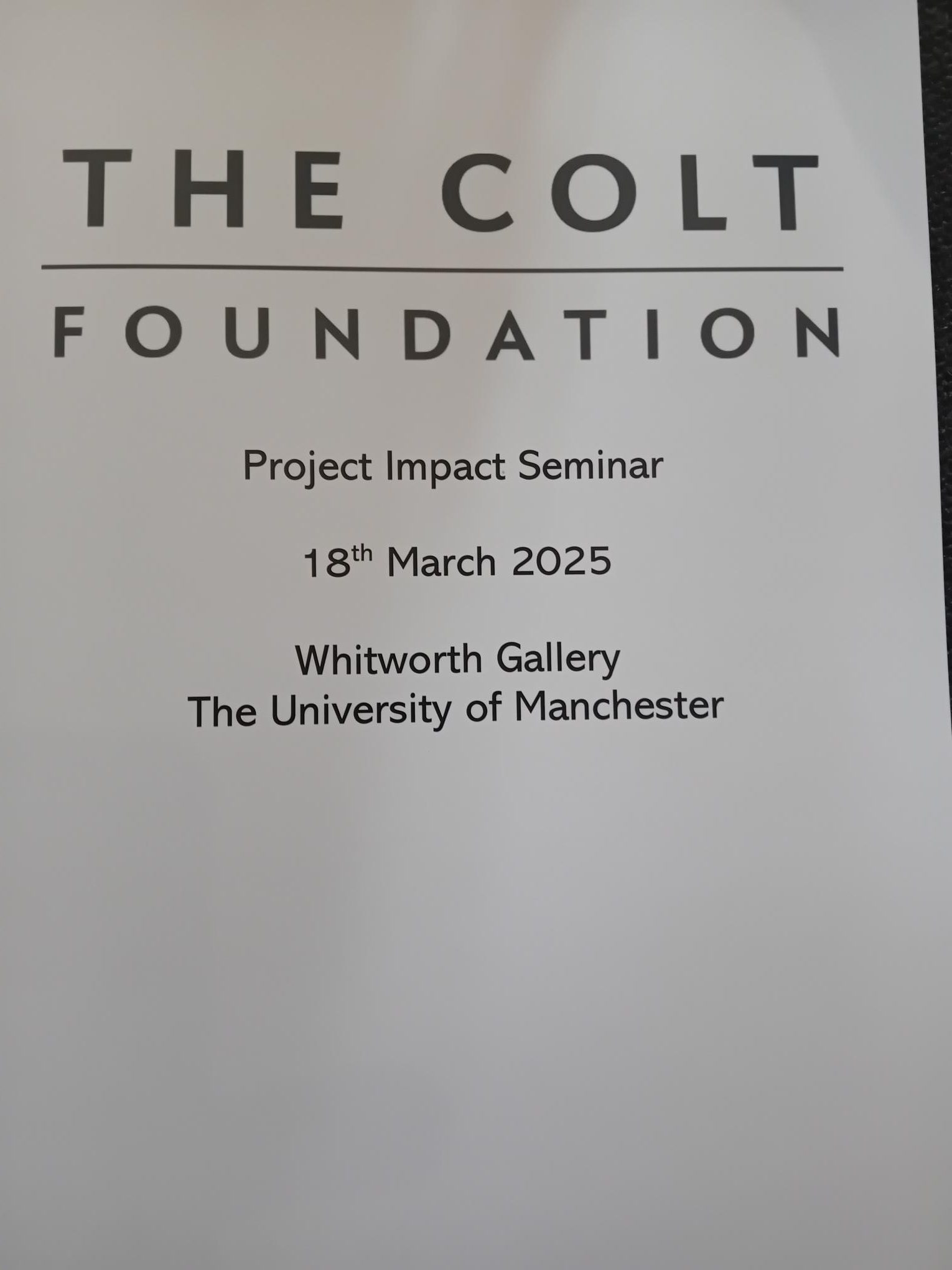
The title was: ‘Risk of kidney injury among returnee Nepalese migrants: a mixed-methods’ which was conducted in the one of areas of Nepal with a high proportion of people working abroad as migrant labourers. Over the past decade there have been increasing concerns about possible chronic kidney disease (CKD) in migrant workers returning to Nepal. 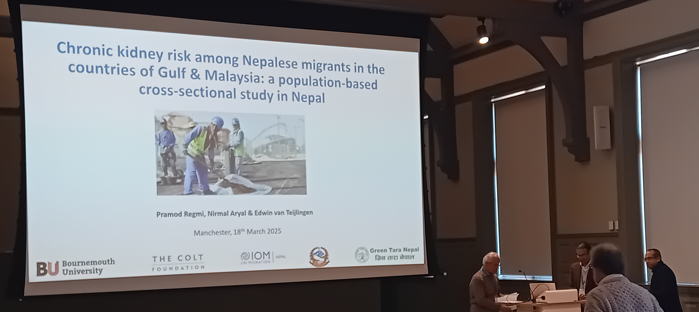
This important study has resulted in one publication in PLoS One (1) and one more recently submitted. The event was good for networking to discuss possible collaborations. We also had the pleasure of meeting former colleagues from the University of Aberdeen, now based at the University of Stirling. This dissemination event is the latest in a long line of research publications focusing on the health and well-being of migrant workers from Nepal from the BU team in the Faculty of Health & Social Sciences [1-35].
Prof. Edwin van Teijlingen
Centre for Midwifery & Women’s Health
References:
- Regmi, P., Aryal, N., Bhattarai, S., Sedhain, A., KC, R.K. and van Teijlingen, E. (2024) Exploring lifestyles, work environment and health care experience of Nepalese returnee labour migrants diagnosed with kidney-related problems, PLoS One 19(8): e0309203. https://doi.org/10.1371/journal.pone.0309203

- Paudyal, P., Wasti, S.P., Neupane, P., Sapkota, J.L., Watts, C., Kulasabanathan, K., Silwal, R., Memon, A., Shukla, P., Pathak, R.S., Michelson, D., Beery, C., Moult, A., Simkhada, P., van Teijlingen, E., Cassell, J. 10, (2025) Coproducing a culturally sensitive storytelling video intervention to improve psychosocial well-being: a multimethods participatory study with Nepalese migrant workers, BMJ Open 15:e086280. doi: 10.1136/bmjopen-2024-086280
- Mahato, P., Bhusal, S., Regmi, P., van Teijlingen, E. (2024). Health and Wellbeing Among Nepali Migrants: A Scoping Review. Journal of Health Promotion, 12(1): 79–90. https://doi.org/10.3126/jhp.v12i1.72699
- Paudyal, A.R., Harvey, O., van Teijlingen, E., Regmi, P. R., Sharma, C. (2024). Returning Home to Nepal after Modern Slavery: Opportunities for Health Promotion. Journal of Health Promotion, 12(1): 125–132. https://doi.org/10.3126/jhp.v12i1.72713
- Simkhada, P.P., van Teijlingen, E., Gurung, M., Bhujel, S., Wasti, S.P. (2024) Workplace harassment faced by female Nepalese migrants working aboard, Global Health Journal 8(3): 128-132. https://www.sciencedirect.com/science/article/pii/S241464472400040X
- Regmi, P., Aryal, N., van Teijlingen, E., KC, R.K., Gautam, M. and Maharjan, S. (2024). A Qualitative Insight into Pre-Departure Orientation Training for Aspiring Nepalese Migrant Workers. Tropical Medicine and Infectious Disease, 9 (7).
- Chaudhary, M.N., Lim, V.C., Faller, E.M., Regmi, P., Aryal, N., Zain, S.N.M., Azman, A.S. and Sahimin, N. (2024). Assessing the basic knowledge and awareness of dengue fever prevention among migrant workers in Klang Valley, Malaysia. PLoS ONE, 19 (2).
- Aryal, N., Regmi, P., Adhikari Dhakal, S., Sharma, S. and van Teijlingen, E. (2024). Moral panic, fear, stigma, and discrimination against returnee migrants and Muslim populations in Nepal: analyses of COVID-19 media content. Journal of Media Studies, 38 (2), 71-98.
- Chaudhary, M.N., Lim, V.C., Sahimin, N., Faller, E.M., Regmi, P., Aryal, N. and Azman, A.S. (2023). Assessing the knowledge of, attitudes towards, and practices in, food safety among migrant workers in Klang Valley, Malaysia. Travel Medicine and Infectious Disease, 54.
- Adhikari, Y., Regmi, P., Devkota, B. and van Teijlingen, E. (2023). Forgotten health and social care needs of left-behind families of Nepali migrant workers. Journal of Health Promotion, 10, 1-4.
- Regmi, P., Simkhada, P., Aryal, N., van Teijlingen, E. (2022) Excessive mortalities among migrant workers: the case of the 2022 FIFA World Cup. Europasian Journal of Medical Sciences, 4:31-32. https://doi.org/10.46405/ejms.v4i0.455
- Regmi, P., Dhakal Adhikari, S., Aryal, N., Wasti, S.P., van Teijlingen, E. (2022) Fear, Stigma and Othering: The Impact of COVID-19 Rumours on Returnee Migrants and Muslim Populations of Nepal, International Journal of Environmental Research & Public Health 19(15), 8986; https://doi.org/10.3390/ijerph19158986
- Simkhada, P., van Teijlingen, E. and Regmi, P. (2022). Migrant Workers in Qatar: Not just an important topic during the FIFA World Cup 2022. Health Prospect: Journal of Public Health, 21 (3), 1-2.
- Simkhada, B., Sah, R.K., Mercel-Sanca, A., van Teijlingen, E., Bhurtyal, Y.M. and Regmi, P. (2021). Perceptions and Experiences of Health and Social Care Utilisation of the UK-Nepali Population. Journal of Immigrant and Minority Health, 23 (2), 298-307.
- Aryal, N., Sedhain, A., Regmi, P.R., KC, R. K., van Teijlingen, E. (2021). Risk of kidney health among returnee Nepali migrant workers: A survey of nephrologists. Asian Journal of Medical Sciences, 12(12), 126–132. https://doi.org/10.3126/ajms.v12i12.39027
- Aryal, N., Regmi, P.R., Sedhain, A., KC, R.K., Martinez Faller, E., Rijal, A., van Teijlingen, E. (2021) Kidney health risk of migrant workers: An issue we can no longer overlook. Health Prospect 20(1):15-7
- Aryal, N., Regmi, P.R., van Teijlingen, E., Trenoweth, S., Adhikary, P. and Simkhada, P., (2020). The impact of spousal migration on the mental health of Nepali women: A cross-sectional study. International Journal of Environmental Research and Public Health, 17 (4).
- Regmi, P., Aryal, N., van Teijlingen, E., Adhikary, P. (2020) Nepali migrant workers and the need for pre-departure training on mental health: a qualitative study, Journal of Immigrant & Minority Health https://link.springer.com/content/pdf/10.1007/s10903-019-00960-z.pdf
- Adhikary, P., Aryal, N., Dhungana, R.R., KC, R.K., Regmi, P., Wickramage, K.P., Duigan, P., Inkochasan, M., Sharma, G.N., Devkota, B., van Teijlingen, E. and Simkhada, P. (2020). Accessing health services in India: Experiences of seasonal migrants returning to Nepal. BMC Health Services Research, 20 (1), 992.
- Regmi, P., van Teijlingen, E., Mahato, P., Aryal, N., Jadhav, N., Simkhada, P., Zahiruddin, Q.S., Gaidhane, A. (2019) The Health of Nepali Migrants in India: A Qualitative Study of Lifestyles and Risks. International Journal of Environmental Research and Public Health, 16 (19). https://doi.org/10.3390/ijerph16193655
- Adhikary P, van Teijlingen E. (2019) Support networks in the Middle East & Malaysia: A qualitative study of Nepali returnee migrants’ experiences’ – International Journal of Occupational Safety and Health 9(2): 31-35.
- Aryal, N., Regmi, P.R., Faller, E.M., van Teijlingen, E., Khoon, C.C., Pereira, A., Simkhada, P. (2019) Sudden cardiac death and kidney health related problems among Nepali migrant workers in Malaysia. Nepal Journal of Epidemiology, 9 (3), 788-791. https://doi.org/10.3126/nje.v9i3.25805
- Adhikary P, van Teijlingen E., Keen S. (2019) Workplace accidents among Nepali male workers in the Middle East and Malaysia: A qualitative study, Journal of Immigrant & Minority Health 21(5): 1115–1122. https://link.springer.com/article/10.1007/s10903-018-0801-y
- Dhungana, R.R., Aryal, N., Adhikary, P., Kc, R.K., Regmi, P.R., Devkota, B., Sharma, G.N., Wickramage, K., Van Teijlingen, E. and Simkhada, P. (2019). Psychological morbidity in Nepali cross-border migrants in India: A community based cross-sectional study. BMC Public Health, 19 (1).
- Aryal, N., Regmi, P.R., van Teijlingen, E., Simkhada, P. and Mahat, P. (2019). Adolescents left behind by migrant workers: a call for community-based mental health interventions in Nepal. WHO South-East Asia journal of public health, 8 (1), 38-41.
- Simkhada, P.P., van Teijlingen, E.R., Gurung, M., Wasti, S. (2018) A survey of health problems of Nepalese female migrants workers in the Middle-East & Malaysia, BMC International Health & Human Rights 18(4): 1-7. http://rdcu.be/E3Ro.
- Simkhada, P., van Teijlingen, E., Sharma, A., Bissell, P., Poobalan, A., Wasti, S.P. (2018) Health consequences of sex trafficking: A systematic review, Journal of Manmohan Memorial Institute of Health Sciences, 4(1): 130-49.
- Adhikary P, Sheppard, Z., Keen S., van Teijlingen E. (2018) Health and well-being of Nepalese migrant workers abroad, International Journal of Migration, Health & Social Care 14(1): 96-105. https://doi.org/10.1108/IJMHSC-12-2015-0052
- Adhikary, P, Sheppard, Z., Keen, S., van Teijlingen, E. (2017) Risky work: accidents among Nepalese migrant workers in Malaysia, Qatar & Saudi Arabia, Health Prospect 16(2): 3-10.
- Simkhada, P.P., Regmi, P.R., van Teijlingen, E., Aryal, N. (2017) Identifying the gaps in Nepalese migrant workers’ health and well-being: A review of the literature. Journal of Travel Medicine, 24 (4). https://doi.org/10.3126/nje.v9i3.25805
- Aryal, N., Regmi, PR., van Teijlingen, E., Simkhada, P., Adhikary, P., Bhatta, YKD., Mann, S. (2016) Injury and Mortality in Young Nepalese Migrant Workers: A Call for Public Health Action. Asian-Pacific Journal of Public Health 28(8): 703-705.
- Aryal, N., Regmi, PR., van Teijlingen, E., Dhungel, D., Ghale, G., Bhatta, GK. (2016) Knowing is not enough: Migrant workers’ spouses vulnerability to HIV SAARC Journal of Tuberculosis, Lung Diseases & HIV/AIDS 8(1):9-15.
- Adhikary P., Keen S., van Teijlingen E. (2011) Health Issues among Nepalese migrant workers in Middle East. Health Science Journal 5: 169-75. www.hsj.gr/volume5/issue3/532.pdf
- van Teijlingen E, Simkhada, P., Adhikary, P. (2009) Alcohol use among the Nepalese in the UK BMJ Rapid Response: www.bmj.com/cgi/eletters/339/oct20_1/b4028#223451
- Adhikary, P., Simkhada, P.P., van Teijlingen E., Raja, AE. (2008) Health & Lifestyle of Nepalese Migrants in the UK BMC International Health & Human Rights 8(6). Web address: www.biomedcentral.com/1472-698X/8/6.

Promoting South-South collaboration and learning
 The Sonamoni Project is working with communities in rural Bangladesh utilizing human-centered design (HCD) techniques. These design principles have been applied for many years in designing consumer products and, more recently, in the fields of health and social systems. The research project is identifying solutions to reduce the number of drowning deaths in newly mobile children (6-24 months), developing prototype, and assessing the acceptability and usability of potential interventions. This interdisciplinary project is coordinated by Bournemouth University in collaboration with the Centre for Injury Prevention and Research, Bangladesh (CIPRB), the University of the West of England, the Royal National Lifeboat Institution (RNLI), the University of Southampton, and Design without Borders Africa (DwB) from Uganda. Our Sonamoni project has been made possible thanks to a grant from the National Institute for Health and Care Research (NIHR) through their Research and Innovation for Global Health Transformation programme.
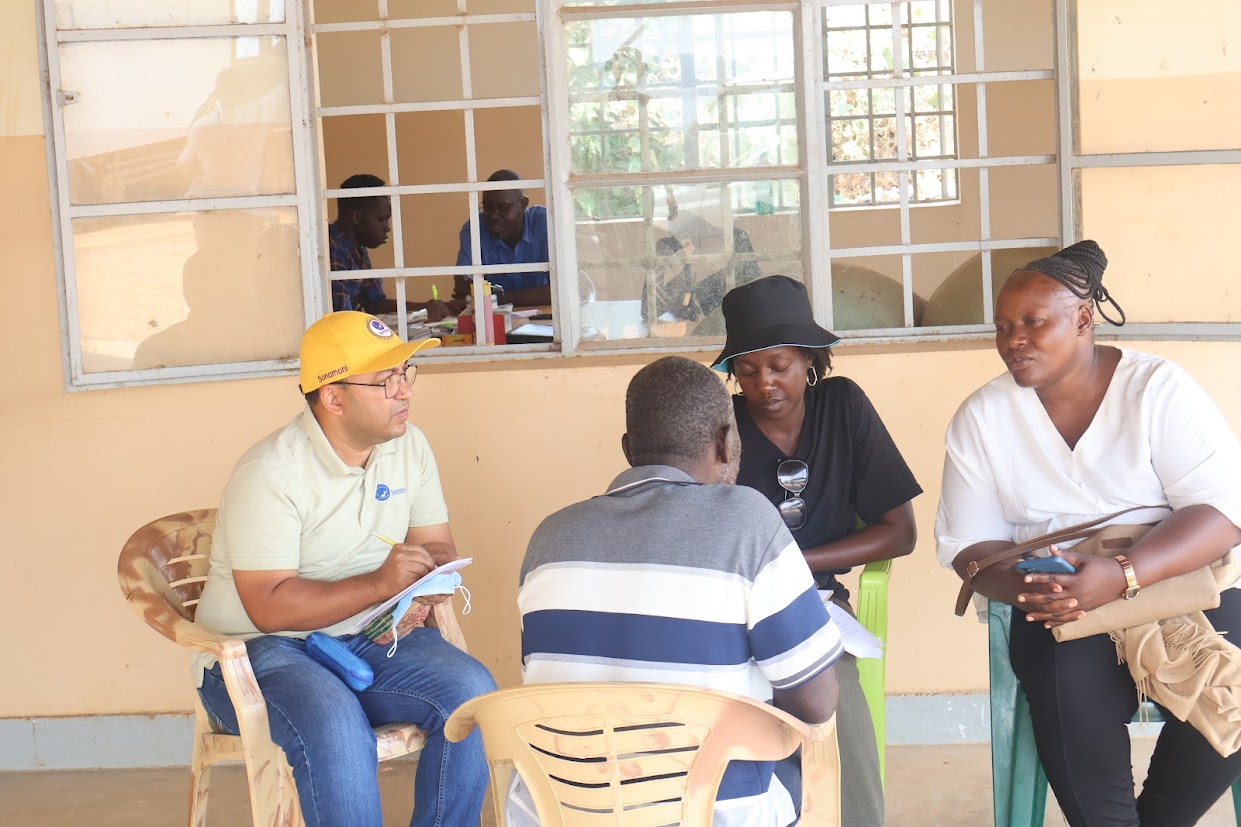 As part of the Sonamoni project we arranged some serious South-South learning by facilitating a visit to DwB in Uganda in early march by two of our Bangladesh-based team, namely Notan Chandra Dutta, Research Manager and Mirza Shibat Rowshan, HCD Specialist. DwB applies HCD approaches to complex challenges faced by communities in low and middle-income countries. To gain greater insights into HCD activities the researchers from Bangladesh visited one site near Lake Victoria to observe data collection with fishermen, transporters, and local leaders. Notan and Shibat co-facilitated a four-day long Design Community Advisory Board (DCAB) workshop on the “Enhancing Fisherfolk Safety” project where fishermen, boat owners, transporters, traditional weather forecasters, health workers were the participants. To prevent drowning, HCD was applied in the workshop to generate ideas and share solutions of the lake site community from Lake Victoria of Mayuge district. Lessons learnt from the visit by two staff of CIPRB can further enrich the Sonamoni Project implementation in Bangladesh. The NIHR really values research capacity building and South-South learning in its funded projects, as well as North-South leaning, of course.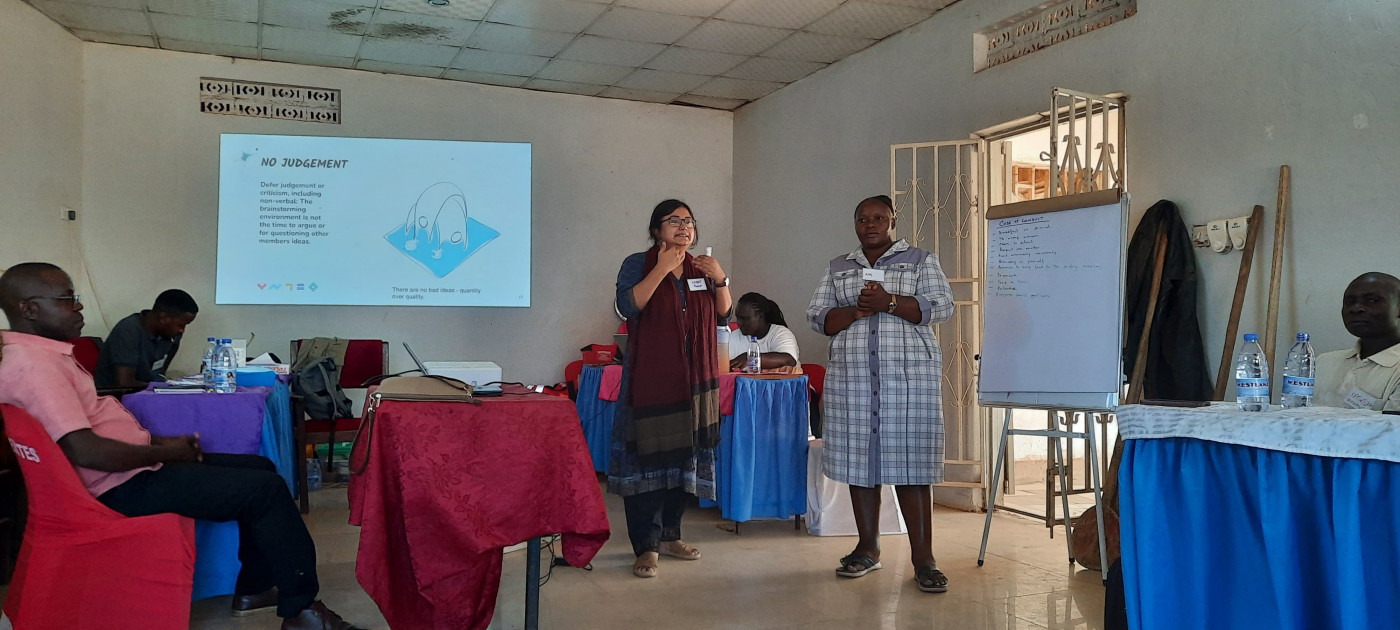
Prof. Edwin van Teijlingen
The order of things: Starting an M.Sc. after your Ph.D.
In the 1990s after I had completed my Ph.D. in Medical Sociology my first lectureship was in Public Health at the University of Aberdeen where my job title included that of coordinator of the B.Sc. Health Sciences. At the time I was required to do a variety of training modules and workshops on education at university level. Since there was the option to register for the Master of Education (M.Ed.) in the Department of Education at the University of Aberdeen, I thought I might as well gain more insight into education and learning than the required basic training and get a degree out of it at the same time. For a long time, I considered myself as odd, starting a lower degree after having completed a higher one. I bit like the guy I met thirty years ago who had completed to Ph.D.’s, one in Chemistry and then afterwards one in Divinity.
My view changed a few years ago when a colleague (with a Ph.D.) commenced an M.Sc. for a different reason. On this occasion to become a qualified practitioner, through the completion of a practice-based M.Sc. in Mental Health Nursing. The M.Sc. programme started a decade after the completion of a Ph.D. in Public Health.
And the idea for this blog sprang on me this morning when a colleague with a Ph.D. in Statistics and Epidemiology asked me for a reference to support his application for a place on an M.Sc. in Neuroscience. His argument for starting such M.Sc. is that he is actively involved in several neuro-psychology research projects and as a quantitative researcher he wants to have a greater understanding of the underpinning science and the wider topic area.
 Having successfully passed your Ph.D. viva is evidence that you study and learn effectively on your own, the subsequent M.Sc. can offer licensure (the right to practice) or greater insight into an academic field different from your Ph.D. one.
Prof. Edwin van Teijlingen
Centre for Midwifery & Women’s Health
Presenting HSRI results at Nepal Dialogue UK
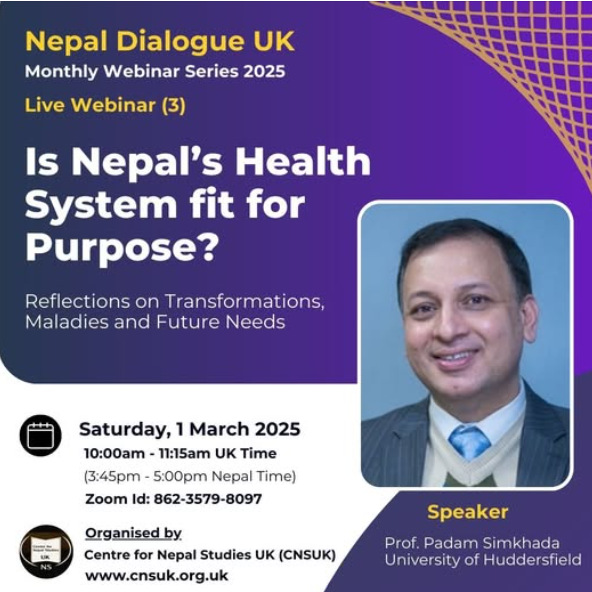 Today, Saturday morning, BU Visiting Professor Padam Simkhada from the University of Huddersfield was guest speaker at the third Nepal Dialogue UK webinar series of the Centre for Nepal Studies UK (CNSIK). His presentation was titled Is Nepal’s Health System fit for Purpose? Reflections on Transformations, Maladies and Future Needs. He outlined the state of health (epidemiology) as well as that of the health system. He presented a lot of change in the health of the population, in the health system, as well as issues around human resources, including the high rate of migration of health workers. He highlight that there is in Nepal insufficient investment in health, unethical practices,
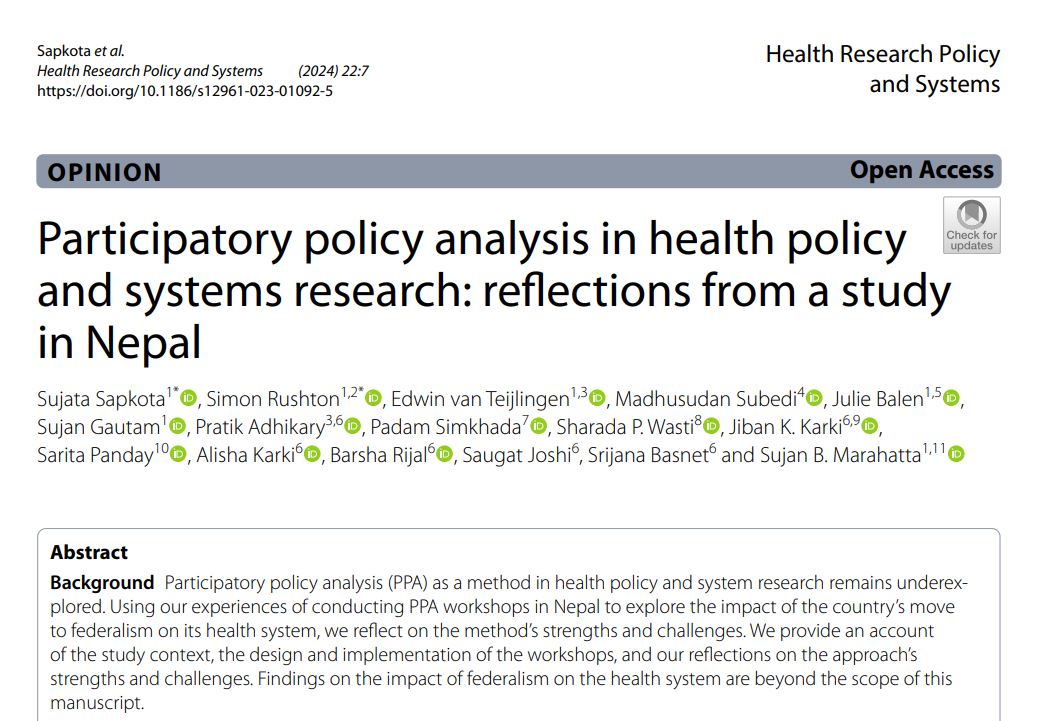 He introduced some the key findings from our recently completed study on the effects of the federalisation process on Nepal’s health system. Padam was one of the co-applications on this study together with academics from the University of Sheffield, Canterbury Christ Church University and Bournemouth University in the UK, and colleagues in Nepal from Manmohan Memorial Institute of Health Sciences (MMIHS) and PHASE Nepal. The project was funded by the UK Health Systems Research Initiative (Grant ref MR/T023554/1). For more information on the Nepal Federal Health System Team, see: https://www.nepalfederalhealthsystem.com/. This interdisciplinary study has been disseminated in the form of eight published papers [1-8].
Prof. Edwin van Teijlingen
CMWH
References:
- Koirala, B., Rushton, S., Adhikary, P., Balen, J., et al. (2024) COVID-19 as a challenge to Nepal’s newly federalised health system: capacities, responsibilities, and mindsets, Asia Pacific Journal of Public Health (online first) https://doi.org/10.1177/1010539524125012.
- Sapkota, S., Rushton, S., van Teijlingen, E., et al. (2024) Participatory policy analysis in health policy and systems research: reflections from a study in Nepal. Health Research & Policy Systems, 22 (No.7) https://doi.org/10.1186/s12961-023-01092-5 .
- Wasti, S.P., van Teijlingen, E., Simkhada, P., et al. (2023) Selection of Study Sites and Participants for Research into Nepal’s Federal Health System, WHO South-East Asia Journal of Public Health 12(2):116-119.
- Sapkota, S., Dhakal, A., Rushton S., et al. (2023) The impact of decentralisation on health systems: a systematic review of reviews. BMJ Global Health 8:e013317. doi:10.1136/bmjgh-2023-013317.
- Wasti, S.P., van Teijlingen, E., Rushton, S., et al. (2023) Overcoming the Challenges Facing Nepal’s Health System During Federalisation: An Analysis of Health System Building Blocks, Health Research Policy & Systems 21(117) https://doi.org/10.1186/s12961-023-01033-2
- Sapkota, S., Panday, S., Wasti, S.P., et al. (2022) Health System Strengthening: The Role of Public Health in Federal Nepal, Journal of the Nepal Public Health Association 7(1):36-42.
- Adhikary, P., Balen, J., Gautam, S., et al. (2020) The COVID-19 pandemic in Nepal: Emerging evidence on the effectiveness of action by, and cooperation between, different levels of government in a federal system, Journal of Karnali Academy of Health Sciences 3 (3): 1-11.
- Rushton, S., Pandey, S., van Teijlingen, E., et al. (2021) An Investigation into the Impact of Decentralization on the Health System of Nepal. Journal of Manmohan Memorial Institute of Health Sciences, 7(1): 3–14. https://doi.org/10.3126/jmmihs.v7i1.43146
BU staff can login below:
Other services







Recent posts
BU research Funding opportunities EU
 SONAMONI contributions to Safety Conference 2026 in South Africa
- REF adds ‘midwifery’ to Unit of Assessment 3 name
 Three CMWH presentations at Berlin conference
 New interdisciplinary paper on Nepal
- New BU Social Work paper published this week
- NEW BOOK Just Published: Rather and Buhalis, 2026, Metaverse Marketing: Challenges, Opportunities, and Fundamental Mechanisms
 Horizon Europe Cluster 3 (Civil Security for Society) 2026 Calls Now Open
 MSCA Doctoral Networks 2026 Call Information Webinar
 ESRC Festival of Social Science 2026: Application Deadline Extended to Thursday 25 June 2026
- Apply now to take part in the 2026 ESRC Festival of Social Science
 Reminder: Register for the ESRC Festival of Social Science 2026 Information Session
 ECR Funding Open Call: Research Culture & Community Grant – Apply now
- MSCA Postdoctoral Fellowships 2025 Call
 ERC Advanced Grant 2025 Webinar
- European Migration Research and Impact – Invitation to a Roundtable Discussion
- MSCA Postdoctoral Fellowships 2025
 Update on UKRO services
 European research project exploring use of ‘virtual twins’ to better manage metabolic associated fatty liver disease
 Research Information Network
- Physical Sciences Case studies: information use and discovery
- Information handling in collaborative research: an exploration of five case studies
- Information literacy monitoring and evaluation
- Data centres: their use, value and impact
- Heading for the open road: costs and benefits of transitions in scholarly communications