The Public Engagement with Research Team are running two workshops in February: Evaluation of Engagement and Advanced Evaluation.
These sessions will be delivered by Dr Jamie Gallagher, one of the most experienced engagement trainers in the UK. Jamie is a dynamic and engaging trainer who makes these sessions enjoyable as well as useful.
It is recommended that both sessions are attended to gain the full benefit. The sessions will build skills from the basic principles of evaluation, through to being able to develop evaluation plans for even the most complex topics, exploring data capture, analysis and reporting. You’ll also learn how to write evaluation reports for funders or for the REF (Research Excellence Framework).
While both sessions are recommended, attending just the first session may be appropriate for your needs. It is advised against only attending the second session.
This workshop will highlight what you need to ask yourself, and the public, to ensure you can demonstrate the success of your intervention and capture the long term impact of it.
Successful public engagement can benefit research, researchers and the public – but how do you go about demonstrating this change? This workshop will guide you through the best evaluation processes showing you when, why and crucially how to use evaluation to give you reliable and clear data. It will highlight how to demonstrate success to funders, record impact for the REF, help to improve your processes, and give you a better understanding of the people you are connecting with.
At the end of the workshop, you will be able to:
- Understand the purposes, uses and limitations of evaluation
- Apply event-appropriate evaluation methods in multiple scenarios
- Prepare useful, answerable and relevant evaluation questions
- Devise and deliver your own evaluation plan
- Interpret and report evaluation data.
To book a place on this workshop please complete the booking form.
Taking an in-depth look at evaluation, participants will explore data capture, analysis and reporting. From surveys to focus groups, you will learn how to format powerful questions and report meaningful data. Discover how to develop evaluation plans for even the most complex topics. You will also learn how to write evaluation reports for funders or for the REF.
This workshop requires good base knowledge of evaluation, ideally from attending the previous Evaluation of engagement workshop.
To book a place on this workshop please complete the booking form.
For any queries regarding either of these sessions please contact the Public Engagement team: publicengagement@bournemouth.ac.uk.









 The next







 SONAMONI contributions to Safety Conference 2026 in South Africa
 Three CMWH presentations at Berlin conference
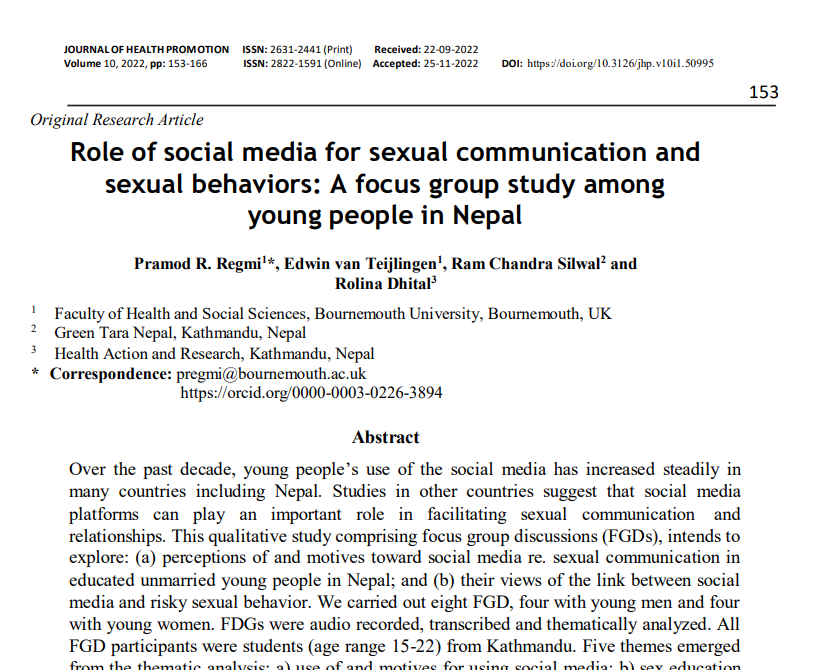
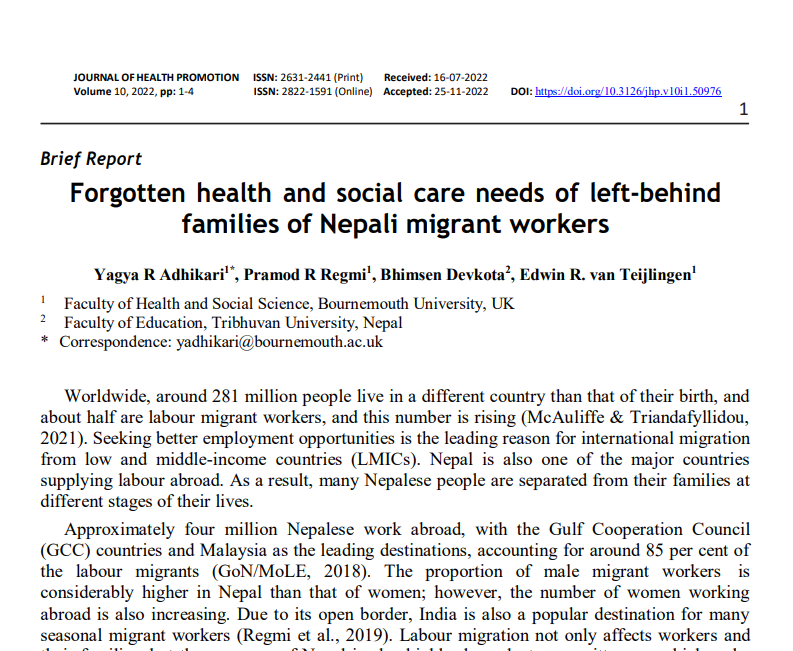
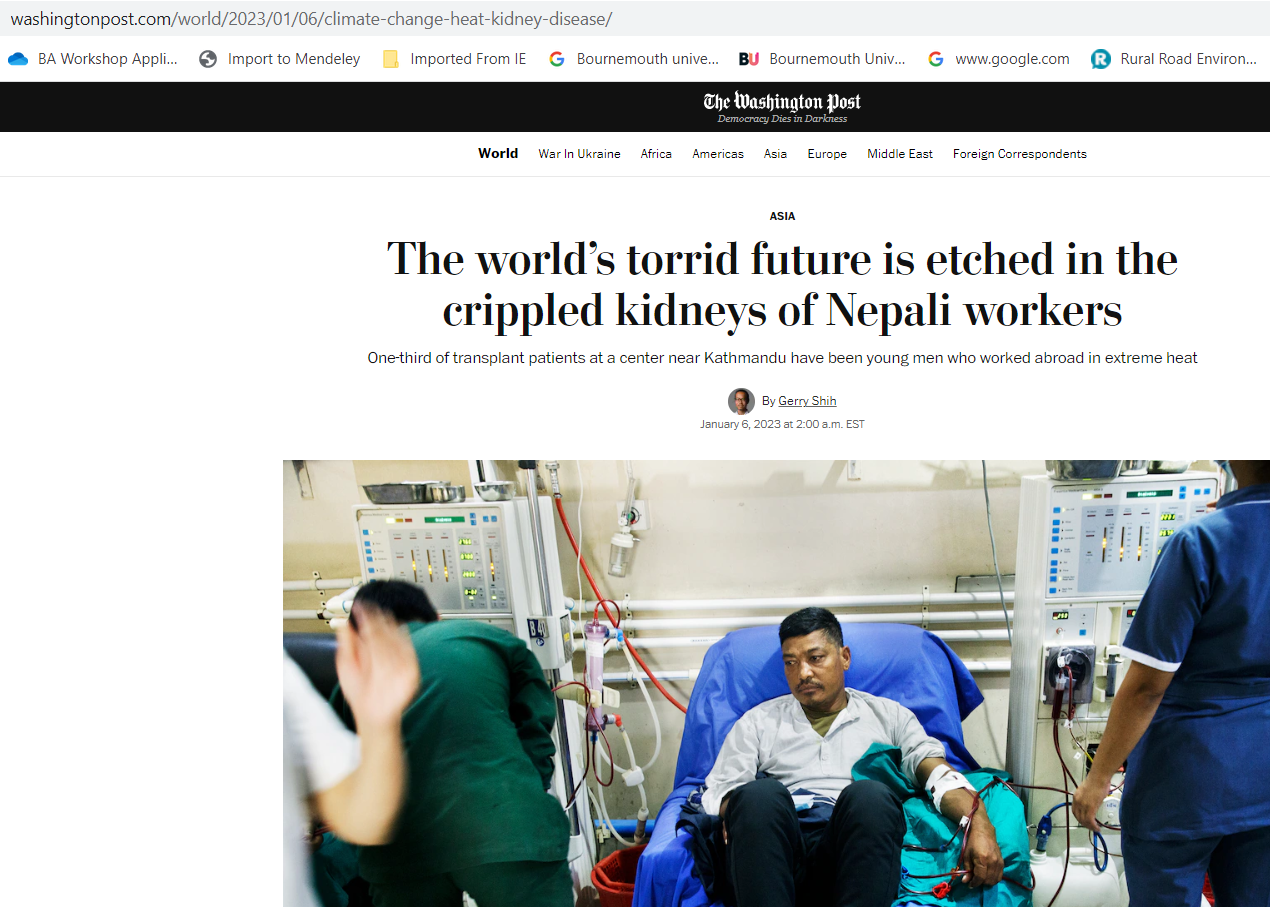
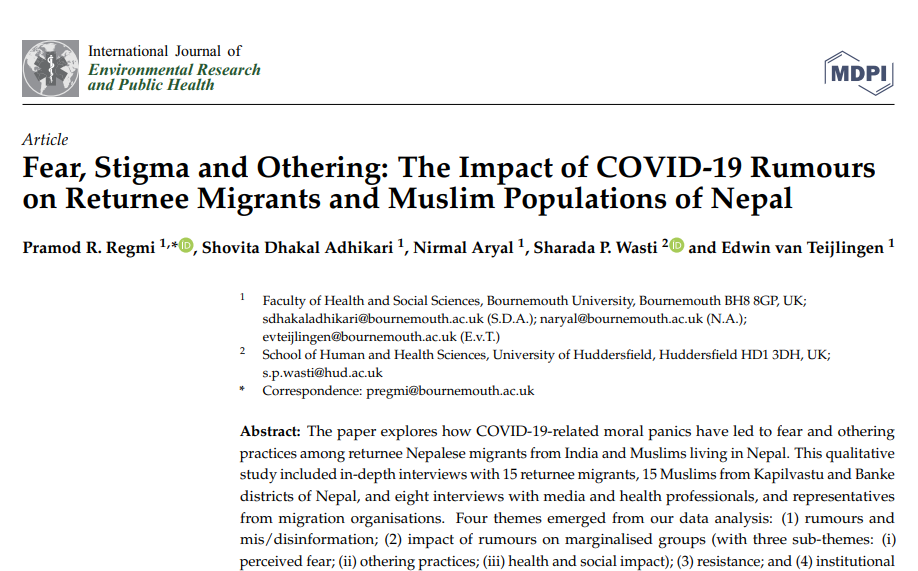
 New interdisciplinary paper on Nepal
 Horizon Europe Cluster 3 (Civil Security for Society) 2026 Calls Now Open
 MSCA Doctoral Networks 2026 Call Information Webinar
 ESRC Festival of Social Science 2026: Application Deadline Extended to Thursday 25 June 2026
 Reminder: Register for the ESRC Festival of Social Science 2026 Information Session
 ECR Funding Open Call: Research Culture & Community Grant – Apply now
 ERC Advanced Grant 2025 Webinar
 Update on UKRO services
 European research project exploring use of ‘virtual twins’ to better manage metabolic associated fatty liver disease