- Koirala, B., Rushton, S., Adhikary, P., Balen, J., et al. (2024) COVID-19 as a challenge to Nepal’s newly federalised health system: capacities, responsibilities, and mindsets, Asia Pacific Journal of Public Health (online first) https://doi.org/10.1177/1010539524125012.
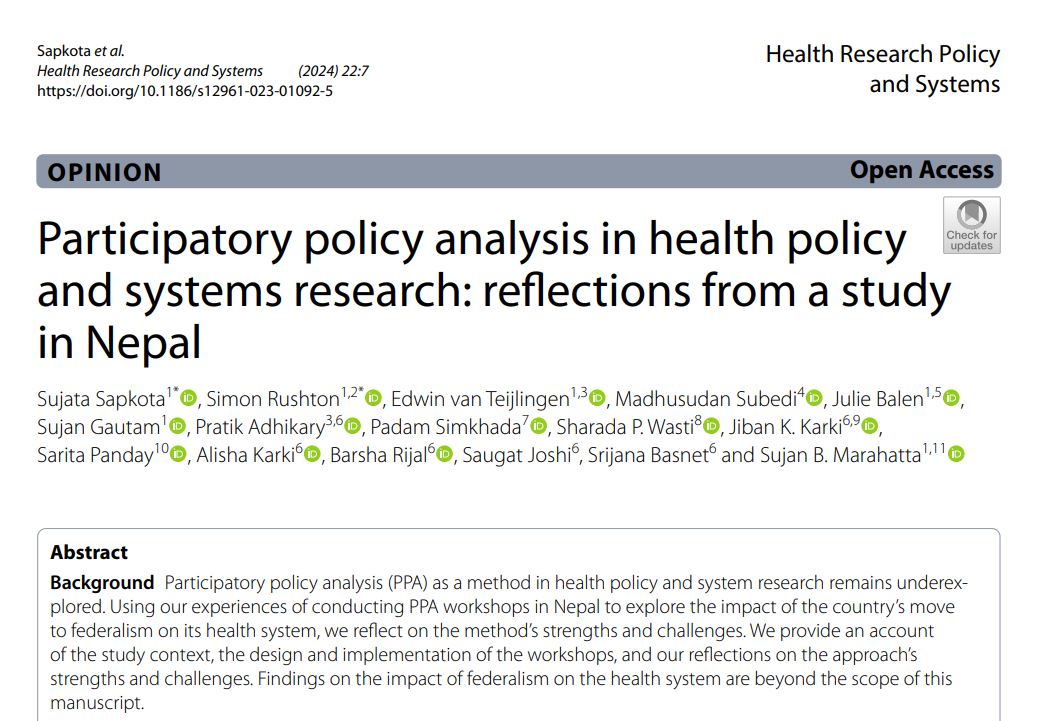
- Sapkota, S., Rushton, S., van Teijlingen, E., et al. (2024) Participatory policy analysis in health policy and systems research: reflections from a study in Nepal. Health Research & Policy Systems, 22 (No.7) https://doi.org/10.1186/s12961-023-01092-5 .
- Wasti, S.P., van Teijlingen, E., Simkhada, P., et al. (2023) Selection of Study Sites and Participants for Research into Nepal’s Federal Health System, WHO South-East Asia Journal of Public Health 12(2):116-119.
- Sapkota, S., Dhakal, A., Rushton S., et al. (2023) The impact of decentralisation on health systems: a systematic review of reviews. BMJ Global Health 8:e013317. doi:10.1136/bmjgh-2023-013317.
- Wasti, S.P., van Teijlingen, E., Rushton, S., et al. (2023) Overcoming the Challenges Facing Nepal’s Health System During Federalisation: An Analysis of Health System Building Blocks, Health Research Policy & Systems 21(117) https://doi.org/10.1186/s12961-023-01033-2
- Sapkota, S., Panday, S., Wasti, S.P., et al. (2022) Health System Strengthening: The Role of Public Health in Federal Nepal, Journal of the Nepal Public Health Association 7(1):36-42.
- Adhikary, P., Balen, J., Gautam, S., et al. (2020) The COVID-19 pandemic in Nepal: Emerging evidence on the effectiveness of action by, and cooperation between, different levels of government in a federal system, Journal of Karnali Academy of Health Sciences 3 (3): 1-11.
- Rushton, S., Pandey, S., van Teijlingen, E., et al. (2021) An Investigation into the Impact of Decentralization on the Health System of Nepal. Journal of Manmohan Memorial Institute of Health Sciences, 7(1): 3–14. https://doi.org/10.3126/jmmihs.v7i1.43146
Tagged / Prof. Edwin van Teijlingen
New BU midwifery publication by Joanne Rack
This week the international scientific journal Midwifery published Ms. Joanne Rack’s second paper from her PhD research. This latest paper ‘The Pregnant Pause: Engaging and Involving Public Contributors in Maternal Health Research‘ [1] appeared online two days ago. This paper focuses on Joanne’s PPI (Patient Public Involvement) in prepartion for her PhD research. The public contributors of PPI groups can include an extensive range of people, including patients, family members or carers, people from allied organisations, service users, and members of the general public who have an interest in research for other reasons. Participants bring their unique perspectives and experiences that can help to shape and inform the research process. This type of involvement ensures that maternal health research is grounded in the needs and preferences of those it aims to serve and grows a sense of ownership and investment among those who use the services but also those who provide them. Joanne stresses that PPI is an essential element for all maternal health endeavours.
Joanne is doing a Clinical Doctorate in the Centre for Midwifery & Women’s Health (CMWH) specialising in personalised care for women of advanced maternal age. This PhD study is matched-funded by University Hospitals Dorset (UHD) NHS Foundation Trust and Bournemouth University.
Her PhD is supervised and supported by Profs. Vanora Hundley, Ann Luce and Edwin van Teijlingen at BU and Dr. Latha Vinayakarao in Poole Maternity Hospital. The first PhD paper with Joanne as lead author was her research protocol ‘Understanding perceptions and communication of risk in advanced maternal age: a scoping review (protocol) on women’s engagement with health care services’ published int he summer of 2024 [2].
References:
- Rack, J., Hundley, V., van Teijlingen, E., Luce, A. (2025)The Pregnant Pause: Engaging and Involving Public Contributors in Maternal Health Research, Midwifery (online first)
- Rack, J., Hundley, V., van Teijlingen, E., Luce, A., Vinayakarao. L. (2024) Understanding perceptions and communication of risk in advanced maternal age: a scoping review (protocol) on women’s engagement with health care services, MIDIRS Midwifery Digest, 34(3): 201-204.
Meeting at BU to address maternal inequalities
Today and yesterday (January 7-8) academics involved in MIHERC (Maternal and Infant Health Equity Research Centre), the successful interdisciplinary collaboration to address challenges in maternity care, met in Bournemouth. MIHERC is led by Sheffield Hallam University, along with Bournemouth University, South Yorkshire Digital Health Hub (SYDHH) and the Health Determinant Research Collaboration, Doncaster. In addition, a range of local and national partners are recognised. MIHERC is one of the nine groups of UK universities making up the new NIHR Challenge Maternity Disparities Consortium. This NIHR Consortium aims of tackling inequalities in maternity outcomes, focusing on inequalities before, during and after pregnancy.
Our second planning meeting highlighted our collective strengths including our expertise in community engagement and PPIE (Public & Patient Involvement & Engagement); intelligent digital solutions in maternity service delivery; research into under-served communities; and capacity building of both communities and maternity staff. The first planning meeting was held late last year at Sheffield Hallam University.
MIHERC is the only midwifery-led collaboration with a strong community engagement and digital inclusive research. MIHERC will work with various NHS Trusts as well as charities such as the Active Pregnancy Foundation, Active Dorset, and Maternal Mental Health Alliance.
New editorial Journal of Asian Midwives
This weekend a new issue of the Journal of Asian Midwives appeared online [1]. Its latest editorial focuses in part on research ethics. The editors highlight the new World Health Organization (WHO) guidance for best practices in clinical trials [2]. The new WHO guidance was picked up at the 24th FERCAP International Conference “Maximizing Benefits through Responsible Conduct of Research” held in November 2024 in Nepal. FERCAP is the Forum for Ethical Review Committees in the Asian and Western Pacific Region.
FERCAP reminded us that research as a social activity should improve health and quality of life for both targeted and general populations. One notable message from this recent conference was the need for shorter and more comprehensible consent forms to make them user-friendly without sacrificing clarity. The other interesting development is that of so-called “decentralized clinical trials”. Decentralized or point-of-care trials can increase the diversity of clinical trial enrollment by increasing its accessibility, for example where elements of the trial are delivered at home and/or data are collected electronically by trial participants instead of researchers. These are exciting new developments in thinking about research ethics.
The Journal of Asian Midwives is Gold Open Access and hence freely available online.
Prof. Edwin van Teijlingen
Centre for Midwifery & Women’s Health
References:
- van Teijlingen, E., Musaddique, A., Jan, R. (2024) Editorial – Dec 2024. Journal of Asian Midwives, 11(2):1–2.
- World Health Organization (2024). Guidance for best practices for clinical trials. World Health Organization. https://www.who.int/publications/i/item/9789240097711 (accessed Jan. 2025)
Anyone can drown. No one should!
The first editorial of The Lancet Public Health [1] highlights a public health issue close to our work in Bangladesh, namely the risk of drowning, especially in young children. “Anyone can drown. No one should” are the words of the Director General of the World Health Organization (WHO) in its first Global status report on drowning prevention, published two weeks ago (Dec. 2024). According to The Lancet Public Health this landmark report dissects the drowning burden globally, at the country level, and the trends since 2000, presents an overview of the key strategies to prevent drowning, and provides a benchmark for tracking prevention efforts in the future. Importantly, this report sheds light on a tragic, neglected, mostly preventable public health issue.
We are grateful to The Lancet Public Health for raising this important issue in 2025, since Bournemouth University (BU) is currently engaged in research project in this field called ‘Sonamoni’. This an interdisciplinary study is a collaboration with CIPRB (the Centre for Injury Prevention and Research, Bangladesh), the University of the West of England (in Bristol), the University of Southampton, the Royal National Lifeboat Institution (RNLI), and Design Without Borders (DWB) in Uganda. Sonamoni aims to design and develop interventions to reduce the number of young children drowning in Bangladesh.
This public health project is funded by the National Institute for Health and Care Research (NIHR) through its Research and Innovation for Global Health Transformation programme. For more information, visit the NIHR website.
The interdisciplinary team at BU includes three faculties and six member of staff: Dr. Mavis Bengtsson, Dr. Kyungjoo Cha, Dr. Mehdi Chowdhury, Dr. Yong Hun Lim, Mr. John Powell, and Prof. Edwin van Teijlingen. We recently published the first paper ‘Drowning Prevention should be a Public Health Issue in Nepal related to this project [2].
References:
- Anonymous (2025) Anyone can drown. No one should. The Lancet Public Health, 10(1): e1
- Hossain, M. S., Pant, P.R., van Teijlingen, E., Sedain, B., Rahman, A. (2024). Drowning Prevention should be a Public Health Issue in Nepal. International Journal of Social Sciences and Management, 11(4): 83–87.
Advancing Rehabilitation Research
Rehabilitation research has long remained in the shadows of other health/medical disciplines, despite its immense potential to reshape patient outcomes and community health. The Rehabilitation Research Symposium Series in Qatar is a significant initiative aligned with global and national frameworks such as the WHO’s (World Health Organization) Rehabilitation 2030 and Qatar’s National Vision 2030.
Advancing Rehabilitation Research: Building Capacity for Evidence-Based Practice: Level 2 Rehabilitation Research Symposium serves as a powerful response to the growing call for a comprehensive, evidence-based approach to rehabilitation, both locally and globally. The second day of this symposium, tomorrow (January 4th 2025), includes a session by Bournemouth University’s Prof. Edwin van Teijlingen. He has been invited to help build research capacity in the field of academic writing and publishing.
Bournemouth University collaboration in Qatar centres on academics and clinicians based at Hamad Medical Corporation’s (HMC). HMC has been appointed as a WHO Collaborating Centre for Healthy Ageing and Dementia, under auspices of Ministry of Public Health in Qatar. 
Last publication of 2024
The Nepal-based Dhaulagiri Journal of Sociology and Anthropology published its latest issue today, the last day of 2024, with an editorial on the hot topic of ‘The Use of Artificial Intelligence (AI) in Academic Writing and Publishing Papers’ [1].
In this editorial, the authors made it very clear that the complete text in Box 1 is generated by AI. Which is appropriate considering the focus of this editorial is on questions raised by the potential use of academic writing. The authors argue that AI should be used with consideration to avoid misuse. Any use of AI should be done transparently, ethically, and professionally, and the authors should take full responsibility for the accuracy of the information.
Prof. Edwin an Teijlingen
Centre for Midwifery & Women’s Health
Reference:
-
van Teijlingen, E., Subedi, M., Parker, S., Khattri, M.B. (2024) The Use of Artificial Intelligence (AI) in Academic Writing and Publishing Papers Dhaulagiri Journal of Sociology & Anthropology, 18(2): 1-4. https://www.nepjol.info/index.php/DSAJ/article/view/73358
Study of federalisation in Nepal leading to policy brief
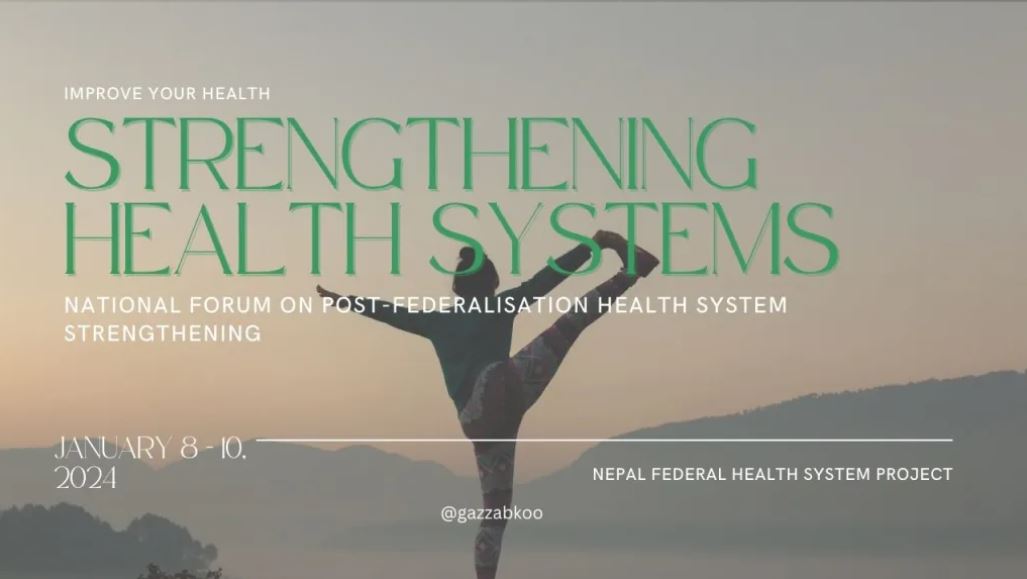
On Boxing Day and the following day (Dec. 27th) a member of our research team, Amshu Dhakal based at Manmohan Memorial Institute of Health Sciences (MMIHSS), presented findings from our Nepal Federal Health System Project in Kathmandu. The event, Nepal Health Conclave 2024, was organised by the Ministry of Health and Population and supported by WHO (World Health Organization) Nepal and UNFPA. The event aimed to help strengthen Nepal’s health services. This year’s conclave, themed “Bridging the Gap Between Global Expertise and National Needs”, brought together Nepalese diaspora health professionals and national stakeholders to foster collaboration and innovation in health systems.
Amshu presented two posters at the event: (1) The Impact of Decentralisation on Health Systems: A Systematic Review of Reviews which systematically reviewed how decentralisation affects health systems globally, highlighting key opportunities and challenges across WHO’s six building blocks; and (2) Transforming the Health System in Nepal: The Impact of Federalisation, which examined how the transition to a federal system reshaped Nepal’s health system, identifying gaps, opportunities, and actionable recommendations for improvement.
Our research team produced policy briefs in collaboration with government officials/stakeholders from all three levels of government. The policy briefs can be accessed at the website of our Nepal Federal Health System Project. This study was funded by the UK Health Systems Research Initiative [Grant ref. MR/T023554/1] to study the consequences for the health system of Nepal’s move from a centralised political system to a more federal government structure in 2015. This joint project was led by the University of Sheffield in collaboration with Bournemouth University, the University of Huddersfield, Canterbury Christ Church University and two institutions in Nepal, namely MMIHS and PHASE Nepal.
In late 2022 further funding was awarded by the Medical Research Foundation to Prof. Julie Balen, from Canterbury Christ Church University, to disseminate the findings of our UK Health Systems Research Initiative-funded research in Nepal. In terms of academic dissemination, we have published eight papers from this interdisciplinary project [1-8].
For and from this project, our team produced a comprehensive English-language policy brief as well as a Nepali-language version for politicians and policy-makers and civil servants in Nepal.
Prof. Edwin van Teijlingen
Centre for Midwifery & Women’s Health
References:
- Koirala, B., Rushton, S., Adhikary, P., Balen, J., et al. (2024) COVID-19 as a challenge to Nepal’s newly federalised health system: capacities, responsibilities, and mindsets, Asia Pacific Journal of Public Health (online first) https://doi.org/10.1177/1010539524125012.
- Sapkota, S., Rushton, S., van Teijlingen, E., et al. (2024) Participatory policy analysis in health policy and systems research: reflections from a study in Nepal. Health Research & Policy Systems, 22 (No.7) https://doi.org/10.1186/s12961-023-01092-5 .
- Wasti, S.P., van Teijlingen, E., Simkhada, P., et al. (2023) Selection of Study Sites and Participants for Research into Nepal’s Federal Health System, WHO South-East Asia Journal of Public Health 12(2):116-119.
- Sapkota, S., Dhakal, A., Rushton S., et al. (2023) The impact of decentralisation on health systems: a systematic review of reviews. BMJ Global Health 8:e013317. doi:10.1136/bmjgh-2023-013317.
- Wasti, S.P., van Teijlingen, E., Rushton, S., et al. (2023) Overcoming the Challenges Facing Nepal’s Health System During Federalisation: An Analysis of Health System Building Blocks, Health Research Policy & Systems 21(117) https://doi.org/10.1186/s12961-023-01033-2
- Sapkota, S., Panday, S., Wasti, S.P., et al. (2022) Health System Strengthening: The Role of Public Health in Federal Nepal, Journal of the Nepal Public Health Association 7(1):36-42.
- Adhikary, P., Balen, J., Gautam, S., et al. (2020) The COVID-19 pandemic in Nepal: Emerging evidence on the effectiveness of action by, and cooperation between, different levels of government in a federal system, Journal of Karnali Academy of Health Sciences 3 (3): 1-11.
- Rushton, S., Pandey, S., van Teijlingen, E., et al. (2021) An Investigation into the Impact of Decentralization on the Health System of Nepal. Journal of Manmohan Memorial Institute of Health Sciences, 7(1): 3–14. https://doi.org/10.3126/jmmihs.v7i1.43146
Academic writing: Six encouragements
The Festive Season is a good time to clean up and clear out the pile of paper collected throughout the proceeding year. One the many pieces of potentially useful information I archived was a three-page article from the April edition of the monthly magazine Prima [1]. Most certainly not the most academic magazine, but useful all the same, as it was a piece encouraging readers to write their own book.
The six steps or recommendations in Prima were:
- Figure out what you want to write;
- Make time to write;
- Find your writing method;
- Forget about perfection;
- Keep going (even when the going gets though);
- Find writing buddies!
I found it interesting as these six steps in this piece overlap a lot with the advice we have been giving to budding academics for years [2]. 
Prof. Edwin van Teijlingen
Centre for Midwifery & Women’s Health (CMWH)
References:
- Gibson, F. (2024) How to write a novel and get published, Prima (April edition): 38-40.
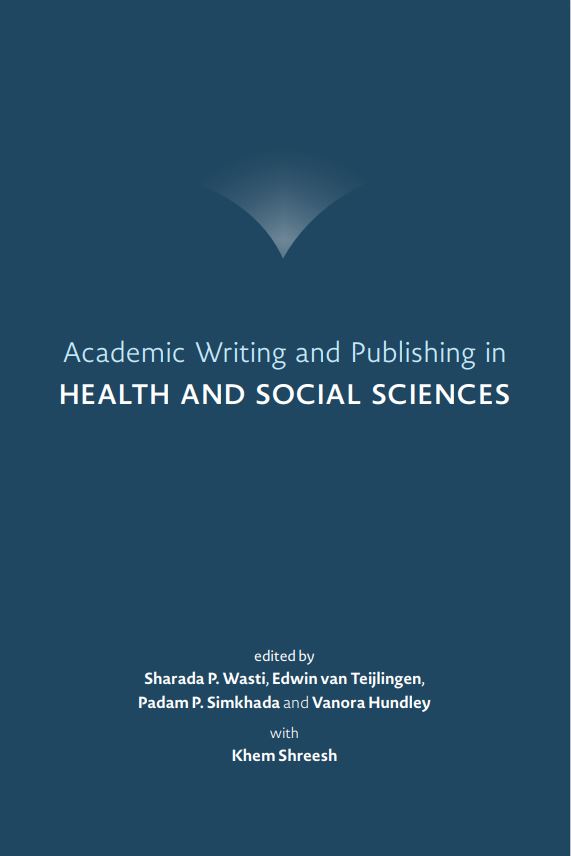
- Wasti, S.P., van Teijlingen, E., Simkhada, P., Hundley, V. with Shreesh, K. (2022) Writing and Publishing Academic Work, Kathmandu, Nepal: Himal Books
Two new BU midwifery publications
This past week, as part of her work with McMaster University in Canada, Bournemouth University’s (BU) Centre for Midwifery & Women’s Health (CMWH) postgraduate PhD student Joanne Rack published a paper in BMJ Open. This Open Access paper explores the strengths and weaknesses of midwifery research in Canada [1]. Joanne is currently doing a Clinical Doctorate in the specialising in personalised care for women of advanced maternal age. This PhD study is matched-funded by University Hospitals Dorset NHS Foundation Trust and Bournemouth University [BU].
Her PhD is supervised and supported by Professors Vanora Hundley and Edwin van Teijlingen in CMWH, Prof. Ann Luce, deputy dean in BU’s Department of Communication & Journalism as well as Dr. Latha Vinayakarao in Poole Maternity Hospital.
The second midwifery paper ‘Importance of Expanding Midwifery-led Units and Midwifery Care in Reducing Maternal Deaths in Nepal‘, which is also Open Access, has a different international focus, this time on Nepal [2]. The paper is co-authored by Dr. Preeti Mahato and Prof. Edwin van Teijlingen. Dr. Preeti Mahato, formerly in BU’s Faculty of Health & Social Sciences, is currently based at Royal Holloway, University of London.
References:
- Ruby, E., Brunton, G., Rack, J., et al. (2024). Exploring the landscape of Canadian midwifery research: strengths, gaps and priorities – results of a scoping review. BMJ Open 14:e087698. doi:10.1136/bmjopen-2024-087698
- Mahato, P., van Teijlingen, E. (2024). Importance of Expanding Midwifery-led Units and Midwifery Care in Reducing Maternal Deaths in Nepal. Europasian Journal of Medical Sciences 6(1). https://doi.org/10.46405/ejms.v6i1.537
New publications Dr. Pramod Regmi
Dr. Pramod Regmi in the Centre for Wellbeing & Long-Term Health published two new academic papers just before Christmas on health and migration. The first one was called ‘Health and Wellbeing Among Nepali Migrants: A Scoping Review’ [1], and the second one has the title ‘Returning Home to Nepal after Modern Slavery: Opportunities for Health Promotion’ [2]. Both papers are Open Access and, hence, freely available online!
References:
- Mahato, P., Bhusal, S., Regmi, P., van Teijlingen, E. (2024). Health and Wellbeing Among Nepali Migrants: A Scoping Review. Journal of Health Promotion, 12(1): 79–90. https://doi.org/10.3126/jhp.v12i1.72699
- Paudyal, A.R., Harvey, O., van Teijlingen, E., Regmi, P. R., Sharma, C. (2024). Returning Home to Nepal after Modern Slavery: Opportunities for Health Promotion. Journal of Health Promotion, 12(1): 125–132. https://doi.org/10.3126/jhp.v12i1.72713
Appreciating Appreciative Inquiry
Prof. Gabriele Bammer, the editor of the i2Insights blogs, highlighted in her ninth annual review that a post created by Bournemouth University academics was one of the website’s most popular contributions in 2024. This BU contribution ‘Learning to use Appreciative Inquiry‘ by Dr. Rachel Arnold is in the top eight most viewed this year – in fact it’s the second most viewed blog!
Dr. Rachel Arnold has been lead author on several research papers in the field of Appreciative Inquiry [1-2], in collaboration with current and former Bournemouth Academics, Professor Emerita Sue Way, Dr. Preeto Mahato (now at Royal Holloway, University of London) and Prof. Edwin van Teijlingen. Rachel has also been a contributor to a major textbook in the field [3-4].
References:
- Arnold, R., Way, S., Mahato, P., van Teijlingen, E. (2024) “I might have cried in the changing room, but I still went to work”. Maternity staff managing roles, responsibilities, and emotions of work and home during COVID-19: an Appreciative Inquiry, Women & Birth 37: 128-136.
- Arnold, R., Gordon, C., Way, S., Mahato, P., van Teijlingen, E. (2022) Why use Appreciative Inquiry? Lessons learned during COVID-19 in a UK maternity service, European Journal of Midwifery 6 (May): 1-7.
- Hodgkiss, D., Quinney, S., Slack, T., Barnett, K., Howells, B. (2024a) Appreciating Health and Care: A practical Appreciative Inquiry resource for the Health and Social Care sector, Forres: Appreciating People; ISBN: 978-1-9160267-6-6
- Hodgkiss, D., Quinney, S., Slack, T., Barnett, K., Howells, B. (2024b) Appreciating Health and Care: AI in practice, Forres: Appreciating People.
BU academics’ paper read 170,000 times!
This week ResearchGate notified us that our methods paper ‘The Importance of Pilot Studies‘ [1], published 22 years ago in The Nursing Standard,
has now been read 170,000 times! Prof. Vanora Hundley and Prof. Edwin van Teijlingen wrote this more elementary paper after publishing an in-depth academic paper on a pilot study into assessing maternity care in Scotland [2]. The latter paper described their learning from a pilot study which we conducted prior to a cross-national study of births in Scotland.
The methods paper in the Nursing Standard is also their most highly cited paper. Today Google Scholar lists it with 2,035 citations, interestingly this is not the case on SCOPUS as The Nursing Standard is not listed on SCOPUS. Researchers seem to be quoting this paper in their research methods section when they have done pilot or feasibility study for a larger-scale study.
References:
- van Teijlingen E, Hundley, V. (2002) The importance of pilot studies, The Nursing Standard 16(40): 33-36. Web: nursing-standard.co.uk/archives/vol16-40/pdfs/vol16w40p3336.pdf
- van Teijlingen E, Rennie, AM., Hundley, V, Graham, W. (2001) The importance of conducting & reporting pilot studies: example of Scottish Births Survey, Journal of Advanced Nursing, 34: 289-95.
FHSS academics teaching in Nepal
As part of our long-standing Memorandum of Agreement between Bournemouth University and Manmohan Memorial Institute of Health Sciences (MMIHS) in Nepal, Dr. Pramod Regmi taught a postgraduate class in Kathmandu last week. Pramod, who is Principal Academic in International Health in the Centre for Wellbeing and Long-term Health (CWLTH) in the Faculty of Health & Social Sciences,
addressed M.Sc. students about the finer aspects of research methods. Tomorrow (Sunday 24th November) I have been invited to speak to the same MMIHS postgraduate students about research theories and paradigms.
The process of internationalising higher education institutions through collaborative partnerships like this one between BU and MMIHS, brings benefits to both institutions’ staff and students. This collaboration has led to many BU staff and students visiting Nepal, and many MMIHS staff and student visiting Bournemouth. The collaboration has also led to several successful grant applications and nearly twenty academic publications [1-17].
Prof. Edwin van Teijlingen
References (BU + MMIHS authors in bold):
- Simkhada, P., van Teijlingen E., Winter, RC., Fanning, C., Dhungel, A., Marahatta SB. (2015) Why are so many Nepali women killing themselves? Review of key issues Journal of Manmohan Memorial Institute of Health Sciences 1(4): 43-49. nepjol.info/index.php/JMMIHS/article/view/12001
- Simkhada, P.P., van Teijlingen, E., Marahatta, S.B. (2015) Mental health services in Nepal: Is it too late? Journal of Manmohan Memorial Institute of Health Sciences 1(4): 1-2.
- Simkhada, B, Mackay, S, Khatri, R., Sharma, C.K., Pokhrel, T, Marahatta, S, Angell, C, van Teijlingen, E., Simkhada, P (2016) Continual Professional Development (CPD): Improving Quality of Nursing Care in Nepal, Health Prospect 15 (3):1-3 nepjol.info/index.php/HPROSPECT/article/view/16326/13255
- van Teijlingen, E., Marahatta, S.B., Simkhada, P., McIver, M., Sharma, J.P. (2017) Developing an international higher education partnerships between high & low-income countries: two case studies, Journal of Manmohan Memorial Institute of Health Sciences, 3(1): 94-100.
- Simkhada, P., van Teijlingen, E., Simkhada, B., Regmi, P., Aryal, N., Marahatta, S.B. (2018) Experts warn Nepal Government not to reduce local Public Health spending, Journal of Manmohan Memorial Institute of Health Sciences, 4(1): 1-3.
- Regmi, P., van Teijlingen, E., Neupane, S., Marahatta, S. (2019) Hormone use among Nepali transgender women: a qualitative study, BMJ Open 9: e030464. doi:10.1136/bmjopen-2019-030464.
- Sathian, B., Asim, M., Mekkodathil, A., van Teijlingen, E., Subramanya, S.H., Simkhada, P., Marahatta, S.B., Shrestha, U.M. (2020) Impact of COVID-19 on community health: A systematic review of a population of 82 million, Journal of Advanced Internal Medicine 9(1): 4-11. https://www.nepjol.info/index.php/JAIM/article/view/29159
- Adhikary, P., Balen, J., Gautam, S., Ghimire, S., Karki, J., Lee, A.C.K., Marahatta, S.B., Panday, S., Pohl, G., Rushton, S., Sapkota, S., Simkhada, P.P., Subedi, M., van Teijlingen, E. for the Nepal Federal Health System team (2020) The COVID-19 pandemic in Nepal: Emerging evidence on the effectiveness of action by, and cooperation between, different levels of government in a federal system, Journal of Karnali Academy of Health Sciences 3 (3): 1-11.
- Khatri, R., van Teijlingen, E., Marahatta, S., Simkhada, P., Mackay, S., Simkhada, B. (2021) Exploring the Challenges and Opportunities for Continuing Professional Development of Nurses: A Qualitative Study with Senior Nurse Leaders in Nepal. Journal of Manmohan Memorial Institute of Health Sciences, 7(1); 15–29. https://doi.org/10.3126/jmmihs.v7i1.43147
- Sapkota, S., Panday, S., Wasti, S.P., Lee, A., Balen, J., van Teijlingen, E., Rushton, S., Subedi, M., Gautam, S., Karki., J., Adhikary, P., Marahatta, S., Simkhada, P., for the Nepal Federal Health System Team (2022) Health System Strengthening: The Role of Public Health in Federal Nepal, Journal of the Nepal Public Health Association 7(1):36-42. https://nepha.org.np/wp-content/uploads/2022/10/5.-Manuscript_Health-System-Strengthening.pdf
- van Teijlingen, E., Thapa, D., Marahatta, S.B., Sapkota, J.L., Regmi, P. Sathian, B. (2022) Editors and Reviewers: Roles and Responsibilities, In: Wasti, S.P., et al. (Eds.) Academic Writing and Publishing in Health & Social Sciences, Kathmandu, Nepal: Himal Books: 32-37.
- Mahato P., Adhikari B., Marahatta S.B., Bhusal S., Kunwar K., Yadav R.K., Baral, S., Adhikari, A., van Teijlingen, E. (2023) Perceptions around COVID-19 and vaccine hesitancy: A qualitative study in Kaski district, Western Nepal. PLOS Global Public Health 3(2): e0000564. https://doi.org/10.1371/journal.pgph.0000564
- Wasti, S.P., van Teijlingen, E., Simkhada, P., Rushton, S., Balen, J., Subedi, M., Karki, J., Adhikary, P., Sapkota, S., Gautam, S., Marahatta, S., Panday, S., Bajracharya, B., Vaidya, A. for the Nepal Federal Health System Team (2023) Selection of Study Sites and Participants for Research into Nepal’s Federal Health System, WHO South-East Asia Journal of Public Health (accepted).
- Sapkota, S., Dhakal, A., Rushton, S., van Teijlingen, E., Marahatta, S.B., Balen, J., Lee, A. for the Nepal Federal Health System Team (2023) The impacts of decentralisation on health systems: a systematic review of reviews, BMJ Global Health 8(12) https://gh.bmj.com/content/8/12/e013317
- Marahatta, S., Regmi, P., Knight, A., Kuncova, J., Asbridge, E., Khanal, D., van Teijlingen, E. (2023). Staff-Student Exchange between MMIHS and Bournemouth University (UK). Journal of Manmohan Memorial Institute of Health Sciences, 8(1): 1–5. https://doi.org/10.3126/jmmihs.v8i1.57265
- Sapkota, S., Rushton, S., van Teijlingen, E., Subedi, M., Balen, J., Gautam, S., Adhikary, P., Simkhada, P., Wasti,SP., Karki, JK., Panday, S., Karki, A., Rijal, B., Joshi, S., Basnet, S., Marahatta, SB. (2024) Participatory policy analysis in health policy and systems research: reflections from a study in Nepal. Health Research & Policy Systems, 22(7) https://doi.org/10.1186/s12961-023-01092-5 .
- Clark CJ, Marahatta SB, Hundley VA (2024) The prevalence of pain catastrophising in nulliparous women in Nepal; the importance for childbirth. PLoS ONE 19(8): e0308129. https://doi.org/10.1371/journal.pone.0308129
Capacity building with CIPRB staff in Bangladesh
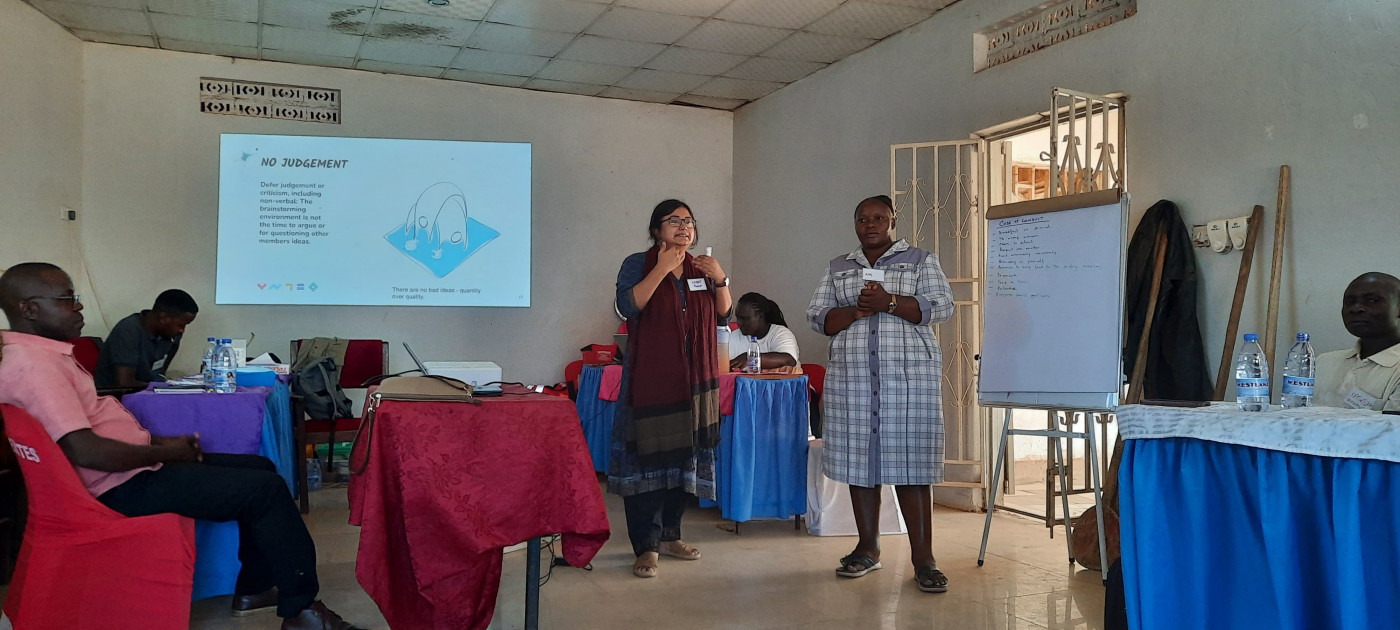
Yesterday I had the pleasure to delivery two research capacity building workshop sessions in Dhaka with staff at CIPRB (Centre for Injury Prevention and Research, Bangladesh). I was in Bangladesh as part of our Sonamoni project, this interdisciplinary project is jointly coordinated by Bournemouth University and CIPRB, in also includes the University of the West of England, Bristol, the University of Southampton, Design Without Borders (DWB) in Uganda, and the Royal National Lifeboat Institution (RNLI). We are working to reduce drownings among newly-mobile children, generally those under two years old. This £1.6m project has been made possible by a grant from the National Institute for Health and Care Research (NIHR) through its Research and Innovation for Global Health Transformation programme.
Two sessions covered qualitative research approaches in the morning and academic writing and publishing in the afternoon. The sessions were attended by staff involved in the Sonamoni project but we made it open to other CIPRB staff and in total 18 people attended. BU’s contributions to capacity-building initiatives aim to develop our collaborators’s research staff’s skills and increase their confidence in conducting qualitative research as well as publishing it.
Professor Edwin van Teijlingen
New weight change BU paper
Congratulations to Faculty of Health & Social Sciences (FHSS) PhD student colleagues Dr. The effectiveness of couples’ lifestyle interventions on weight change: A systematic review and meta-analysis of Randomised Controlled Trials‘.
Iro is a PhD student and this systematic review and meta-analysis is the first to investigate the effectiveness of lifestyle interventions targeting couples on weight loss, compared to interventions focused on individuals or standard care. The findings suggest that interventions aimed at couples lead to greater weight loss, though the results should be interpreted with caution due to the wide heterogeneity among the studies. The authors conclude that further research is needed with evidence-based study designs, targeting younger participants, and incorporating intervention of longer duration, and longer follow-up periods.
- Arvanitidou, E. I., Tsofliou, F., Wood, J., & Tsatsani, I. (2024). The effectiveness of couples’ lifestyle interventions on weight change: A systematic review and meta-analysis of Randomised Controlled Trials. Nutrition and health, 2601060241291123. Advance online publication. https://doi.org/10.1177/02601060241291123
Congratulations to three former BU staff
Bournemouth University Emeritus Professor, Jonathan Parker, now Health Services University, UK, former BU academic Professor Vanessa Heaslip, now Salford University and Professor Sarah Hean and Pravin Tembjerg from the University of Stavanger, Norway, are pleased to announce the publication of their edited international research collection Rebuilding Family Relations for Children and Youth Separated from Family. This edited volume is published by Palgrave Macmillan.
This edited volume explores a range of causes for separation of children and young people from family, the impact of these causes, and methods that both professionals and families may employ to build or rebuild these relations. In particular, contributions focus on six high priority crises through which children and young people become either permanently or temporarily separated from their families: removal by child welfare services, migration, family breakdown, placement into institutional care, incarceration and/or the death of a parent. Contributors include scholars in social work, psychology, health, sociology, social policy, and political science and the work develops co-production participatory research methods and tools in addition to empirical research to enhance professional practice.
Congratulations!
Prof. Edwin van Teijlingen
Sonamoni project field visit
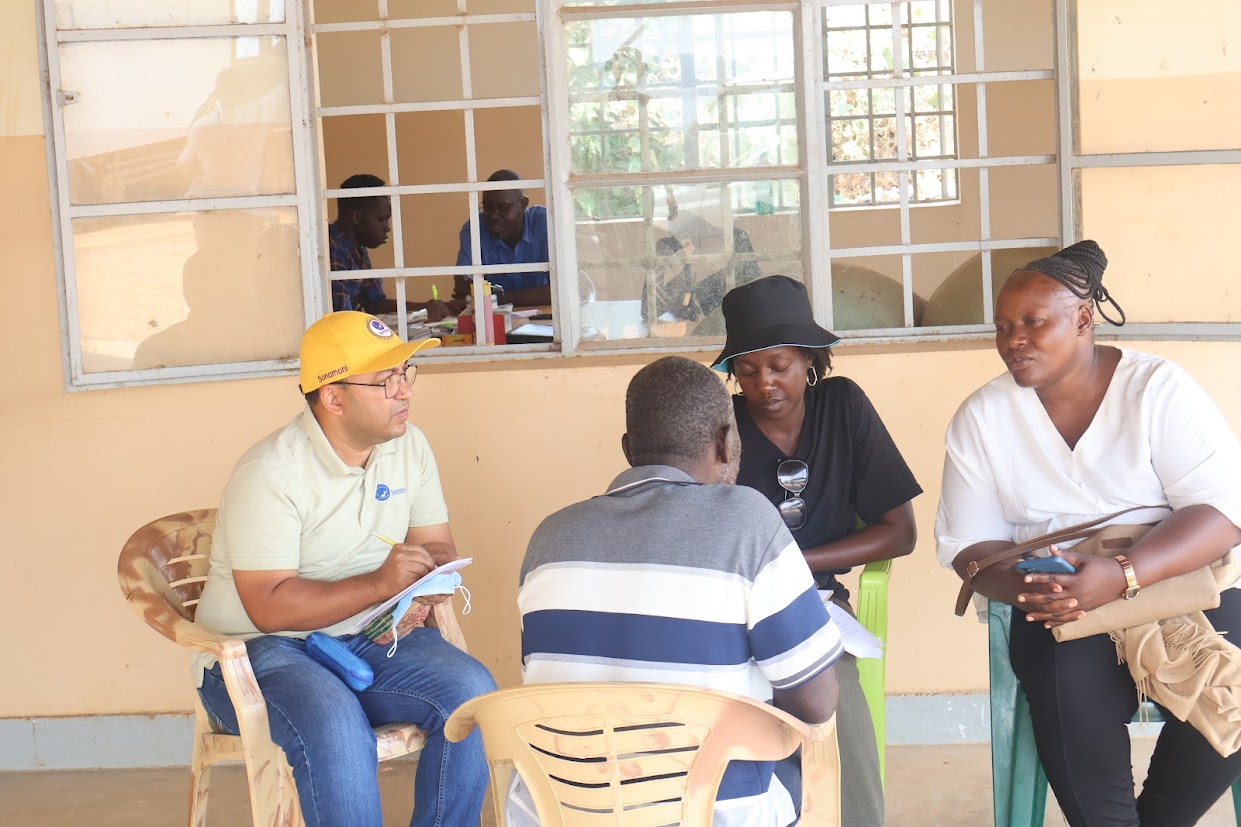
This week I had the pleasure of visiting one of the two major research sites of our Sonamoni project. Sonamoni is jointly coordinated by Bournemouth University in collaboration with the Centre for Injury Prevention and Research, Bangladesh (CIPRB), the University of the West of England, Bristol, the University of Southampton, Design Without Borders (DWB) in Uganda, and the Royal National Lifeboat Institution (RNLI). We are working to reduce drownings among newly-mobile children, generally those under two years old. This £1.6m project has been made possible thanks to a grant from the National Institute for Health and Care Research (NIHR) through their Research and Innovation for Global Health Transformation programme. Yesterday CIPRB staff Prof. Dr. Aminur Rahman and Mr. Notan Chandra Dutta took me to the field site in Kalapari in rural Bangladesh.
This was my first ever visit to Bangladesh despite earlier attempts to go out there two and three decades ago. This visit included an outdoor meeting with a Village Injury Prevention Committee (VIPC) with whom CIPRB has been working for years in harmony.
The Bournemouth University team comprises staff from three faculties: Dr. Mavis Bengtsson, Dr. Kyungjoo Cha, Dr. Mehdi Chowdhury, Dr. Yong Hun Lim, Mr. John Powell, and Prof. Edwin van Teijlingen, and Ph.D. student Mr. Md. Shafkat Hossain. For more information about our ongoing research in Bangladesh, please visit the NIHR website.
Prof. Edwin van Teijlingen
Centre for Midwifery & Women’s Health (CMWH)
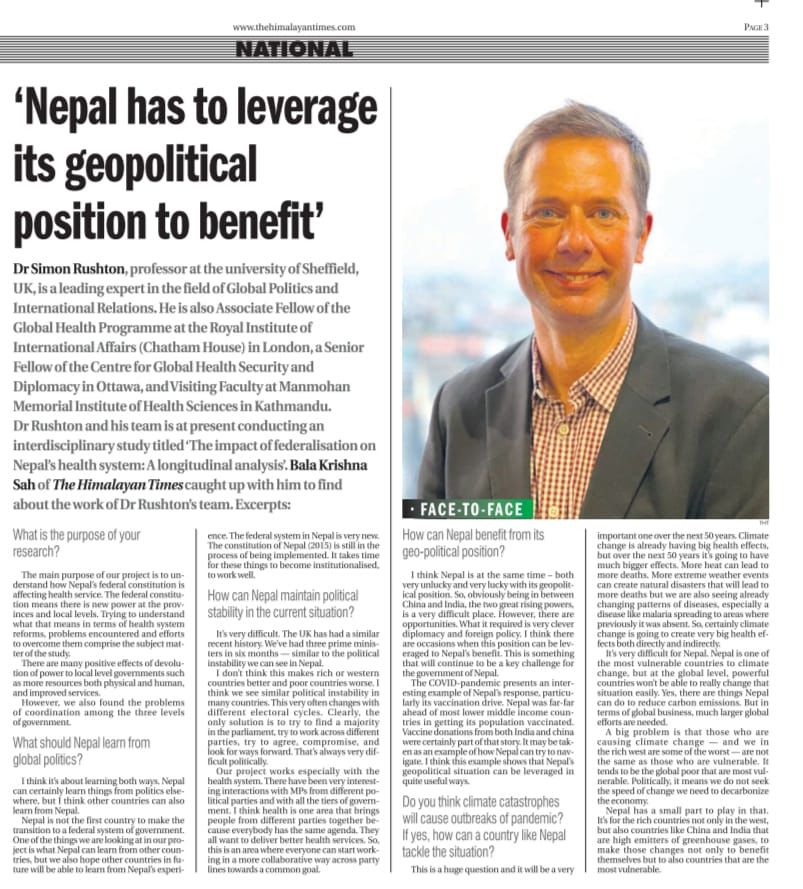
Last month we reported on this Bournemouth University Research Blog (click here!) that Ms. Amshu Dhakal, presented findings from our Nepal Federal Health System Project in Nepal. Amshu’s presentation at the Nepal Health Conclave 2024, organised by the Ministry of Health and Population and supported by WHO (World Health Organization) Nepal and UNFPA, resulted in an online article in Nepal. This article in Nepali in Swasthya Khabar Patrika features lessons learnt and evidence from our research project “The Impact of Federalisation on the Health System of Nepal.”

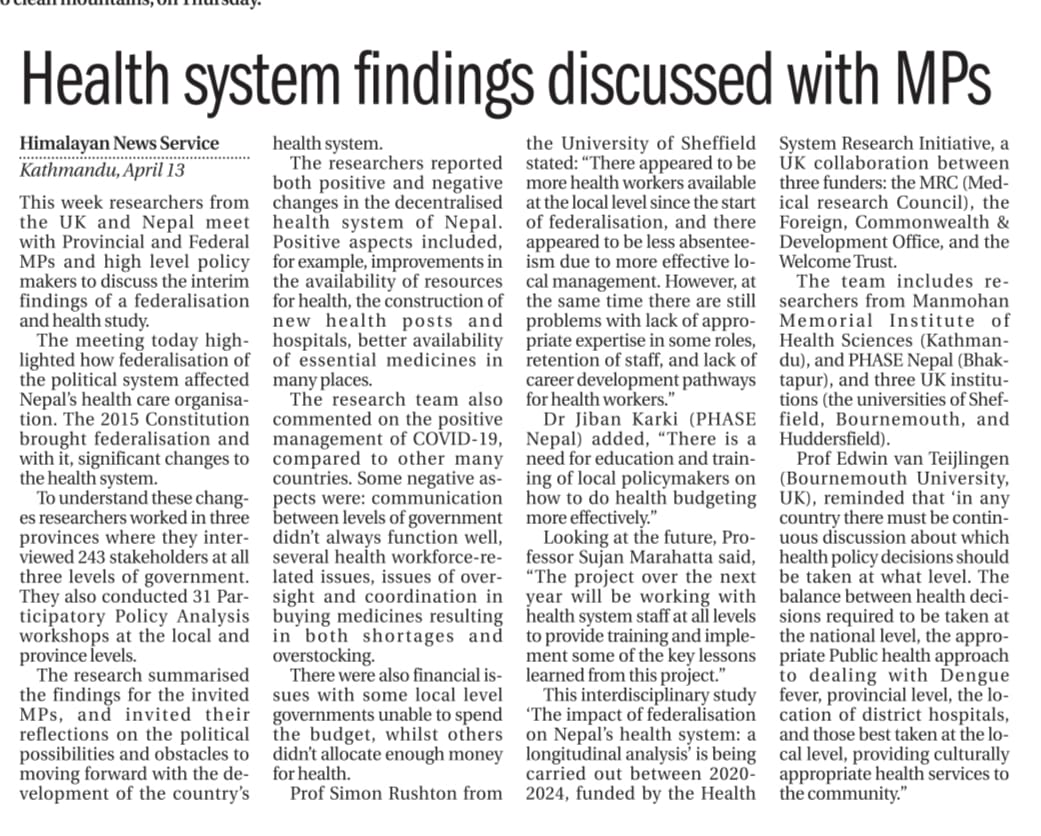
This is one of several news articles from this project which have appeared in both English and Nepali in national media in Nepal.
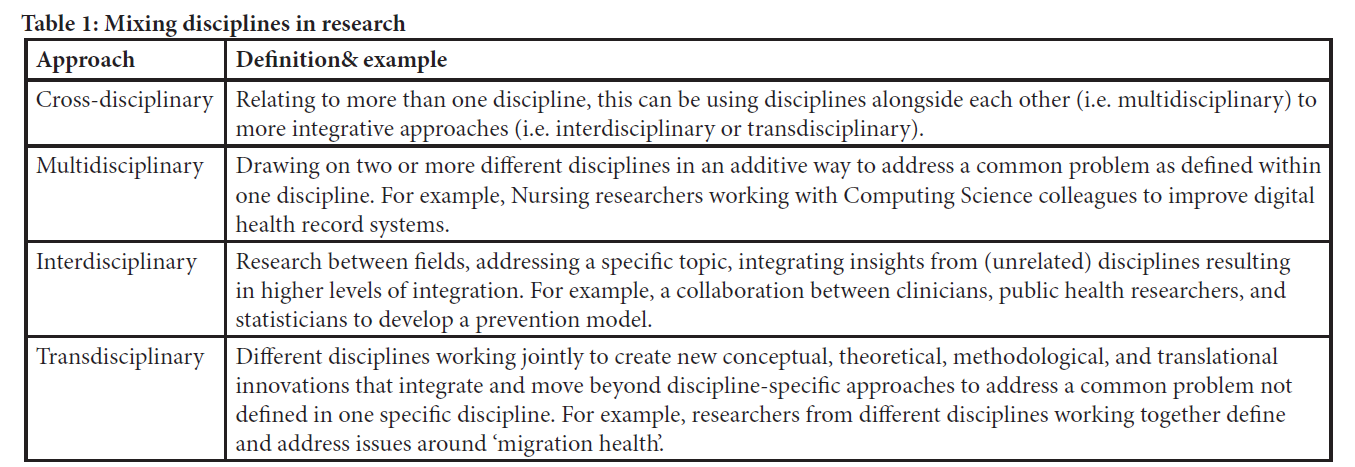
Our interdisciplinary research project ‘


Writing policy briefs
Upholding Excellence: The Concordat to Support Research Integrity
Today’s Documentation Will Serve Tomorrow’s Justice
Up2U: New BU academic publication
New BU midwifery paper
ECR Funding Open Call: Research Culture & Community Grant – Application Deadline Friday 12 December

MSCA Postdoctoral Fellowships 2025 Call

ERC Advanced Grant 2025 Webinar
Horizon Europe Work Programme 2025 Published
Horizon Europe 2025 Work Programme pre-Published
Update on UKRO services
European research project exploring use of ‘virtual twins’ to better manage metabolic associated fatty liver disease