 Congratulations to Charlotte Clayton, PhD student in the Centre for Midwifery, Maternal & Perinatal Health (CMMPH) on the publication of an article based on her PhD study. The paper ‘The public health role of case-loading midwives in advancing health equity in childbearing women and babies living in socially deprived areas in England: The Mi-CARE Study protocol’ is co-authored with her supervisors Prof. Ann Hemingway, Dr. Mel Hughes and Dr. Stella Rawnson [1].
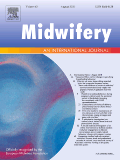
This paper in the European Journal of Midwifery is Open Access, and hence freely available to everybody with an internet access. Charlotte is doing the Clinical Academic Doctoral (CAD) programme at Bournemouth University. The CAD programme provides midwives with bespoke research training, which includes conducting a piece of independent research whilst also remaining in clinical practice. The CAD programme is part of the NIHR Wessex Integrated Academic Clinical Training Pathway and in her PhD study supported by BU and University Hospital Southampton (UHS), where Charlotte works as a midwife). Charlotte use the Twitter handle: @femmidwife.
Well done!
Prof. Edwin van Teijlingen
CMMPH
Reference:
- Clayton S, Hemingway A, Hughes M, Rawnson S (2022) The public health role of caseloading midwives in advancing health equity in childbearing women and babies living in socially deprived areas in England: The Mi-CARE Study protocol, Eur J Midwifery 6(April):17





 elation to their needs, rather than the focus being almost exclusively on their babies.














 Apply now to take part in the 2026 ESRC Festival of Social Science
 Reminder: Register for the ESRC Festival of Social Science 2026 Information Session
 Deadline Approaching: Submit your Poster for the Research Conference by Monday 27 April
 BU academics publish in Nepal national newspaper
 New BU Physiology paper
 ECR Funding Open Call: Research Culture & Community Grant – Apply now
 ECR Funding Open Call: Research Culture & Community Grant – Application Deadline Friday 12 December
 MSCA Postdoctoral Fellowships 2025 Call
 ERC Advanced Grant 2025 Webinar
 Update on UKRO services
 European research project exploring use of ‘virtual twins’ to better manage metabolic associated fatty liver disease