 On Wednesday, 19th October 2016, BU’s Global Engagement team (as part of the new Research Knowledge Exchange Development Framework) will be facilitating a Sandpit event on Global Challenges, attended by staff from the DFID and other organisations.
Which means…?
We’re seeking to come up with novel research that could form part of the UK’s Official Development Assistance (ODA) commitment.
So, who should attend?
We want anyone who thinks they might have something to contribute, and who is available all day on Wednesday 19th October to come along. We will also be inviting relevant external attendees to contribute to the day.
What do I need to prepare in advance? What will the sandpit entail?
Absolutely nothing in advance. During the sandpit, you’ll be guided through a process which results in the development of research ideas. The process facilitates creativity, potentially leading to innovative and interdisciplinary research ideas. These ideas will be explored with other attendees, and further developed based on the feedback received.
What if I don’t have time to think about ideas in advance?
You don’t need to do this. Some inspiring speakers with a range of backgrounds will be coming along to give you ideas…
What about afterwards? Do I need to go away and do loads of work?
Well… that depends! The sandpit will result in some novel research ideas. Some of these may be progressed immediately; others might need more time to think about. You may find common ground with other attendees which you choose to take forward in other ways, such as writing a paper or applying for research funding.
What if my topic area is really specific, such as health?
Your contribution will be very welcome! One of the main benefits of a sandpit event is to bring together individuals with a range of backgrounds and specialisms who are able to see things just that bit differently to one another.
So, is this just networking?
Definitely not! It is a facilitated session with the primary intention of developing innovative research ideas, which also enables the development of networks. It gives you the opportunity to explore research ideas which you may develop over time, together with the chance to find common ground with academics from across BU and beyond.
So, how do I book onto this event?
To take part in this exciting opportunity, all participants should complete the Global Challenges Sandpit Application Form and return this to Dianne Goodman by Friday, 30th September. Places are strictly limited and you will be be contacted to confirm a place place on the sandpit with arrangements nearer the time. The event will be held in Bournemouth at the Executive Business Centre.
By applying, you agree to attend for the full duration of the event on 19th October (c. 9:30 – 16:30).
If you have any queries prior to submitting your application, please contact Ehren Milner, RKEO Research Facilitator.
 Our informative “Coping with the new EU Landscape” 2 workshops will be taking place this Thursday the 29th of September in the Octagon on Talbot Campus at:






 The EPSRC is








 ESRC Studentships for 2027 Entry: Opportunity Now Open
 SONAMONI contributions to Safety Conference 2026 in South Africa
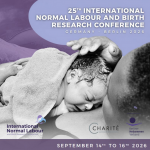 Three CMWH presentations at Berlin conference
 New interdisciplinary paper on Nepal
 Horizon Europe Cluster 3 (Civil Security for Society) 2026 Calls Now Open
 MSCA Doctoral Networks 2026 Call Information Webinar
 ESRC Festival of Social Science 2026: Application Deadline Extended to Thursday 25 June 2026
 Reminder: Register for the ESRC Festival of Social Science 2026 Information Session
 ECR Funding Open Call: Research Culture & Community Grant – Apply now
 ERC Advanced Grant 2025 Webinar
 Update on UKRO services
 European research project exploring use of ‘virtual twins’ to better manage metabolic associated fatty liver disease