Category / Ageing and Dementia

Latest Major Funding Opportunities

The following funding opportunities have been announced. Please follow the links for more information.


The Department of Health, including NIHR, invites tenders for its small business research initiative call on faecal and urinary incontinence in frail elderly people. The call aims to find innovative new products and services to help with faecal and urinary incontinence in frail elderly people. Tenderers should address prevention, diagnosis, treatment and management.

Phase 1 shows the technical feasibility of the proposed concept, and Phase 2 contracts are intended to develop and evaluate prototypes or demonstration units from the more promising technologies in Phase 1. Only those projects that have completed Phase 1 successfully will be eligible for Phase 2.

Maximum award: up to £100,000 per project over six months

Closing date:  12:00pm,  11/08/15


NHS England, under the Department of Health, invites tenders for minimising the impact of falling. This competition focuses on minimising the impact of falls and the fear of falling in older people, and should address a range of unmet needs, expressed as ‘what if’ scenarios, that could improve the care that clinicians are able to offer to patients in terms of outcomes, experience and efficiency. Fall prevention services provide assessment, strength and balance training, occupational therapist support, vision assessments and medicines review. Tenders should show the technical feasibility of the proposed concept.

Maximum award: up to £100,000 per project for a maximum of six months.

Closing date: 12:00pm, 11/08/15


NHS England, under the Department of Health, invites tenders to address functional needs in the elderly. This competition aims to find technologies to help address, as well as provide solutions for, functional difficulties associated with patients, particularly the increasingly frail elderly suffering multi-morbidities (defined as suffering two or more chronic conditions). Technologies should be aligned to the three key challenges which are commonly associated with functional difficulties; these are: detecting frailty and monitoring deterioration; activities of daily living (including dressing above and below the waist, grooming, bathing and showering, light housework and preparing meals); and treatment burden, including adhering to disease management plans and lifestyle changes, as well as drug concordance, adherence and compliance.  Tenders should show the technical feasibility of the proposed concept.

Maximum award: up to £100,000 per project for a maximum of six months.

Closing date: 12:00pm, 11/08/15


The Biotechnology and Biological Sciences Research Council, the Natural Environment Research Council and the Newton Fund invite proposals for their collaborative call with China, the Philippines, Thailand and Vietnam on rice research. This aims to build on the combined strengths of academic research groups within China, the Philippines, Thailand, Vietnam and the UK to work together on collaborative interdisciplinary and innovative basic, strategic or applied research that contributes to and underpins the long-term sustainable production of rice, and also an understanding that rice production sits alongside the provision of other ecosystem services. Projects of up to three years in duration and addressing the following challenges will be encouraged:

• Greater resilience to biotic and abiotic stresses;

• Improved resource use efficiency, including nitrogen, phosphorous and water;

• Improved quality of rice, including nutritional enhancement and grain quality;

• Novel research tool and technology development supporting the above areas, including systems biology, bioinformatics, screening and characterisation of germplasm for gene and trait discovery.

In addition to the challenges listed above, proposals will also be welcomed in the following areas and countries:

• Improved photosynthetic efficiency in rice (China, Thailand, UK)

• Environmentally sustainable rice cultivation systems (Thailand, Philippines, UK)

• Utilisation of rice by-products (Philippines, Vietnam, UK)

• Sustainably increasing the genetic yield potential of rice (China, UK)

Each proposal must involve at least one applicant based in the UK and one based in either China, the Philippines, Thailand or Vietnam. All proposals are required to have a UK principal Investigator, in addition to a PI from one or more of the partner countries.

All applicants must adhere to the national eligibility rules for research proposals.

The total budget from BBSRC and NERC is worth up to £6.5 million, with matched funding from the partner agencies in China, the Philippines, Thailand and Vietnam. Projects may last up to a maximum of up to three years.

Closing date: 16:00, 13/08/15


The Natural and Environmental Research Council (NERC) and the São Paulo Research Foundation (FAPESP) are inviting research proposals under this ‘Understanding and Sustaining Brazilian Biome Resources’ call. This call is supported by the UK through the Newton Fund which forms part of the UK governments Official Development Assistance (ODA) commitment and is only open to joint UK-Brazil applications.

This call aims to improve the understanding of the role of biodiversity in the functioning of ecosystems, the drivers and impact of change, and management and restoration options in Brazil. The call’s objectives are:

• Improve understanding of the role of biodiversity in major biome biogeochemical cycles at the whole-biome level;

• Explore the spatial correlations between ecosystem function in terms of biogeochemical cycles and the distribution of species of conservation concern, within a range of Brazilian ecosystems including forest and non-forest biomes;

• Critically assess the potential and trade-offs of ecosystem management and policy options to protect both key ecosystem functions and biodiversity and other ecosystem services.

Projects must undertake research at the biome spatial level, and should seek to utilise new or novel technological capability and make use of existing long term data sets that are available from other projects.

UK-based researchers associated with organisations eligible for NERC funding may apply. Brazilian researchers associated to public or non-profit higher education and research organisations in the state of São Paulo may apply.

NERC will provide up to £2 million at 80 per cent full economic cost for UK-based researchers with FAPESP providing matched equivalent effort to Brazilian researchers.

It is expected that two to three project proposals, lasting up to three years, will be funded.

Closing date: 16:00, 02/09/15


The Engineering and Physical Sciences Research Council and the Natural Environment Research Council has extended the closing date for technical assessments and applications for their ARCHER leadership projects.

The previous deadline of 1 September has been extended to 7 September 2015. All other call details remain the same.

These awards provide direct access to the UK’s national supercomputing facility ARCHER for computationally intensive individual projects. Eligible projects may include the following:

• Leadership calculations that push the boundaries of scientific high performance computing;

• Calculations that require a large number of processing cores;

• High-risk, high-reward projects that rely heavily on high performance compute resource and have significant potential for large future impact;

• Substantial computational projects by experienced teams that need large compute resources, but do not rely on additional support by EPSRC or NERC;

• Pre-competitive computational production runs by non-academic research groups within sectors related to the remits of the ARCHER partner research councils.

Applicants should be individuals eligible to hold a full EPSRC or NERC grant, or persons of similar standing in industry or the third sector.

A total of 2m kAU is available, split between EPSRC and NERC remits at the ratio of 77 % EPSRC and 23 % NERC. Each applicant should apply for at least 100,000 kAU for a maximum period of two years.

Closing date: 16:00, 07/09/15


The Centre for Defence Enterprise and Defence Science and Technology Laboratory invite innovative proposals for their themed competition on ‘what’s inside that building’. This supports phase one research projects that aim to develop novel techniques which remotely provide information about the layout and situation inside a building, or underground facility from a range of at least 100 metres. Projects should develop and mature technology readiness level 2 to 3 concepts based on both direct sensing and inference from indirect measurements. In addition, they should address the following technology challenges: novel applications of traditional sensing methods; new technologies and approaches.

Proposals may include technologies that address the following:

• Detecting concealed manufacturing activity;

• Finding out about the internal structure of a building in preparation for entry, including walls, furniture and electrical equipment;

• Identifying illegal storage activities;

• Working out the number of people in a building and what they are doing;

• Detecting people who are hiding or being held against their will;

• Supporting disaster relief, for instance seeing under collapsed buildings.

Preference may be given to projects that produce a technology demonstration as opposed to projects that only deliver a written report.

The total budget for phase one of this competition is worth £650,000. There is no cap on proposals, however MOD is more likely to fund phase one projects worth between £50,000 and £100,000. Successful projects may receive an additional £500,000 for phase two of the competition, in which funding is awarded on a per-project basis. Proposals should focus on a short, sharp, proof of concept phase, typically lasting between 3 to 8 months.

Closing date: 17:00, 10/09/15


Nesta, in collaboration with Innovate UK, invites proposals for the Longitude prize. This rewards the development of a transformative point-of care diagnostic test to revolutionise the delivery of global healthcare and conserve antibiotics for future generations. The test must be accurate, rapid, affordable, easy to use and available to anyone, anywhere in the world. It should be able to identify when antibiotics are needed and, if they are, which ones to use.

Anyone and any organisation may enter. Teams must include a member who has a presence in the UK. The competition is only open to those who have developed a new diagnostic test.

The winner is awarded £8 million. £2m is awarded to support promising entries along the way. The prize money must be used to develop and market the winning solution.

Closing date: 30/09/15


Innovate UK’s IC tomorrow, in collaboration with several partners, invites proposals for its digital innovation contest on games. This supports the development of an innovative commercial prototype service or application across five areas which different areas of the games industry. Proposals should address one of the following challenges:

• Second-screen use in a game, supported by Sony Computer Entertainment Europe (SCEE);

• Open street map data, supported by Crytek UK;

• New markets and perceptual computing, supported by Intel;

• Wider games distribution on mobile web, supported by Google Chrome;

• Games and cinema, supported by Odeon Cinema and Pinewood Studios.

Businesses based in the UK and EU may apply.

Five companies may receive up to £25,000 each. The total budget is £125,000.

Closing date: 12:00pm, 16/10/15


Follow-on funding from The Natural Environment Research Council

As the name suggests, the Follow-on Fund picks up where research programme and discovery science (responsive mode) grants leave off, and enables their commercial potential to be realised by further developing the research outputs.

Examples of activities funded include technology licensing, launching technology-based products or services, selling know-how based consultancy services, and the commercialisation of NERC-funded datasets.

Researchers who are receiving/have received NERC funding may apply. Proposals must build on the outputs of recent/previous NERC-funded research activity. Applicants are encouraged to seek input from potential commercial stakeholders and end-users before submitting an application. Projects do not have to be based on proprietary, patentable intellectual property, though all proposals must have demonstrable economic potential, and be likely to deliver some form of societal or environmental benefit.

Each proposal may receive up to £100,000 at 80 per cent full economic cost.

Closing date: 22/10/15


Please note that some funding bodies specify a time for submission as well as a date. Please confirm this with your RKEO Funding Development Officer

You can set up your own personalised alerts on Research Professional. If you need help setting these up, just ask your School’s/Faculty’s Funding Development Officer in RKEO or view the recent blog post here.

If thinking of applying, why not add notification of your interest on Research Professional’s record of the bid so that BU colleagues can see your intention to bid and contact you to collaborate.
 

BUDI hosts its second Masterclass

20150617_153842

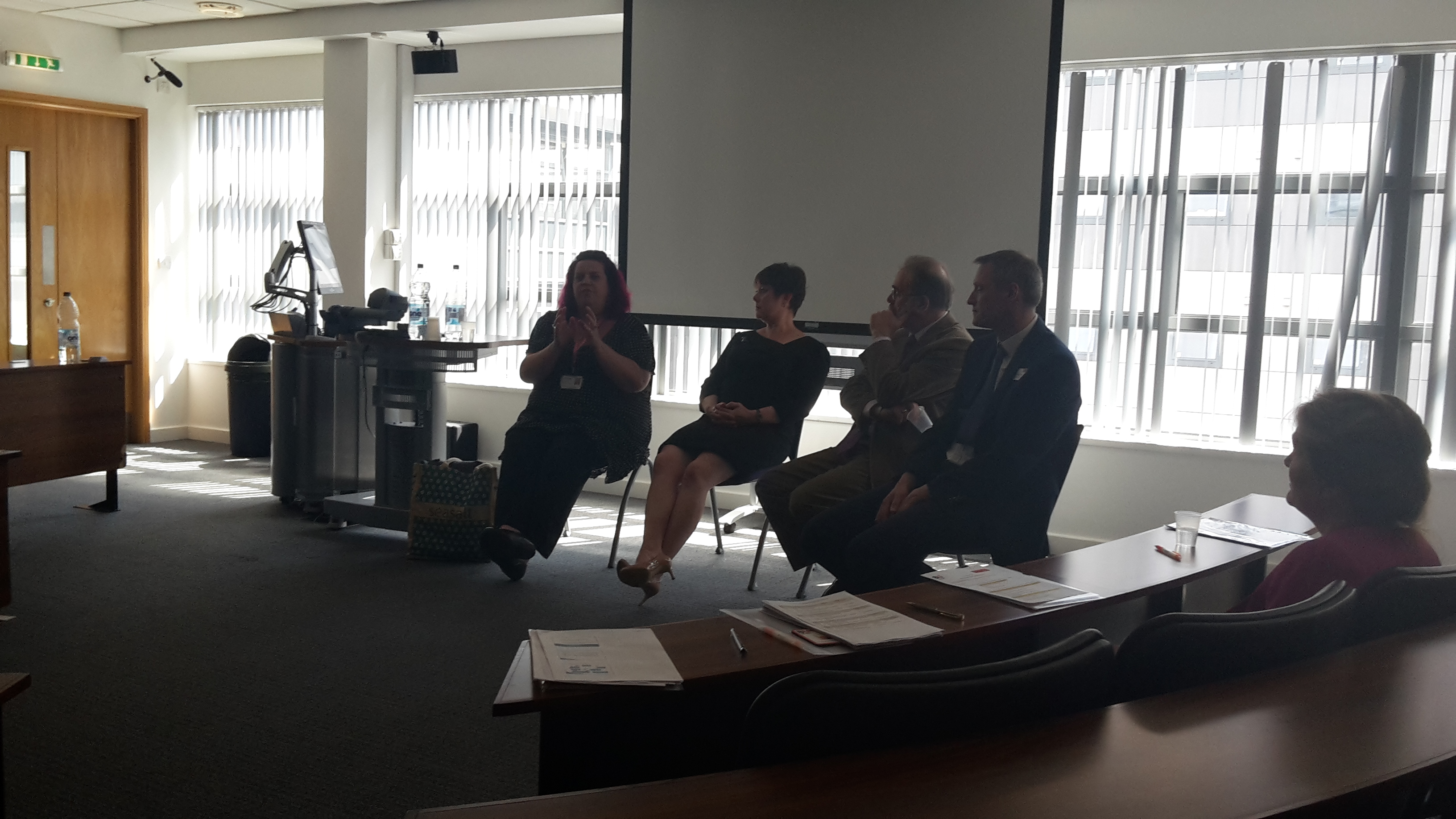
On Wednesday 17th June BUDI hosted the second in its series of one-day Masterclasses, this time on “Financial & Legal Aspects of Dementia Care”.

It was a very thought-provoking day prompted by our set of highly knowledgeable guest speakers.

Our speakers included practising solicitors (Malcolm Skinner and Stuart Bradford), a recently retired independent financial advisor (Vivien Zarucki), and a Deprivation of Liberty Safeguards manager (Esther Donald), who each have several years’ experience in their roles. They all provided interactive and stimulating sessions on the very practical and pertinent legal / financial issues that concern people affected by dementia and the common pitfalls to be avoided. The sessions included discussion of Power of Attorneys, the Mental Capacity Act, and the Care Cap due to come in force next year.

The feedback has been very positive and we are grateful for the contributions from our speakers. We now look forward to the next Masterclass!

The BUDI Masterclasses are open to BU staff and students to attend but advance booking is essential.

The next Masterclasses are:

Wednesday 30th September – Creative Approaches in Dementia

Wednesday 2nd December – Promoting Wellbeing at the End of Life

Should you require any further information or wish to book a space on either of these Masterclasses please contact us at budi@bournemouth.ac.uk .

WAN speaker event: ‘Inspiring our futures: High profile women at BU’

A lunchtime Women’s Academic Network (WAN) event on the 4th June to participate in a panel composed of three senior, high profile BU women proved to be one of our most popular WAN events. This drew in a wide audience of female academics of all ranks from across all the Faculties of the University. We were additionally honoured to have in the audience our VC, Professor John Vinney and the PVC for Global Engagement, Dr Sonal Minocha.

The panel included Sue Sutherland (OBE) Chair of the University Board, Professor Gail Thomas, Dean of the Faculty of Health & Social Sciences and Head of Centre Excellence Learning and Professor Christine Maggs, Dean of the Faculty of Science & Technology.  The seminar topic focused on an interactive discussion of career progression, achievements and dealing with potholes, cul-de-sacs, obstacles and speeding highways along the way from the personal and professional perspectives of our three eminent speakers.

Professor Sara Ashencaen Crabtree opened by the event by welcoming the audience, introducing the speakers and warmly acknowledging all the support provided by panel members and her fellow co-convenors, Associate Professor Dr Heather Savigny and Professor Chris Shiel– not forgetting every member of the WAN community, whose numbers across BU grow weekly. This has helped to make WAN a powerful and exhilarating vehicle for achieving equality in diversity at BU.

The honesty, humour, courage and grit of the speakers in talking so candidly about their road to success was a revelation to the audience who were both moved and liberated to engage fully in discussions with the panel, plying them with questions, comments and sharing their own stories. This was the opportunity to demonstrate that strength in leadership lies in being able to reveal human vulnerabilities and aspirations – a lesson that was deeply inspirational to everyone in the room.

The VC closed the event with his own account – personal, unembellished and moving, staying on to discuss with WAN members his own vision for the future in respect of our shared aims. We, co-convenors, were delighted that the success of this event as another step towards assisting our fellow female colleagues on their paths to progress where the superb examples offered by our outstanding panel received a myriad of compliments from our enthralled WAN participants.

Reminder:  Next WAN event Chaired by VC Professor John Vinney, 7th  July, 5pm   TAG02, Tolpuddle Annexe, Talbot Campus.

 Topic: Getting to the top: A grand plan or serendipity?

Speaker:  Professor Judith Petts, CBE, Pro Vice-Chancellor Research & Enterprise, University of Southampton

Please note: this is an Open WAN Seminar – all academics, irrespective of gender, are warmly invited to attend.  For full details of, and registration for Event: Prof Judith Petts, PVC Southampton, please see https://www.eventbrite.co.uk/e/getting-to-the-top-a-grand-plan-or-serendipity-tickets-17003423698


Professor Sara Ashencaen Crabtree, Dr Heather Savigny & Professor Chris Shiel,

WAN Co-convenors

International Association of Gerontology and Geriatrics (IAGG) European Region Congress in Dublin.


At the weekend Samuel Nyman and Michele Board were at the International Association of Gerontology and Geriatrics (IAGG) European Region Congress in Dublin. This was a fantastic conference with about a 1000 delegates from around the world, all interested in ageing!  The Prime Minister (Taoiseach) of Ireland, Enda Kenny, opened the Congress and we were treated to traditional Irish songs by retired public transport workers.

The days were full of sessions from a broad range of disciplines. The sessions about ageing in place, nursing care and assessment of those aged over 65 years in acute settings and residential settings were of great interest to Michele. Key points from the research presented was the importance of participation of older people throughout the research process, the significance of application to practice and the creative dissemination of research.

Michele had a poster displayed at the conference from her PhD studies on “How Does The Life Course Influence The Meaning Of Home For Six Baby Boomers?”,There was a lot of interest and some useful ideas from the more experienced researchers on developing the work further. Dublin Poster

Samuel chaired a symposium entitled, “New directions in promoting physical activity among older people”. Samuel presented the first paper on Do Strategies To Increase Physical Activity Among Older People Work For Individuals? This was from a series of n-of-1 randomised controlled trials used to evaluate the use of behaviour change techniques to increase walking activity among older people. Dr Merja Rantakokko from Finland presented the second paper onEnvironmental Characteristics And Life-Space Mobility In Community-Dwelling Older People. This was from an observational study with a two-year follow-up that investigated cross-sectional and longitudinal predictors of restriction of outdoor mobility among older people. Dr Anne Tiedemann from Australia presented the third paper on Fitbit Pedometers And Health Coaching To Increase Physical Activity Among Older Community-dwelling People. Using a subset of the intervention group from a randomised controlled trial, Anne presented findings for, the acceptability of a new intervention that aims to increase physical activity without also increasing falls. The final paper was presented by Dr Annemarie Koster from The Netherlands on More Movement During Sedentary Time Is Positively Associated With Metabolic Outcomes. This was from an observational study that used accelerometers to investigate the benefits of physical activity for older people even during seated activities.

Despite being the last session of the day, we had a good sized audience who asked lots of interesting questions. This was a great networking opportunity and has provided some fresh ideas and new contacts for future work.

The social sciences at BU

In response to an open email invitation, a group of social scientists from across BU met on Tuesday 17 March to discuss prospects for inter-Faculty collaboration. As in previous meetings between FMC and HSS colleagues, it was apparent that there were opportunities for more collaborative work than currently exists, and that there is considerable enthusiasm for developing links. A growing presence of the social sciences in BU, and of BU in the social sciences, was felt to be essential to BU’s development as a university with a rich intellectual community. If you haven’t received the report from this meeting by email, and would like to do so, please email Prof. Barry Richards (brichards@bmth.ac.uk)

NIHR Panels and Boards are Recruiting

NIHR research programme boards and panels select the most important research questions to commission, and make funding recommendations on project applications.

They are looking for additional expertise for the boards or panels of the following programmes:

  • Efficacy and Mechanism Evaluation (EME) Programme
  • NIHR Health Services and Delivery Research (HS&DR) Programme
  • NIHR Health Technology Assessment (HTA) Programme

For more information please see: Opportunities to influence Health Research


A model Institute?

The Byrd Institute, Tampa, Florida is an interesting example of an inter-disciplinary academic institute in practice. http://health.usf.edu/byrd/  I presented there earlier this month, Raising awareness of dementia: disseminating research via public engagement activities, which ties in with recent developments in this primarily NIH funded unit which is part of the University of South Florida. We toured the labs, where staff and students work alongside each other with mice at one end of the lab to computer images of human brains at the other. The second floor of the building is dedicated to screening for dementia and provides an example of dementia friendly design where people with dementia and their families spend the day going through the variety of tests that will lead to an often long awaited diagnosis of dementia. The Byrd Institute began as an independent unit on University property before becoming part of the University. Staff from across Faculties work in or are linked to the Institute providing an excellent exemplar of inter-disciplinary working. From screening in retirement villages to recuriting participants to clinical research trials this institute is slowly building a large data base of people with dementia as well as adults with early signs of mild cognitive impairment in a region known for attracting retirement migrants. They are now committed to enhanving their public outreach work and have recruited a social scientist to take this forward in the coming months. They have a wish to raise awareness of dementia within their local community and will achieve this by an ambitious outreach programme which will also contribute to increasing their pool of potential research participants in future clinical, neuroscience and social science projects.

Intergenerational working

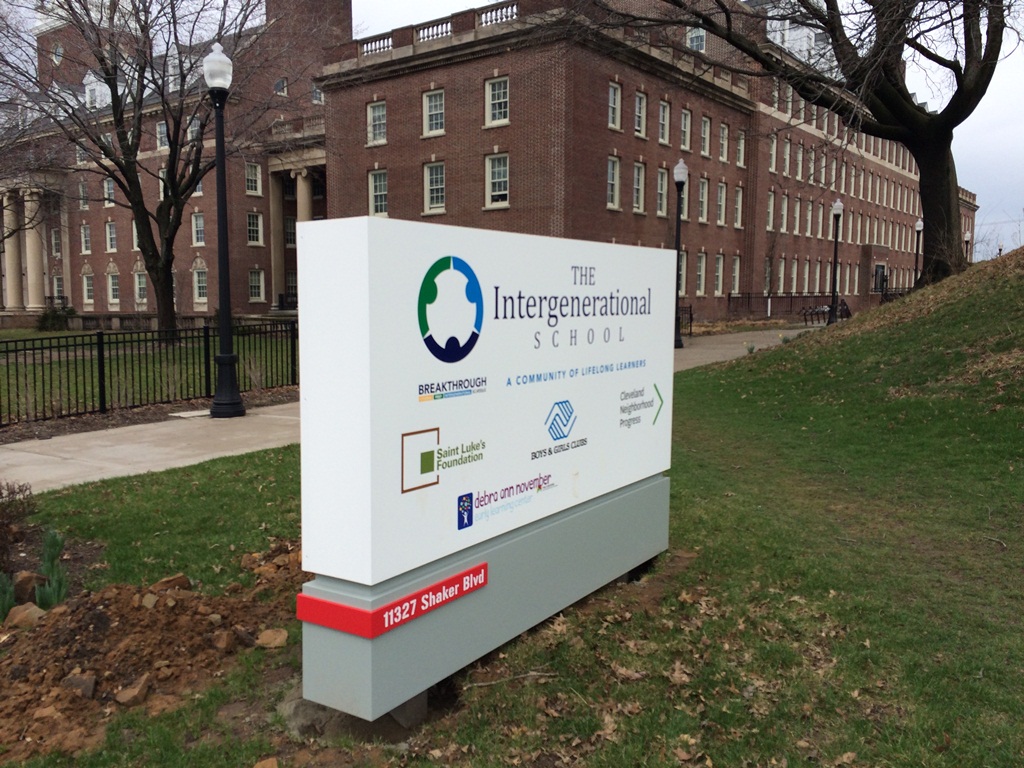
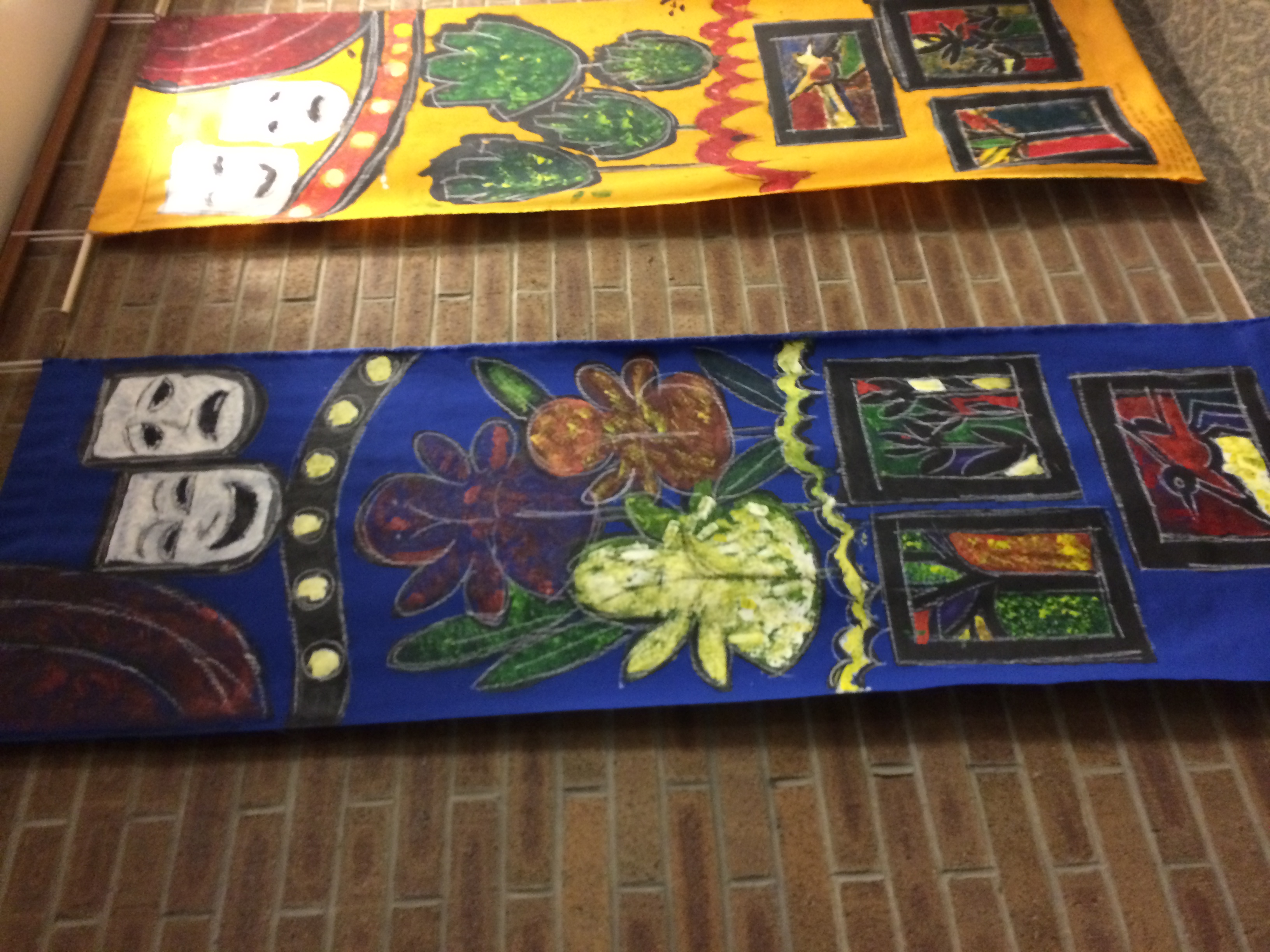
Earlier in the month as part of a whirlwind three State visit to the US we visited one of three  Intergenerational Schools in Cleveland, Ohio. http://www.tisonline.org/ This model of education has two distinct programmes to promote learning and working between the older and younger generations. The first is a ‘buddy reading’ system where older people living in the community come into the school to read with pupils. Every pupil receives 2 x 20 minute sessions with an older person per week to enhance their reading skills. A second programme involves every class in the school visiting one of thirty-one care facilities (day care and long stay care) in the area once a month where pupils work with older people on a range of projects. The image attached is one art project  where pupils visited the care home and worked with people with dementia residing in one of Clevelands premier care facilities, Judson to create these banners that hang in the entrance to the care facility. These two initiatives demonstrate the possibilities for learning and working together in meaningful ways benefitting both older adults and school children. We have been experimenting with intergenerational working here at Bournemouth via a Tech Group facilitated at The Bourne Academy where school pupils have welcomed people with dementia and their carers into their schools to work together in an after school club where they have been learning to play on the wii, xbox and ipads together. This way of working offers opportunities to educate younger generations about dementia and to combat associated stigma, ignorance and fear of what it might mean to live with dementia. To paraphrase some of the words of the School Principle in Cleveland, who I found truly inspirational, the younger we start to educate our children about life and the challenges it can throw at us the better prepared they will be to contribute as active citizens in our society.

BUDI Open Public Meeting 2015: Dementia-friendly Communities

To coincide with Dementia Awareness Week (18-24 May 2015), on Wednesday 20 May 2015 from 12 – 3pm, Bournemouth University Dementia Institute (BUDI) are hosting their fourth Annual Public Open Meeting. This free event will showcase work that is being undertaken locally to make our community dementia-friendly.

There will be an overview of local progress in the following areas:

  • Becoming dementia-friendly in Dorset and Somerset
  • Dementia-friendly GP Surgeries
  • Home fire safety for people affected by dementia.

Alongside updates on the following creative community involvement projects:

  • Intergenerational IT Club
  • BUDI Orchestra
  • Gardening
  • Care Farming

Anyone interested in dementia-friendly communities is welcome to attend, for more information or to register for your free place:

Call us on: +44 (0)1202 962771

Book online at: http://www.eventbrite.co.uk/e/budi-2015-open-public-meeting-dementia-friendly-communities-tickets-14377261777

BUDI Orchestra Performance 27th March

Last October, BUDI were lucky enough to secure funding from the ‘Inspired by 2012 Health and Wellbeing’ Fund via Dorset County Council to run another round of our music initiative with people with dementia and their carers from the community.

BUDI Orchestra have been working hard for the last eight weeks to bring you a performance this Friday 27th March, and we would be delighted if you could come along and show your support for all they have achieved in such a short space of time.


When? 27th March 2015, 10:30 – 11:30am

Where? The Atrium, Talbot Campus

We look forward to seeing you there!


Higher Education for Dementia Network (HEDN) 17th March

Report on Meeting of the Higher Education for Dementia Network (HEDN) 17th March, Worcester

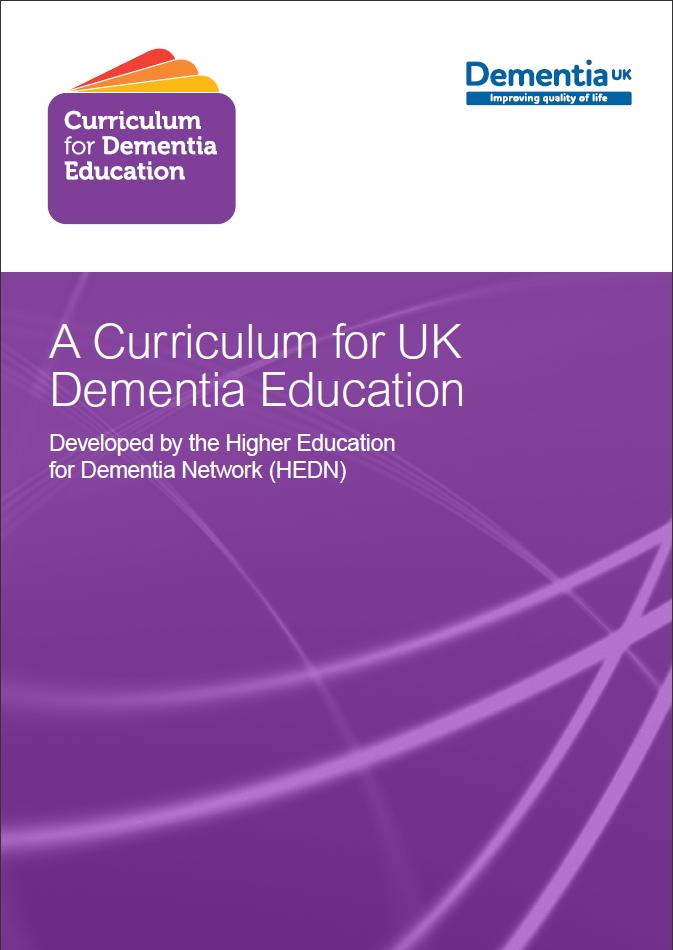
On the 17th March, BUDI attended the quarterly meeting of the Higher Education for Dementia Network (HEDN). It was held in The Hive, University of Worcester, a building co-owned by the university and the council. The Network is an open forum with a purpose to share information and innovation across UK Higher Education providers and to influence the provision of education for the current and future dementia workforce. The host institution gives a presentation at these meetings and on this occasion the University of Worcester decided to initiate discussion about their intentions of developing training for academics wanting to specialise in dementia, and dementia trainers working outside of higher education who want more training in how to design and deliver educational programmes. We also had discussion about how dementia could be better embedded within existing programmes across university departments / courses. At these meetings members also have opportunity to share about their latest developments and initiatives. BUDI was able to share about their work in developing a new MSc in Applied Dementia Studies, and the four Masterclasses that we are running this calendar year. BUDI is proud to be a member of this network and national networks such as these are great not only for sharing innovation and good practice but for working together to help shape the UK’s education provision. This network’s most recent way of achieving this was to develop a national curriculum that is now in the process of being implemented.