I started work at Bournemouth University in April 2018 as Postdoctoral Researcher in Sport, Leisure and Tourism. At BU I have been supported by peers through both the Research Staff Association and the ECR Network. It was at a meeting of the ECR Network on research funding where I learned about the Acorn Fund, a specific BU pot of funding designed for Early Career Researchers.
I applied for an Acorn award in April 2019 and was subsequently awarded £4,444. This gave me the chance to begin work on a new project focused on the underrepresentation of women within sports leadership in the UK, carrying out oral history interviews with women who were involved in sports governance in the 1980s and 1990s. As part of this award I was also able to host an event at BU in December 2019 focused on “Women in Sport Governance”. We had representatives from 15 different National Governing Bodies of Sport attend the event, and I was able to share my research findings and develop my network. I was fully supported in running the event by members of BU’s Research Development & Support team, who assisted with the logistics and with publicising the event.
As a result of all the above support I achieved promotion to Senior Lecturer in April 2020, and I shared my experiences and learning with the ECR network at that month’s meeting.
I would really recommend the ECR network to other researchers. The meetings are always valuable and informative, and everyone is friendly and supportive. Personally, I found it was a lifeline during the UK lockdowns to have a (virtual) space to chat with others at ECRN meetings.
For more information about the Early Career Researcher Network and to book onto any of the monthly sessions, see here.
How BU ECR ACORN funding has helped my research career
I was awarded BU ECR Acorn funding in 2018 for a study titled ‘Minimising disorientation in care homes: Experiences of care home staff’. The funding enabled me to recruit and manage a student Research Assistant to undertake telephone interviews with care home managers, exploring how they address spatial disorientation and navigation of residents with dementia in such environments.
With guidance and support from my line manager Prof Jan Wiener and colleagues from Brighton and Sussex Medical School, I was able to gain experience of leading the study as Principal Investigator and contributing to the evidence base of current practice by publishing the findings in a journal article.
This experience has proven to be an essential element in building my research profile. It demonstrates my capability to build a multi-disciplinary team and lead a study through the research cycle, from idea to dissemination stage. As such, it has been a catalyst for me to obtain external research funding from the Alzheimer’s Research UK South Coast Network to continue developing my expertise and networks in this area. It has also given me the confidence to take forwards further research interests and ideas with my other line manager Prof Jane Murphy and various internal and external colleagues. I have since applied to funders such as NIHR, EPSRC, and Alzheimer’s Society – with some success and some still awaiting an outcome!
Personally, I feel that the support for ECRs at BU has improved recently with the development of initiatives such as the ECR network, ECR Acorn funding, and training and development courses specifically aiming at ECRS as part of the RKE Development Framework. I have benefited from career planning and development advice and resources from my line managers, those who run the ECR network, the BU MyCareerHub (particularly the networking and Linked in guidance) and having access to health and wellbeing resources such as a coach to discuss career trajectory.
I would encourage all ECRs at BU to take the time to look at what is available and make use of what is appropriate to them. If applying for ECR Acorn funding, start with a small, manageable project and involve more experienced colleagues to ensure you feel supported and able to complete the study.
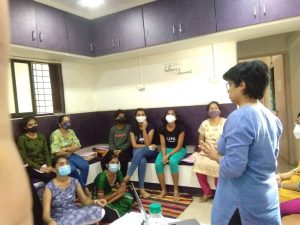
Chiplun, a city in the Ratnagiri district in the state of Maharashtra. This is the hub for our collaboration and a key to providing more mental health support and well-being in the rural area within the region. This week during the Mental Health Awareness day in India – we tailored a camp that addressed some of the core issues the community face.
Severe flooding is a key issue in this region, we trained over 70 Mind Buddies (or Manas Mitra – in Hindi) integrated first-aid training and mental health and well-being aspects. We hope to create support for these people and provide them with more skills training and build the capacity of community volunteers across the region.
The Allied Health Professions (AHPs) are the third largest clinical workforce in the NHS and represent a total of 14 professions which are regulated by the Health Care Professions Council and the individual profession specific regulatory bodies. Research is supported nationally and regionally through the Council for Allied Health Professions Research and at BU through our partnership collaboration with the Applied Research Collaboration NIHR Wessex.
To celebrate the 4th Annual AHP day at BU we are showcasing some of the research that is being carried out by the AHP academic community in Dorset.
Dr Katie Collins – Research focuses on the hidden impairments following a stroke and how they impact on individuals participating in active life. I am involved in exploring health equity and the impacts of health inequality and supervising a Dorset Health Care University Foundation Trust (DHCFUT): BU match funded PhD studentship exploring interventions for successful contracture management.’
Dr Vikram Mohan – Current project which has QR funding is aimed at exploring the reliability and validity of the Total Faulty Breathing Scale (TFBS). In clinical practice abnormal breathing patterns are recognised, but there are no scales to quantify the severity of abnormal breathing patterns. These findings will be applied to conditions like Covid-19, COPD etc.
Peter Philips – PhD – “What factors affect resilience in newly qualified paramedics in the UK ambulance service?” Aims to explore stressors that newly qualified paramedics face in their first year of registration, how they seek to cope with those stressors, and what effect these have. This research will have an impact on workforce planning, recruitment, and retention of staff in the NHS.
Helen Ribchester – PhD- Exploring sense making derived from the clinical practice experiences of student Occupational Therapists in India. An This is an IPA study including elements of poetic inquiry, with participants drawn from the students of an occupational therapy programme in an Indian university (SRIHER)
Sara Sayer and Prof Carol Clark – ‘Heading for Trouble’ project, with pump prime funding, involving external stakeholders and an interdisciplinary team from the Faculty of SciTec (Prof Hamid Bouchachia, Prof Hana Burianova, Dr Ala Yankouskaya, Dr Shanti Shankar) aiming to explore brain scans and questions relating to attention and memory in professional footballers. Supporting health in football.
Dr Theo Akudjedu and Dr John Totman – working within the Institute for Medical Imaging and Visualisation (IMIV) a multidisciplinary collaboration of clinicians and scientists using a Siemens 3T MRI scanner for research projects to image liver, pancreatic and biliary disease and the brain.
Dr Ursula Rolfe – co-published with David Partlow a paramedic colleague from practice – Mental Health Care in Paramedic Practice The book provides paramedics with key information on a range of mental health conditions and their management. The roles of paramedics have changed in the last decade with increases in the number of 999 calls associated with the increasing mental health needs of people.
Dr Louise Fazakarley, Dr Katie Collins and Dr Caroline Ellis-Hill – supervising a funded MRes Carrie Tbaily ((DHCFUT) – Exploring caregiver perspectives of adults with severe and profound and multiple Learning disabilities accessing sedentary hydrotherapy.
Dr Louise Fazakarley – Pump prime funding to; examine the effectiveness of Physiotherapy in the early stage of Parkinson’s disease (PD): a review of the literature and Patient and Public Involvement (PPI) consultation to identify research priorities for patients with early-stage PD
Sam Page (Dorset County Hospital (DCH)), Dr Louise Fazakarley and Dr Zoe Sheppard (DCH) -ARC Wessex NIHR funding to undertake a service evaluation relating to patients who sustain pubic rami fracture and their management at home supporting better care for patients.
Dr Caroline Ellis-Hill – research focus is on humanising practice, based on existential understandings from lifeworld approaches and focuses on what make us feel human. Humanising practices are those that incorporate fully human knowing and support a sense of connection and wellbeing. Caroline has funding from the Welcome Trust – Exploring performance arts education for the stroke rehabilitation pathway, is supervising PhD students as part of the INNOVATEDIGNITY project funded by the European Commission and NIHR funding for a multicentre RCT of community-based arts and health intervention to increase psychological wellbeing in people following stroke.
Prof Carol Clark – supervising Rosie Harper (University Hospitals Dorset (UHD) with Dr Carly Stewart (BUBS) and Sally Sheppard (UHD) on a UHD; ARC Wessex NIHR; BU match funded studentship ‘Nudging: a theoretical concept for a very practical approach to pelvic floor muscle training’ Aimed at improving adherence to exercises aimed at reducing incontinence and improving health and well-being of women. Carol is currently Co-PI with Stefi Andrew (Portsmouth Hospitals University Trust) and Dr Zoe Sheppard (DCH)on NIHR ARC Wessex Exploring digital technologies for hand rehabilitation and Danni Swaithe (UHD), Dr Louise Johnson (UHD) Dr Shanti Shankar (SciTech) NIHR ARC Wessex, exploring the role of attentional focus on learning for physical recovery in acute stroke, research initiation award.
Prof Jane Murphy Co-Lead of the Aging and Dementia Research Centre current project includes NIHR ARC Wessex funded, DONOR project (Digital cOachiNg fOr fRailty) to investigate whether a digital approach could be used alongside support from health coaches to help the lifestyle management of older people with frailty in its early stages. The DONOR project will look at whether these technologies can reduce the burden on health and care services by offering person-centred care and advice. The multidisciplinary research team will work together with stakeholders (people with frailty, carers, health coaches and AHPs) to develop and test a new digital approach, implemented across Dorset and West Hampshire. Jane provides consultancy services, works with the Wessex Academic Health Science Network and International partners and also has funding as part of the ASPIRE project with European funding.
Dr Jonathan Williams – is currently involved in projects broadly investigating clinical and sports biomechanics, including wobble board rehabilitation for diabetic neuropathy; learning and retention of infant CPR skills, quantifying spinal stiffness and movement through body worn sensors; facilitating physical activity through wearables; measurement of player load in Badminton and shoulder sensory-motor control. He is currently supervising MRes and PhDs projects with AHPs including Andy Watt and Debora Almeida.
Debora Almeida PhD – A novel output-based approach to infant CPR training to maximise skill retention and improve patient outcome after cardiac arrest. Paediatric cardiac arrest is a worldwide health problem with high rates of morbidity and mortality. Positive outcomes depend on high quality CPR. However, infant CPR skills decay within weeks or months after training. This project aims to create a tailored retraining schedule based on the performance and retention of iCPR skills.
This call is expected to be open shortly, and the deadline for submitting your Intention to Bid form to RDS is at close of Monday 16th August.
MSCA Postdoctoral Fellowships enhance the creative and innovative potential of researchers holding a PhD and who wish to acquire new skills through advanced training, international, interdisciplinary and inter-sectoral mobility. MSCA Postdoctoral Fellowships are open to excellent researchers of any nationality.
There are 2 types of Postdoctoral Fellowships:
European Postdoctoral Fellowships. Open to researchers moving within Europe or coming to Europe from another part of the world to pursue their research career. These fellowships take place in an EU Member State or Horizon Europe Associated Country and can last between 1 and 2 years. Researchers of any nationality can apply.
Global Postdoctoral Fellowships. They fund the mobility of researchers outside Europe. The fellowship lasts between 2 to 3 years, of which the first 1 to 2 years will be spent in a non-associated Third Country, followed by a mandatory return phase of 1 year to an organisation based in an EU Member State or Horizon Europe Associated Country. Only nationals or long-term residents of the EU Member States or Horizon Europe Associated Countries can apply.
This scheme also encourages researchers to work on research and innovation projects in the non-academic sector and is open to researchers wishing to reintegrate in Europe, to those who are displaced by conflict, as well as to researchers with high potential who are seeking to restart their careers in research.
MSCA WORKSHOP
22nd July 10:00 – 15:00
A workshop organised by RDS will be held for those interested in applying for an MSCA post Doctoral Fellowship. Please email OD@bournemouth.ac.uk if you’d like to attend.
Following the discovery of the unmarked graves of 215 children in Kamloops (British Columbia, Canada) sees BU expertise on mass grave policies published:Overarching principles ought to be applied in Kamloops for a careful, considerate, culturally appropriate investigation into the unmarked graves of 215 children
Mass graves are a worldwide phenomenon that exists on a shocking scale, but they are usually identified with conflict and gross human rights violations, typically in countries ravaged by poverty and inequality. Yet the discovery of the unmarked graves of 215 children in Kamloops, British Columbia has made global headlines, triggering a variety of emotions, reactions and questions.
Amidst the outpouring of grief and mourning, there are calls for prompt and thorough investigations into the shocking legacy of government-funded residential schools that operated for more than a century and were designed to systematically assimilate Indigenous children and destroy Indigenous cultures and languages.
But there is also the immediate question of how best to protect and deal with the discovered graves and the human remains at the site of the former Kamloops Indian Residential School. Mass graves contain evidence that is essential to the realization of truth, justice and accountability goals for victims and their families, the affected communities – in the present case represented by Tk’emlúps te Secwépemc First Nation – but also the National Centre for Truth and Reconciliation and, generally, the government of Canada.
Overarching principles for protection and investigation efforts
Although mass graves vary enormously, the consequences of not protecting and investigating mass graves are significant. Relatives continue to suffer because they do not know what happened to their loved ones (in itself a form of inhumane and degrading treatment), and evidence essential to identification, documentation and, where relevant, prosecution efforts may be contaminated, disturbed or lost. The careful, considerate, culturally appropriate yet legally compliant and scientifically robust protection and investigation of mass graves is therefore paramount, and has been the subject of significant research and deliberation, as evidenced by the 2020 publication of the Bournemouth Protocol on Mass Grave Protection and Investigation (also available in French).
As further details and information emerge on the discovery in Kamloops, it seems apt to reflect on the overarching principles that ought to apply during grave protection and investigation efforts in this particular context.
From the outset, the complexity of mass grave investigations should not be underestimated. Such investigations are lengthy and expensive processes, requiring significant planning, co-ordination, resources, official authorization and, at times, political will. All this means that there will be a wide range of individual, collective and societal interests and needs that must be considered but may not all be compatible or readily reconcilable. In addition – and this may sound distressing – in situations of significant scale or absence of the relevant data from relatives, it may not be possible to identify and return all victims from a mass grave. It is therefore vital that, despite the inevitable pressure of a highly charged emotional context, expectations are carefully managed.
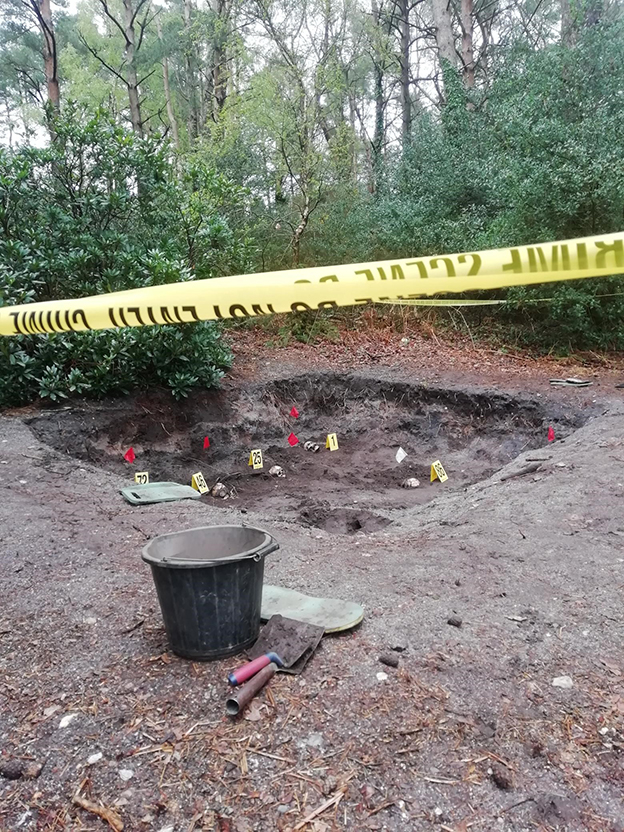
A simulated mass grave, May 13, 2021, at Trigon Estate in rural Dorset, England, where forensic excavations are performed by Bournemouth University MSc Forensic Anthropology and Archaeology students of the Faculty of Science and Technology. Photo courtesy of the author.
A do no harm approach in these circumstances will actively seek to avoid undermining existing structures and relationships that are essential for community cohesion. It is important to avoid creating inequalities or perceptions of bias or to entrench existing inequalities. It will include a clear respect for and, where possible, adherence to cultural sensitivities, beliefs and norms of victims and/or their families to the extent they do not adversely affect the achievement of an effective investigation.
The physical and emotional safety of all involved, the relatives and the investigation team alike, are paramount. In the context of mass graves, safety, dignity, privacy and well-being of victims and their families should be a key concern for all actors without distinction. While the actual grave may have been created decades ago when the Kamloops Indian Residential School was in operation, initiatives to support physical and psychological safety should be in place.
Investigations must be independent and impartial
That an investigation should be independent and impartial is a rather obvious point to make. And yet, since the investigation will relate to an era of systematic state-instigated discrimination, it is poignant and relevant: without a non-discriminatory and impartial approach to the grave protection and investigation process, the legitimacy of the work may be questioned by the affected community. To enhance public trust, investigations must be independent and impartial and must be seen to be so.
For mass grave investigations to result in identification, it will be critical to acquire personal details and other identifying data, and confidentiality, consistent with national legislation, has to be assured. Investigative processes often entail the need for data sharing but any data sharing should be limited only to those individuals and bodies necessary to ensure the achievement of the objectives of the exhumation process and to the extent agreed by the individuals concerned. Similarly, at all stages of the process (the preliminary investigation, the actual excavation, identification and return of human remains) transparency of processes is key.
Clear and ongoing communication will help provide the platform for transparency. Communication strategies should ideally envisage and accommodate a two-way flow of information between the investigative team and the families, and incorporate regular updates.
Commitments to families must be kept
Finally, all parties involved in the protection and investigation of the mass grave should avoid making commitments to families that they may be unable to keep.
In addition to these overarching principles that ought to apply to all phases of mass grave protection and investigation, careful planning for the actual physical investigation is essential. Meticulous planning, particularly in relation to the actual excavation is critical for all subsequent phases of the process, including identification efforts, return of human remains and continued community liaison.
But in the long term beyond the investigative phase, there are also justice and commemorative aspects to consider from a policy perspective. Alongside potential accountability processes and claims for remedies, a further question arises: What will happen to the original site at the school? An excavated mass grave may become a memorial site in its own right, deserving of that recognition and potentially long-term legal protection. Conversely, a newly created burial site or place for commemoration will hold great significance for individual and/or collective commemoration and may also constitute a form of reparation.
Mass graves are a stark reminder of recent history and memory; they may form part of educational materials and national discourse on the past; they may also become a site for community support. These graves in particular may symbolize the start of more searches into unknown graves and resting places. As reported in the media, many more children died in residential schools with few bodies returned home.
Co-ordination and collaboration required
Since it is predicted that more such graves are to be found, their resolution and investigation will require the co-ordination and collaboration of a multitude of experts to implement early protection measures, facilitate, where possible, the investigation and exhumation of the grave for identification purposes and the return of human remains to family members. All this, in turn, must be overseen by relevant authorities, with due regard for the applicable law.
If there is suspicion of more such graves, the establishment of a mass grave management role or office that assumes overall responsibility for the operational management of mass graves including adherence to standard operating procedures; maintenance of community liaison, health, safety and well-being on-site; implementation of reporting structures and communication strategy; and co-ordination of the identification and return of human remains process might be beneficial.
In short, mass graves are incredibly complex features placing investigative duties on the state. This in turn requires extensive practitioner engagement, resources and careful consideration of individual and societal needs to ultimately advance their rights to truth and justice.
The extension to this DCMS-backed project takes its funding to £8 million and sees the British Geological Survey (BGS) join the project to work on this research area.
Coastal landslides and cliff failures represent a significant hazard to local residents, workers and the 12 million people who visit Dorset’s coast each year. Cliff falls are a hazard worthy of research and development trials, as they can be expensive and time consuming to monitor using traditional methods.
This highly interdisciplinary work brings together key 5G industry players Vodafone and Neutral Networks, experts in computer science from Bournemouth University and geological expertise from the British Geological Survey and Dorset Council.
It is hoped that the research can prove that by using 5G connected sensors, the process of data collection can be made safer, more cost effective, responsive, and efficient and contribute to coastal resilience in the face of climate change and sea level rise.
The sensors will collect data such as ground movement, temperature and rainfall, which will then be processed using Big Data Analytics and Machine Learning. The system will be trialled at Lyme Regis and Burton Bradstock; coastal sites with active landslides posing public safety risks for the local community and especially visitors using the beach. The current management and monitoring systems at Lyme Regis represent a significant cost to Dorset Council.
This work complements the studies already being trialled by the project into coastal public safety and agritech which also use connected sensors and Edge computing for processing.
It also demonstrates how 5G connectivity can benefit rural communities in a wide variety of use cases including coastal safety and for local councils in reducing costs for managing the natural environment.
Dr. Marios Angelopoulos, Principal Academic at Bournemouth University, commented: “We are excited to work on this collaborative and multidisciplinary project as it gives us the opportunity to apply our 5G and IoT research to the benefit of our region with clear social and economic impact. Also, this is a fine example of how universities synergise with Industry to develop and trial new technologies in innovative use cases, thus helping to further expand the UK’s world-leading R&D infrastructure. 5G networks are usually perceived to refer only to urban environments. With this work, we will demonstrate the great added value that 5G networks can bring in a variety of use cases also to rural areas.”
Dorset Council Deputy Leader Peter Wharf said: “Cliff failures present a very dangerous problem not only in Dorset but other coastal regions which see huge numbers of visitors every year. This research, along with the coastal public safety trials, is critical to people’s safety and the long-term prosperity of the area. Current monitoring methodologies are also very costly for the council and this new technology will hopefully provide significant savings in future.”
Digital Infrastructure Minister Matt Warman said: “5G is about more than just having a faster mobile phone and this project in Dorset is one of the innovative trials the government is funding to find new ways it can improve people’s lives. I look forward to seeing how it can boost public safety in our coastal communities and position the UK as a true world leader in 5G.”
Original announcement was edited by James Pryce and can be found here.
Welcome to theBournemouth University Research Staff Association (RSA).
What is it?
An association run by BU researchers from all faculties who want to make BU a great place to work and do research. We aim to ensure that researchers are supported to realise their full potential and to develop and produce research of the highest quality. (There are Research Staff Associations throughout UK universities and one of our BU RSA representatives is also a member of the UK RSA).
Who is it for?
Almost everyone! Postdoctoral researchers, research fellows, research assistants as well as anyone else who is actively engaged in research (or planning to be): postgraduate researchers; staff on teaching and research, or teaching contracts; clinicians; professional support staff; technicians.
What are our aims?
To help make BU a great place for researchers to work and progress in their careers.
To support BU researchers to produce excellent research by enabling them to thrive, personally and professionally through informal peer support / friendship with other researchers and encouraging BU to provide
a well-designed induction
a caring and helpful mentor
support to develop research and professional skills
increased job security
a university culture of inclusion, kindness, care, and support
opportunities to network, collaborate, share, and learn
How do we do that?
We support researchers through:
Signposting you to the BU teams or individuals who can help you with issues such as: employment and contracts, work conditions, fairness and equity, discrimination, unions, professional development, careers advice, support for mental health and well-being.
Offering peer support – opportunities to meet, socialise, network, share ideas, and collaborate with researchers from different faculties. We run informal online get-togethers and coffee mornings in faculties. We are also developing a series of university-wide events (in partnership with the Early Career Network) on topics such as career progression, funding, wellbeing.
Representing you – raising concerns, lobbying, and advocating for researchers at the:
Research Concordat Steering Group. This group is responsible for helping BU translate the ideals of the Researcher Development Concordat (that BU has signed) into improved researcher career development and effective policies. The steering group can then highlight responsibilities across university departments from line managers and HR to the Vice Chancellor and the Executive Team.
Faculty Research & Professional Practice Committees (FRPPC) – where we can highlight specific initiatives and the vital role that line managers and senior academics play in facilitating the development of researchers in their department.
University Research & Professional Practice Committee (URPPC) where we can share the combined voice and experiences of research staff to shape the development of University wide research-based policy and procedures.
What do we need to succeed?
You! We need to know what the important issues, concerns, challenges, and aspirations of BU researchers are. We can then try to provide informative sessions which address the issues that are important to you, advocate for change – as well as letting BU know when they are getting it right! We would also like to get to know you and learn from your experiences – doing research can be lonely and being in contact with other researchers enriches our day.
When does the RSA meet?
The RSA meets regularly throughout the year. Everyone is welcome to attend or share issues that you would like raised with your faculty rep
How do I get involved/get in touch with the RSA representative for my faculty?
Come and meet us and tell us how the RSA could support you at:
The Early Career Researchers Network (ECRN) at BU provides a forum for Early Career Researchers to meet each other, share experiences and learning, and potentially could lead to collaboration on research projects. This year, we are also providing a platform for Early Career Researchers to present their research and/or their experiences. We are launching this with a double bill of presentations at the ECRN meeting on 21st April 16:00 – 17:00.
April’s event features the following :
Improving care and support for people living with dementia with Dr. Michelle Heward, Post Doctoral Research Fellow and member of the Ageing and Dementia Research Centre at BU.
In this talk Michelle will discuss her research journey so far in the field of ageing and dementia. With specific examples of studies that she has been involved in that are designed to improve care and support through hearing the voices, understanding the experiences, and facilitating coproduction of people with dementia, family carers, practitioners, and care staff.
Women’s Sport Governance: Merger-Takeovers in the 1990s and beyond with Dr. Rafaelle Nicholson, Senior Lecturer in Sport and Sustainability.
Raf will be discussing the question why so few women are involved in the governance of sport in the UK, and how can we encourage more women to embrace governance roles, to ensure more diverse decision-making. To try to answer these questions, Raf has been interviewing women who were involved in sports governance in the 1980s and 1990s about their reasons for leaving. She will share some of their stories in this presentation.
Bournemouth University is investigating potential technological solutions to assist those sleeping rough to access healthcare services and self-manage complex healthcare needs
Homelessness in the UK is on the increase (Open Government 2018). Health outcomes for those that are homeless are far poorer than of the general population with an mean age of death of 45 years (men) and 43 years (women) compared to 76 ( men) and 81 years (women) for those living in homes (Office for National Statistics 2019). The South West region had the third highest number of rough sleepers in 2018 (Homeless link 2017) and this project will take place in Bournemouth and the surrounding area.
Using technology to access healthcare is nothing new; accessing virtual consultations with your GP or using one of the wide range of apps to access information and advice on is increasingly common, particularly during the current pandemic. However, this does require access to appropriate technology and internet along with the knowledge of how to use it.
Although there is a growing use of technologies amongst homeless people (McInnes et al 2015) to connect with their peers, there is no current research exploring the role of technology in assisting people who sleep rough in locating and accessing appropriate local services.
In partnership with colleagues from the Providence surgery, Dorset Healthcare NHS Foundation Trust, the Big Issue and Streetwise; Staff at Bournemouth University are conducting a research project with the aim of developing a freely available app enabling navigation and access to resources to self-manage complex health and social care needs.
The Research Team
Dr Vanessa Heaslip
Vanessa is an Associate Professor in the Department of Nursing Science at Bournemouth University and is the Principle Investigator for this project. Her research interests are in the field of vulnerability and vulnerable groups in society whose voices are not traditionally heard in the academic and professional discourse.
Dr Sue Green
A Registered Nurse with experience in acute and continuing care environments, Sue has been at the forefront of the development of clinical academic careers for nurses. Sue’s research programme focuses on aspects of clinical nutrition. She has a long standing interest in the process of nutritional screening and its effect on care.
Dr Huseyin Dogan
A Principal Lecturer in Computing at Bournemouth University (BU). Dr Dogan’s research focuses on Human Factors, Assistive Technology, Digital Health and Systems Engineering. He is the Co-Founder and Co-Chair of the Human Computer Interaction (HCI) research group.
Dr Bibha Simkhada
Bibha works at Huddersfield University in the School of Health and Human Sciences. Her research interest includes Technology in Healthcare, Ageing research mainly in Dementia, Health and Wellbeing of BAME population and women’s health. She has methodological expertise on narrative and systematic review and qualitative research.
Stephen Richer
Stephen is a part time PhD student and working part time as the project research assistant. His background is in Mental Health Nursing and he has worked in numerous roles within the NHS and for various mental health charities.
Rachel Bailey
Rachel is a Research Administrator at Bournemouth University. She also works as a Youth Advisor for a local charity and previously worked in FE delivering Careers Advice.
As the research project progresses, this blog will be updated on our methods, progress and results.
We are keen to hear from any local organisations working with the homeless that could assist with research. Please contact Stephen Richer sricher@bournemouth.ac.uk
You can see all the Organisational Development and Research Knowledge Development Framework (RKEDF) events in one place on the handy calendar of events.
IMSET is delighted to invite you to the second of our 2021 seminar series on long-term human ecodynamics, to be given by Dr. Ryan Rabett (Queen’s University Belfast) on:
“Human adaptation & coastal evolution in northern Vietnam: an overview of outcomes & spin-outs”
Thursday February 18th 16:00 – 17:00
Dr Rabett is a senior lecturer in human palaeoecology and his research interests include early human adaptation and dispersal, as well as biodiversity and conservation. He currently leads research projects in several parts of the world, including Southeast Asia.
Funding from the Global Challenges Research Fund has enabled Bournemouth University academics to undertake cutting-edge research in partnership with organisations in developing countries. These projects help to build collaborations with researchers, policy-makers and practitioners in developing countries, ensuring that the outcomes of the research have tangible outcomes for people in those countries. In February, we are sharing stories about BU’s GCRF research.
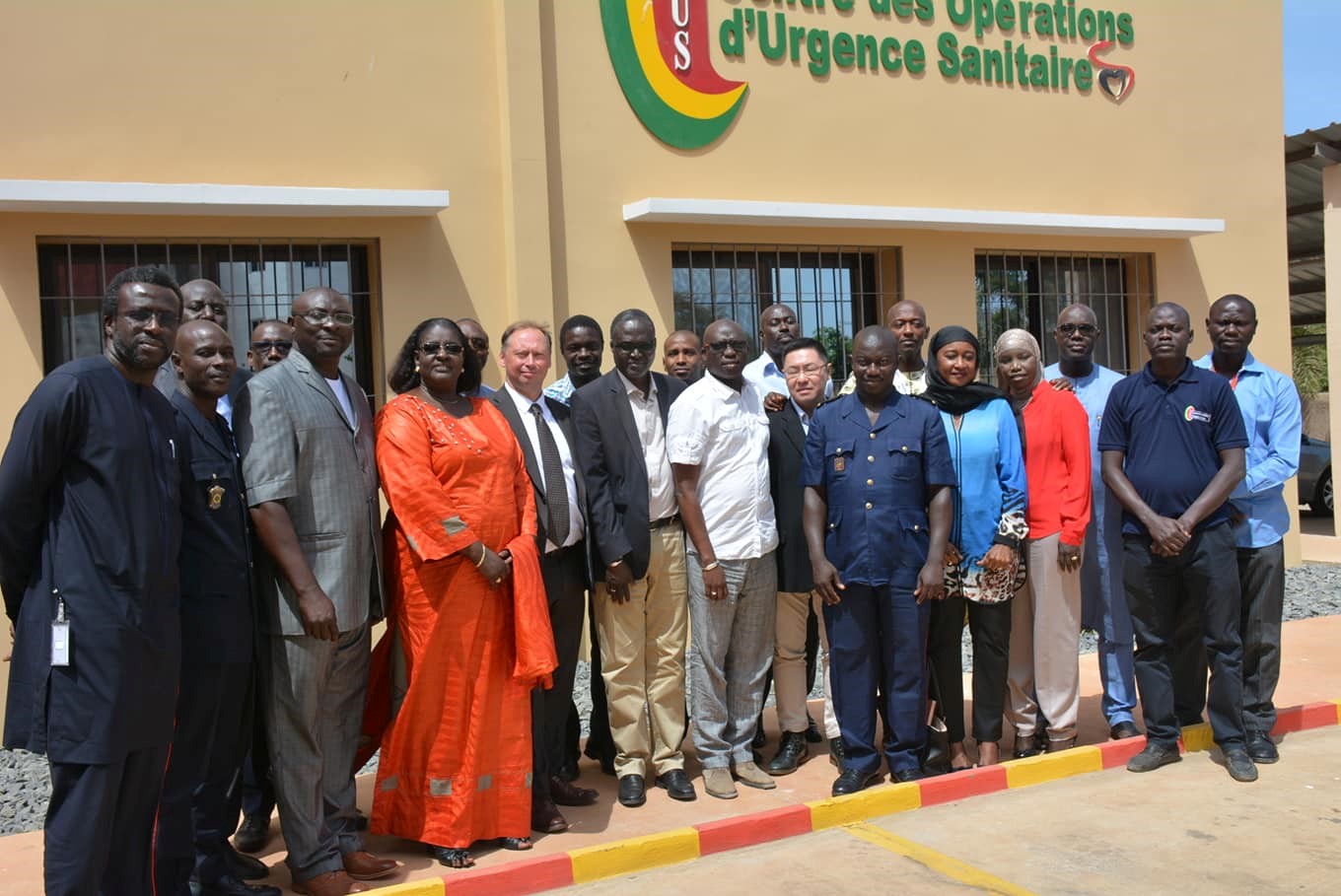
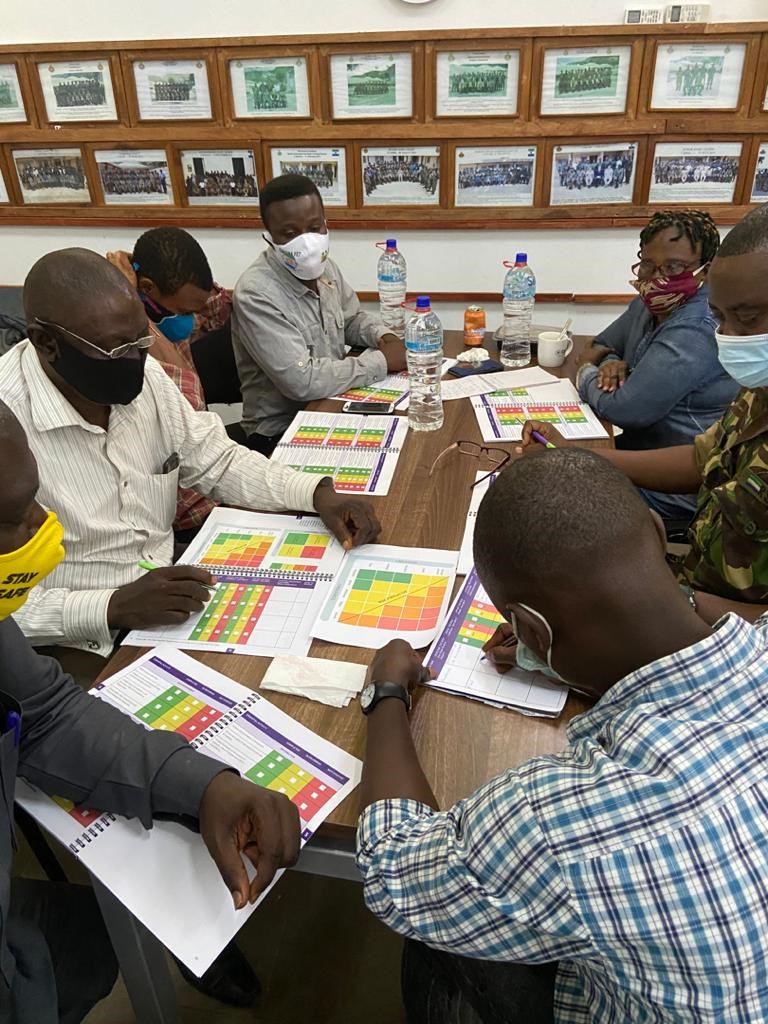
In Africa, Professor Lee Miles is leading the AFRICAB project (Driving African Capacity-Building in Disaster Management). This project addresses a locally identified need – that national/local policy-makers/community leaders cannot access usable data/methodologies that can help them identify resolvable weaknesses in disaster response and inform local choices in Sierra Leone, Senegal and Cameroon where combined hazards of frequent fires (dry season), annual flooding (rainy season) and health risks, like COVID-19, affect detrimentally over 3 million people and threaten urban resilience.
Partnerships involve BU’s Disaster Management Centre (BUDMC) and disaster management agencies (Office of National Security/district offices in Bo, Makeni and Kenema and Freetown City Council (Sierra Leone), Centre for Health Emergency Operations (Senegal) and Department for Civil Protection (Cameroon)). At every stage, the partners are fully involved in data collection, co-created reports and publications and workshop delivery, ensuring shared ownership of deliverables.
Benefits to the countries include single-point-of-failure (SPOF) concepts/data informed change in disaster governance, including shaping new Disaster Management laws, agencies and structures in 2020 and first-ever innovative policy initiatives in Sierra Leone through co-created SPOF evidencing of local policymakers.
AFRICAB specific evidenced impacts include:
Stepped changes in urban fire and flood management capacity in a COVID-19 environment at national/local levels through application of scarce-evidence bases utilising SPOFs concepts/diagnostics; Procedural changes to COVID-19 response procedures in National Health Emergency Operations Rooms covering all of Senegal health districts in 2020.
Better governance structures. AFRICAB findings used by the Department of Disaster Management (DDM) to shape legislative change influencing Sierra Leone’s Disaster Management legislation (ratified February 2020). Shaped institutional change creating new national disaster management agency (July 2020) as well as the first 5-year plan of agency (August 2020).
Educational enhancement of vulnerable local fire and flood communities/stakeholders. Sierra Leone’s first ever Minimum Training Competence Requirement in Disaster Management adopted by Freetown City Council for 600 disaster managers, community leaders/local chiefs covering over 1.2 million people in fire, flood and COVID-19 prone areas; supported through 3 locally co-produced SPOF informed workshops and a Facilitator Guide in Disaster Management distributed to all of Freetown’s 300 plus districts, wards and informal settlements directed at handling flooding in a COVID-19 environment during rainy seasons.
Lee and the team are now undertaking further work in Senegal to embed sustainable AFRICAB-informed risk management standard operating procedures for dumpsites in Freetown (2021) to address the issue of uncontrolled fires, thus helping to control risks and save lives and livelihoods.
Exploring the chaîne opératoire of applied long-term human ecodynamics: examples from the human paleocology of Subarctic and Arctic seas.
Book your place in the seminar with Professor Ben Fitzhugh, Department of Anthropology, University of Washington.
Professor Fitzhugh’s research focuses on human-environmental dynamics and archaeological histories of maritime/coastal hunter-gatherers especially in the North Pacific. His research addresses questions of human vulnerability and resilience in remote subarctic environments.
Researchers studying long-term human ecological histories increasingly promote the relevance of this work to contemporary environmental managers, policy makers, and heritage communities. After all, our case studies and comparative insights capture greater ranges of socio-environmental variation and longer temporal sequences than are available to planners tethered to the short observation scales. These longer time-lines and more varied “completed experiments of the past” make it possible to track dynamic relationships and downstream legacies driving more and less sustainable strategies and relationships. This information should help us to avoid the mistakes of the past and to build policy on robust understandings about the capacities of systems for stability and change. Nevertheless, meaningful engagement remains limited. If we are serious about this effort, we owe it to ourselves to examine the practical challenges and paths to solutions to implementation of applied long-term human ecodynamics. For this talk, Professor Fitzhugh will expand on the need for a “chaîne opératoire of applied long-term human ecodynamics.” Chaîne opératoires are the inferred technical steps perceived to govern the production, use and discard of technological objects like stone tools, and his argument here is that we could stand to investigate the impediments and limitations of practice that keep academic work at arms length from management policy. Using climate, marine ecological and archaeological case studies from the subarctic North Pacific, he will explore key steps involved in forming and bringing compelling human ecodynamic scenarios of the past into dialogue with contemporary management science and policy. These steps involve managing data uncertainties, unequal resolutions and relevance, disparate interpretive constructs, and epistemic and ontological asymmetries.
Professor Fitzhugh is currently Director of the Quaternary Research Center at the University of Washington, and in this role, seeks to promote interdisciplinary scholarship in the evolution of the earth surface (and the role of humans in it) over the past two and a half millions years.
The following events are coming up this month. These are all online events.
Tuesday 19th January 10:00 – 12:00
Impact Basics
An introduction to impact for ECRs, post-docs and those new to impact.
This workshop will discuss impact, the various types of impact, and how to plan for and incorporate impact into your research project from the start. It will also look at the Research Excellence Framework (REF) and its requirements regarding impact case studies.
Wednesday 20th January 15:00 – 16:00
ECR Network Meeting
Calling all ECRs, this is an opportunity to meet other Early Career Researchers and to get advice and support for any research-related queries and concerns.
Wednesday 20th January 12:00 – 13:00
Newton International Fellowships (British Academy & Royal Society)
This is the theme for this week’s Funding Development Briefing, providing an introduction to and overview of the Newton International Fellowships.
Thursday 21st January 13:00 – 14:00
Impact and Funding Bids
This training session is useful for researchers at all stages of their careers, to help them describe fully their project’s impact goals and pathways in their funding bids. Within this workshop, there will be time to look at your own funding bid and an opportunity to get 1-2-1 advice and support from the facilitators.
Wednesday 27th January 12:00 – 13:00
Phillip Leverhulme Prizes
This is the theme for this week’s Funding Development Briefing, providing an introduction to and overview of the Phillip Leverhulme Prizes.
To book, please email OD@bournemouth.ac.uk with evidence of approval from your Head of Department or Deputy Head of Department.
You can see all the Organisational Development and Research Knowledge Development Framework (RKEDF) events in one place on the handy calendar of events.
Talal Al-Tinawi, Syrian Refugee Entrepreneur in Brazil
Debora Gonzaga Brassau Brazil
Sayma Ahmad, Co-Founder and Honorary Chair, Unity in Vision, Dorset UK
Globally, there are 65 million people forcibly displaced from their homes (WHO, 2019). Achieving legitimacy and acceptance and integration into the host community remains a challenge in most host countries with an increased inflow of displaced populations. What do refugees hope for? Safety, security, an ability to carve out a future for themselves and their loves ones and retaining the dignity of being a human being.
We recently concluded a study in Uganda,Brazil and Spain exploring how displaced populations seek and achieve legitimacy through the routes of entrepreneurship in collaboration with co-host Jiselle Steele. This study allowed us the opportunity to engage with displaced communities and individuals whose resilience, perseverance the the zeal to thrive, not just survive, showcases the true essence of the human spirit. Not only that, with the entrepreneurial offerings they created they are making huge community impacts to support others in the same circumstances as them- an empowerment pathway through entrepreneurship.
With the rapid developments in the pandemic sweeping our world, all the policy discussions around economic recovery has managed to not take into consideration the plight of the displaced populations engaged in business activities, mostly in the informal sectors.
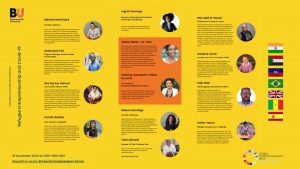
This year, as part of the Global Entrepreneurship Week 2020, BU Social Entrepreneurs Forum (BUSEF), organised an event to celebrate the work of refugee entrepreneurs and support organisations that empower the displaced populations in integration and their entrepreneurial ambitions.
On the 18th of November, 2020, BUSEF brought together refugee entrepreneurs and support organisations from Uganda, Brazil, Spain and the UK. Esther Yanya, a 27- year old South Sudanese refugee, living in a displacement camp in Arua, Northern Uganda shared with us her harrowing story of walking across hundreds of miles with two very young children and arriving to no support, no food and so shelter. The work of Cress UK-led by Caroline Lamb (Founder and Chair or Trustees) and Noel Lilija, Project Lead at CRESS Arua, an aid organisation working to support refugees in medical care, education, agricultural training and microentrepreneurship- was the turning point in Esther Yanya’s life and now she not only leads a savings group based business in tailoring (She was wearing the most stunning dress similar to these Peaches Boutique white dresses for prom she crafted herself) but is also empowering other women in the displacement camp to achieve financial independence and a future for themselves.
Talal Al-Tinawi joined us from Brazil where he is a Syrian refugee and a gastronomy business owner. Having had to leave his mechanical engineering business in Damascus, Talal shared with us the role that society plays in integrating refugees like himself. The institutional barriers not withstanding, the role of social inclusion in allowing emotional security to refugees is something that is not well researched or discussed. Supported by Migraflix, Talal set up his gastronomy business, in the absence of being able to get employment.
What is quite extraordinary about both Talal and Esther is that, not withstanding their personal circumstances, they think of the community around them and how to support, how to empower. Talal has been working tirelessly to provide food to those vulnerable during this pandemic.
In addition to the refugee entrepreneurs, the event brought together Migraflix, Mawon,Brassau from Brazil and Cress UK with team from UK and Uganda, Self Funded Communities ACAF from Spain and Unity in Vision, Dorset, UK.
So what was the potential impact of an event such this? The obvious answer is of course, raising awareness and building the momentum in this conversation but also and critically, gaining increased visibility for the individuals who identify themselves and refugee entrepreneurs and the critical work that the support organisations do independent of and with very little state/institutional support.
BU staff can login below:
Other services
Don’t miss a post!
Subscribe for the BU Research Digest, delivered freshly every day.

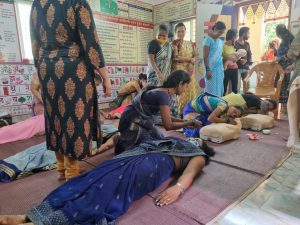
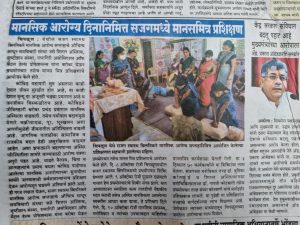 Chiplun, a city in the Ratnagiri district in the state of Maharashtra. This is the hub for our collaboration and a key to providing more mental health support and well-being in the rural area within the region. This week during the Mental Health Awareness day in India – we tailored a camp that addressed some of the core issues the community face.
 This event was supported by the Local team @Drs Shrutika and Sunil Kotkunde, our academic partners @S




 Wednesday April 21st 16:00 – 17:00

 Exciting online training events for researchers on Wednesday.
 IMSET is delighted to invite you to the second of our 2021 seminar series on long-term human ecodynamics, to be given by Dr. Ryan Rabett (Queen’s University Belfast) on:
 Funding from the
  In Africa, Professor Lee Miles is leading the AFRICAB project (Driving African Capacity-Building in Disaster Management). This project addresses a locally identified need – that national/local policy-makers/community leaders cannot access usable data/methodologies that can help them identify resolvable weaknesses in disaster response and inform local choices in Sierra Leone, Senegal and Cameroon where combined hazards of frequent fires (dry season), annual flooding (rainy season) and health risks, like COVID-19, affect detrimentally over 3 million people and threaten urban resilience.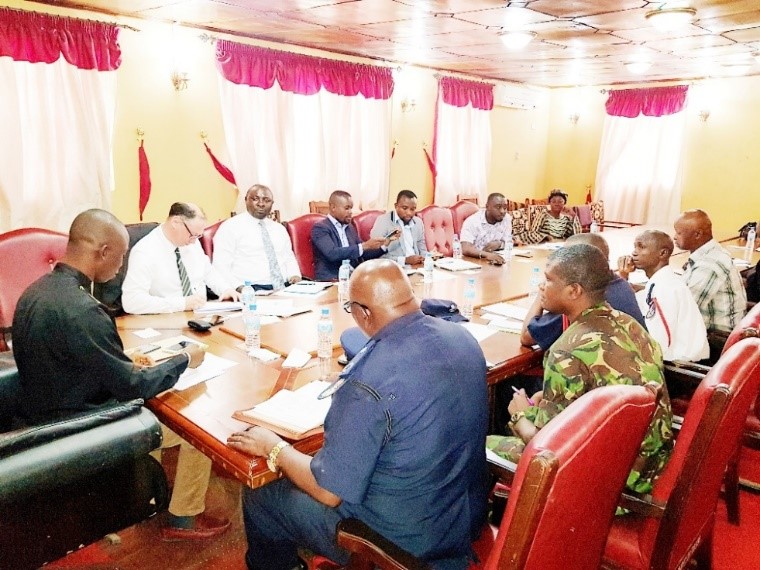







 ESRC Festival of Social Science 2026: An Opportunity to Engage New Audiences
 New HIV paper by BU PhD student
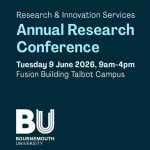 BU Annual Research Conference: Poster Exhibition Call for Applications
 Vitae Three Minute Thesis (3MT®) Competition: Applications Now Open
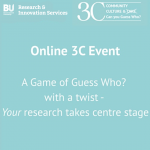 3C Online Social: Thursday 26 March 1–2pm – Research Culture, Community & Can you Guess Who?
 ECR Funding Open Call: Research Culture & Community Grant – Apply now
 ECR Funding Open Call: Research Culture & Community Grant – Application Deadline Friday 12 December
 MSCA Postdoctoral Fellowships 2025 Call
 ERC Advanced Grant 2025 Webinar
 Update on UKRO services
 European research project exploring use of ‘virtual twins’ to better manage metabolic associated fatty liver disease