 On Thursday 22nd July 2021 from 2-4pm, RDS will be hosting a virtual STEAMLab event under the strategic investment area (SIA) of Medical Science. It will be the third of a series to 2-hour long virtual STEAMLabs to be held in the course of 2021.
The ideas generated at this event may also be used to help select colleagues for further Scramble events at short notice.
Booking onto this event
To take part in this exciting opportunity, we ask all participants to download and complete the Application Form and return this to Lisa Andrews by Monday 14th June.
By applying, you agree to attend for the full duration of the event on 22nd July from 2pm – 4pm. Places at the event are limited and you will be contacted to confirm your “virtual space” by 21st June 2021
If you have any queries prior to submitting your application, please contact RDS Research Facilitators Lisa Andrews or Ehren Milner.
The Brief
We’re seeking to come up with highly innovative and urgently required research which is ambitious in scope and will require a high level of expertise, commitment and funding. The research must address challenges in the field of Medical Science.
In short, we anticipate the development of innovative, ground-breaking cross-disciplinary and ambitious projects which have the capacity to attract significant, high value external funding from the public and private sectors in the future.
We would also like to use this opportunity to further collaborations with our local clinical colleagues, and are delighted to be welcoming a number of attendees from local NHS Trusts to join us at this event.
Who should attend?
We welcome those who wish to contribute to having a positive impact through addressing scientific challenges, but in particular, we are specifically targeting the following:
- Those academics whose research aligns with one or more of the BU’s core research areas, or whose research would benefit from the multidisciplinary, collaborative engagement supported by the Medical Science SIA;
- Those who have experience of involvement in medium to large scale research projects.
Some Answers to your FAQs:
Do I need to do anything in advance?
During the STEAMLab, you’ll be guided through a process which results in the development of collaborative research ideas. To aid us in this process, we will be using the platform Padlet to discuss and share ideas on a number of research themes ahead of the event. This will enable us to identify the themes of the day by asking you as the attendees to contribute your thoughts and ideas ahead of the STEAMLab.
What is the immediate objective?
The objective by the end of the STEAMLab is to have scoped some leading and grand ideas around which a working group or cluster can be formed to take forward towards the development of a large grant application. This event is run to facilitate new interdisciplinary research collaborations.
What do I need to do afterwards?
Your project idea may be “oven-ready”, but it is more likely that you/your group’s project idea/s will require some time to crystallise fully, and for the optimum partners to be found for the building a winning consortium. To this end, it is envisaged that you and your potential collaborators will be committed to meeting on a regular basis, with a firm timetable.
What if my topic area is very specialised, within fields such as medical diagnostics or environmental science?
Your contribution will be very welcome! One of the main benefits of a STEAMLab event is to bring together individuals with a range of backgrounds and specialisms who are able to see things just that bit differently to one another.

Well done!










 SONAMONI contributions to Safety Conference 2026 in South Africa
 Three CMWH presentations at Berlin conference
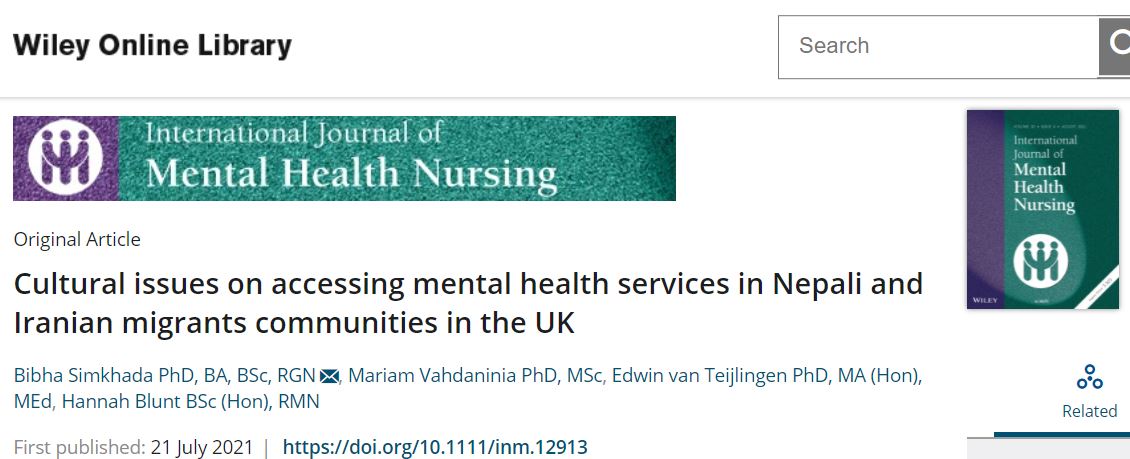
 New interdisciplinary paper on Nepal
 Horizon Europe Cluster 3 (Civil Security for Society) 2026 Calls Now Open
 MSCA Doctoral Networks 2026 Call Information Webinar
 ESRC Festival of Social Science 2026: Application Deadline Extended to Thursday 25 June 2026
 Reminder: Register for the ESRC Festival of Social Science 2026 Information Session
 ECR Funding Open Call: Research Culture & Community Grant – Apply now
 ERC Advanced Grant 2025 Webinar
 Update on UKRO services
 European research project exploring use of ‘virtual twins’ to better manage metabolic associated fatty liver disease